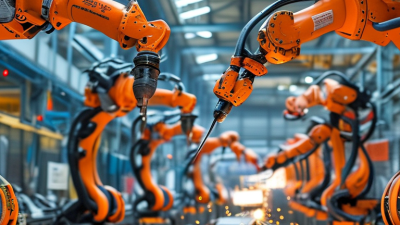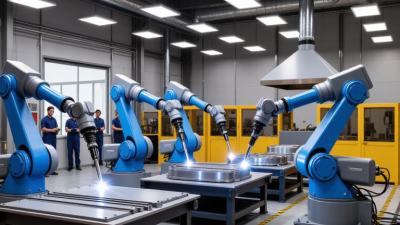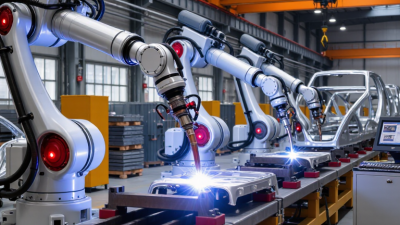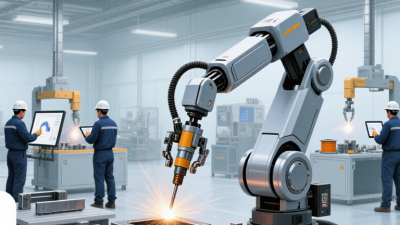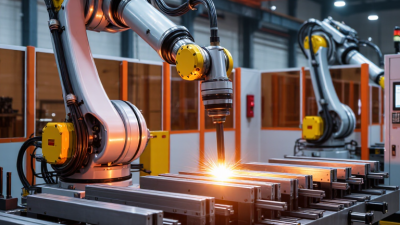
Choosing a robotic welding cell manufacturer in China takes more than comparing prices or polished factory photos. Buyers need to examine engineering depth, application fit, integration support, and the evidence behind performance claims. As technology entrepreneur Bill Gates cautioned, “Automation applied to an efficient operation will magnify the efficiency.” The principle matters on a welding line: a well-designed cell can improve repeatability, while a poor process can simply produce the same problems faster.
This guide looks at manufacturers through practical questions. Can the supplier explain fixture design, robot reach, torch access, and fume extraction for your workpiece? Can it show a real cell welding similar parts, with clear cycle-time assumptions? What happens when a sensor fails or a production change arrives? Details count. A neat layout drawing is useful, but it cannot replace a production trial.
China’s supplier landscape is broad, and “top” depends on the job. A small-batch fabricator may value flexible programming; a high-volume line may need stable takt times and responsive service. Company rankings can also hide differences in scope: one vendor may build the full cell, while another supplies only robots or welding equipment. That distinction deserves scrutiny.
The comparison ahead focuses on capabilities buyers can verify, rather than claims that sound impressive. Some details may remain uncertain until a factory visit or sample weld. That is worth admitting. A careful shortlist should reflect your parts, operators, and maintenance capacity—not just a brochure.
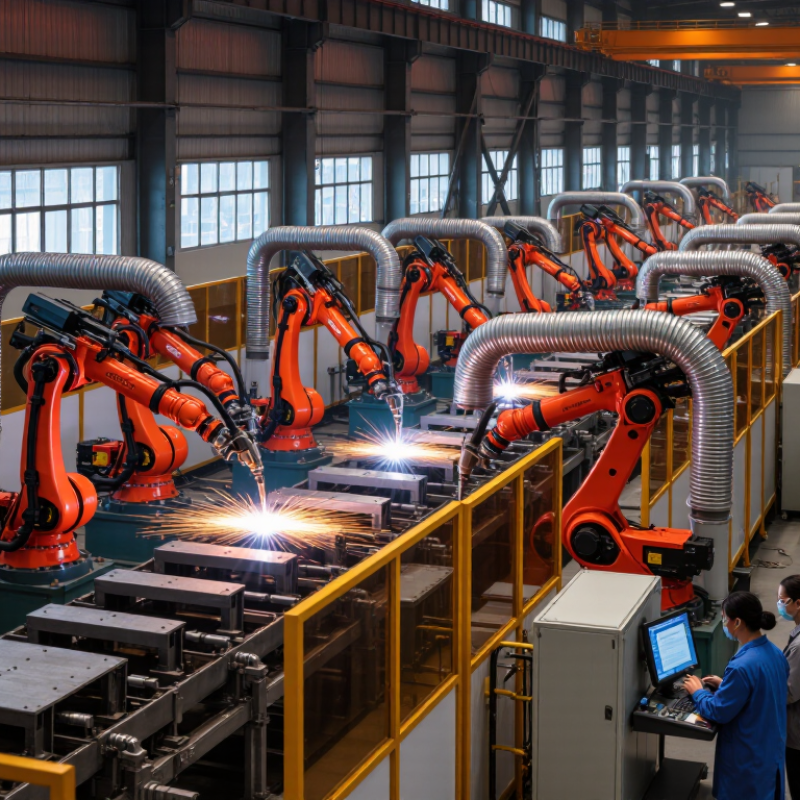
A robotic welding cell is a coordinated workstation that moves, joins, and checks metal parts with repeatable motion. It combines a robot with a welding process, workholding, controls, and safeguards. The cell’s job is not simply to guide a torch. It must keep the joint accessible and the part stable throughout each weld. Small shifts matter.
The robot arm follows a programmed path, while the torch and power source create the arc and deliver wire or other consumables. The fixture locates components; clamps resist heat and movement. For larger or awkward assemblies, a positioner may rotate the workpiece to maintain the torch angle.
Sensors can detect seams or verify part presence, but their value depends on setup and calibration. The controller coordinates robot motion, welding parameters, interlocks, and cycle timing.
A complete cell also needs an enclosure, access doors, emergency stops, and fume extraction suited to the process. These are production components, not optional polish. In practical reviews, inspect cable routing, fixture access, and how quickly operators can change a part. A neat drawing can conceal poor access. Even a well-specified system may need adjustment after real parts reveal distortion or fit-up variation. That is normal, though it should be measured and documented.
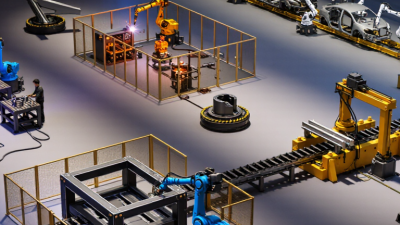
China’s robotic welding cell industry is organized around several connected layers, rather than a single type of manufacturer. Robot makers supply the motion platform, while welding-equipment producers provide power sources, torches, wire feeders, and controls. System integrators bring these parts together and configure the cell for a specific production task.
Many integrators specialize in practical applications, such as welding steel frames, vehicle components, or agricultural machinery. They design fixtures, set torch angles, and tune travel speed, current, and voltage. In a factory, that work may mean checking whether a part sits squarely in its jig before adjusting the robot’s path. Small details matter. Regional supplier networks can also shorten access to fabricated frames, safety enclosures, and service technicians.
The market includes both large turnkey projects and simpler cells for small or medium-sized workshops. Some manufacturers focus on hardware; others provide process testing, installation, operator training, and maintenance. These roles can overlap, so a supplier’s label alone does not show how much welding expertise it has. Buyers should ask for sample welds on their own materials and review cycle-time assumptions. The industry is not perfectly tidy, and service depth can vary. A polished demonstration is useful, but it may not reveal how a cell performs across a full production shift.
China’s robotic welding cell manufacturers are not one uniform group. Their strengths differ by workpiece size, joint type, production volume, and automation depth. Some focus on compact cells for brackets and small frames, pairing robots with positioners and dedicated fixtures. Others handle heavy components for construction equipment, rail, or steel structures. These systems need greater reach, stronger positioners, and careful torch-access planning. Fit matters most.
Tips: Share sample drawings, material thicknesses, and expected cycle times before comparing proposals. Ask how the supplier handles fixture changes and weld-seam variation. A cell can look impressive in a showroom but behave differently with real parts.
Leading manufacturers may also specialize in turnkey integration, offline programming, or retrofitting existing production lines. When assessing their expertise, review comparable installations and ask for measured cycle-time data. Check how they manage fume extraction, safety interlocks, and operator training. These details affect daily performance, not just commissioning. One limitation: published specifications rarely show every factory condition. A cautious buyer should test representative parts and leave room for process adjustments.
China’s robotic welding cell manufacturers differ less by robot arm alone than by how well they match a production line. High-mix job shops often need compact cells, quick-change fixtures, and simple recipe selection. Automotive suppliers may prioritize synchronized multi-robot welding, long reach, and automated part transfer. For thick or reflective materials, seam tracking and stable torch positioning matter more than headline speed. Small details count: a fixture that repeats accurately can prevent costly rework.
The International Federation of Robotics reported 276,288 industrial robot installations in China in 2023, representing 51% of global installations. This figure covers all industrial applications, not welding alone, but it signals a large and varied automation market. Compare systems by payload, working range, welding-process compatibility, safety functions, and integration support. Ask vendors to demonstrate your actual joint and material. A polished showroom weld proves little. Cycle-time estimates can also be optimistic; verify them with your fixtures and operators.
Tips: Bring sample parts. Check the weld bead, changeover time, and fault recovery. Ask who maintains the system. A cell that runs well only under ideal conditions may disappoint on a busy shift.
A standard industrial robot arm commonly has six axes. Adding a positioner or a linear track adds motion axes and can help handle more complex weld paths or larger workpieces. These are illustrative configurations, not a manufacturer ranking or market survey; actual cell designs vary by application.
Comparing robotic welding cell suppliers takes more than checking robot reach or quoted cycle time. Start with the actual part: material, thickness, joint access, and expected batch size. Ask how the cell manages torch angle, cable routing, and positioner movement around corners or deep seams. Fit matters. Request a trial weld on representative parts, then inspect penetration, bead consistency, distortion, and spatter—not appearance alone. The supplier should explain its process settings and how repeatability was measured. A polished demonstration is useful, but it is not production evidence.
Review the complete cell, not only the robot. Check fixture-change time, safety interlocks, fume extraction, guarding, and connections to existing equipment. Ask for cycle-time assumptions in writing, including loading, repositioning, and changeovers.
Compare training, maintenance instructions, spare-part availability, and service response arrangements; these details affect uptime after installation.
One detail is easy to miss: a fast weld may still create a bottleneck at loading. I would treat broad performance promises cautiously and ask which conditions they depend on.
Compare suppliers using the same technical questions and measurable evidence.
Contact Us
Pemamek Ltd