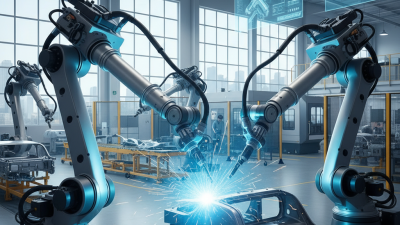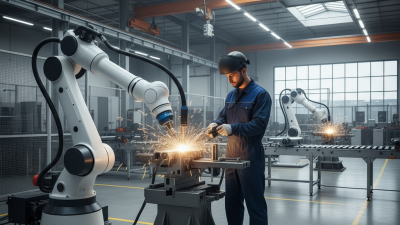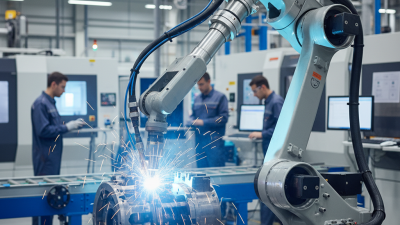
Choosing the best China cobot welding robot requires more than comparing prices, payloads, or advertised cycle times. The right system must fit the weld, fixture, workshop, and operator skill level. A robot that performs beautifully on short fillet welds may struggle with long seams, reflective surfaces, or unstable part positioning. The label “best” is useful, but incomplete.
Industry data shows why this decision matters. The International Federation of Robotics reported 541,302 industrial robots installed worldwide in 2023. China accounted for 276,288 installations, representing more than half of global demand. Its World Robotics 2024 report also ranked China among the leading countries in robot density. These figures indicate a mature automation market, but they do not prove that every Chinese cobot welding robot offers equal quality. Buyers still need evidence from real welding trials, factory references, and lifecycle testing.
A reliable evaluation should examine arc stability, wire feeding, torch collision protection, positional accuracy, and compatibility with MIG, MAG, or TIG processes. It should also check whether the package includes a positioner, fume extraction, safety devices, and technician training. ISO 10218 and ISO/TS 15066 provide important guidance for robot safety and collaborative applications. However, collaborative operation does not remove welding hazards, including heat, ultraviolet radiation, fumes, and sparks. Independent risk assessment remains essential. This guide compares leading China-based solutions through practical criteria, supplier capability, and measurable results. Some specifications are difficult to verify publicly, and that weakness deserves attention. A short factory demonstration may reveal more than a polished brochure.
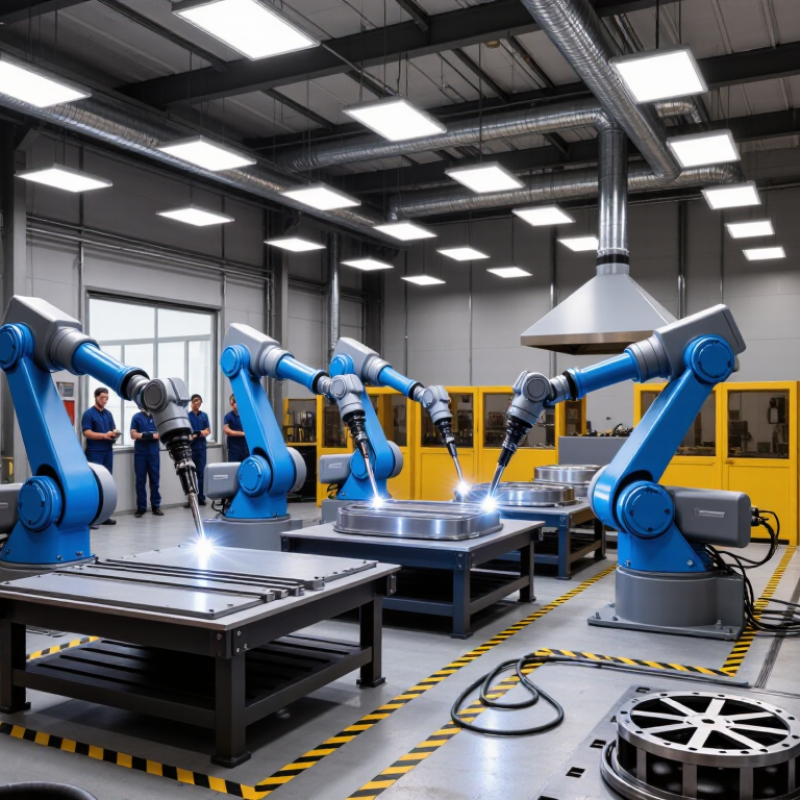
What defines a high-quality China cobot welding robot? The answer is not origin alone, nor a polished showroom video. Reliable quality begins with documented performance, traceable components, and safe integration. Industrial demand provides context. The International Federation of Robotics reported 276,288 industrial robot installations in China during 2023, representing about 51% of global installations in World Robotics 2024. This scale indicates strong manufacturing experience, but it does not automatically prove welding competence. Buyers should request repeatability tests, torch calibration records, weld samples, and service-response data. For arc welding, stable wire feeding, controlled gas flow, and accurate seam tracking matter more than headline payload. Small errors become visible as spatter, porosity, or uneven bead width.
Safety is equally decisive. ISO 10218 and ISO/TS 15066 provide useful references for robot safety and collaborative operation. A serious supplier should explain risk assessment, speed limits, force monitoring, guarding, and emergency-stop behavior. Do not accept a certificate without checking its scope. Cycle-time claims need a real workpiece, not an empty-arm demonstration. I would measure arc-on time, repositioning time, consumable usage, and defect rates across several shifts. That practical test often exposes weak programming or unstable fixtures. Cloud dashboards look impressive. Yet offline support can be slow, and spare-part availability may vary. One uncomfortable truth remains: even a capable cobot can produce poor welds when operators lack training. A high-quality system includes usable instructions, responsive technical support, and verifiable training records.
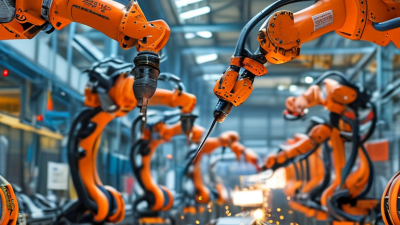
Choosing the best China cobot welding robot depends on the job, not the brochure. Compare payload, reach, repeatability, torch compatibility, and welding power-source integration. A compact cobot may suit small steel frames, while heavier fixtures require greater payload capacity. Check whether the controller supports your preferred welding process, such as MIG, MAG, or TIG.
Request a live sample using your own material, joint design, and welding position. Observe arc stability, bead appearance, spatter, and recovery after an interrupted weld. Ask how quickly operators can adjust parameters without advanced programming skills. Good suppliers should provide cycle-time data, training records, maintenance plans, and clear documentation. Service response matters.
Look beyond the purchase price. Calculate fixtures, safety equipment, installation, consumables, software, and operator training. Confirm that the system supports required safety assessments and workplace regulations in your region. A lower-cost option may become expensive if spare parts arrive slowly or local technicians lack experience. That risk is easy to underestimate.
The demonstration looked excellent. Production may differ.
I would also inspect the welding cell after several hours of operation. Heat, dust, cable movement, and fixture accuracy can expose weaknesses. No system is perfect. Your comparison should record both strengths and unresolved problems, then test whether the supplier offers practical solutions. A reliable choice is the cobot that delivers consistent welds, manageable downtime, and measurable value in your actual workshop.
The best Chinese collaborative welding robot is not defined by origin alone. It is defined by the welding task.
The International Federation of Robotics reported 276,288 robot installations in China during 2023, equal to 51% of global installations.
This scale has encouraged stronger local engineering, service networks, and application knowledge.
Short-run MIG or MAG welding suits a cobot well. Typical examples include brackets, frames, flanges, and small machine parts. These jobs often require repeated torch movement, consistent travel speed, and quick fixture changes. A cobot can follow programmed paths while an operator loads parts nearby. It also suits low-volume production, where a traditional robotic cell may be difficult to justify.
Keep the workpiece stable.
Keep the payload moderate.
Add a reliable positioner when access changes.
TIG welding needs more caution. Thin stainless components can benefit from controlled motion, but arc stability depends on cleanliness, fit-up, and shielding gas. A cobot cannot correct every poor joint automatically.
That assumption is too neat. The International Federation of Robotics stresses risk assessment and application-specific integration, not simple robot selection.
In practice, test welds should examine penetration, porosity, distortion, and operator access. A weld may look clean and still fail inspection. Heavy structural welding, unpredictable gaps, severe spatter, and complex three-dimensional joints may need a conventional industrial robot or skilled manual welder.
The best cobot welding robot is not simply the cheapest unit. It must control arc quality, motion, and operator access together. The International Federation of Robotics reported 541,302 industrial robots were installed worldwide in 2023. China represented more than half of these installations, showing strong demand for practical automation.
Safety deserves direct inspection. Look for risk assessment tools, adjustable speed limits, safe torque off, dual-channel emergency stops, and reliable restart prevention. A laser scanner or safety mat should protect the actual welding cell, not just the robot base. ISO 10218 and ISO/TS 15066 provide useful safety references, but compliance paperwork cannot replace a site test. Welding creates heat, fumes, sparks, and glare. These hazards still need guarding and extraction.
Control features affect daily productivity. The pendant should make waypoint teaching, torch-angle correction, weave adjustment, and fault recovery understandable. Short recovery steps matter. Integration is equally important. The controller should connect with PLCs, field networks, production software, and welding power sources. Job recipes, weld-current records, alarm history, and operator permissions improve traceability. The World Robotics 2024 report also shows how quickly robot adoption is expanding, yet adoption alone does not prove good integration. I would test a complete production cycle before purchasing. A smooth demonstration can hide awkward cable routing, unstable arc starts, or slow program editing. That is where many evaluations become too optimistic.
What Is the Best China Cobot Welding Robot?
Selecting the best China cobot welding robot starts with your production facts, not the lowest quotation. China installed 276,288 industrial robots in 2023, representing 51% of global installations, according to the International Federation of Robotics’ World Robotics 2024 report. This scale offers many capable options, but specifications can vary sharply between suppliers.
Check payload, reach, repeatability, torch compatibility, and positioner capacity together. A six-axis cobot may handle a small steel frame well, yet struggle with long welds or heavy fixtures. Ask for sample welds using your actual material, joint design, wire, and shielding gas. The weld bead should look consistent under changing operator conditions. It should not depend on one unusually skilled technician.
Safety and service deserve equal attention. Confirm compliance with ISO 10218 and ISO/TS 15066, then review emergency stops, speed limits, collision detection, and risk-assessment documents. The American Welding Society projects a US shortage of 330,000 welding professionals by 2028, making simple programming and fast training commercially important. Still, “easy to use” is vague. Request a live demonstration and measure setup time. Include spare-part availability, remote diagnostics, software language, warranty response, and local training in the total cost. I would also test the robot after a week of production; a polished demo can hide practical weaknesses.
| Selection Dimension | Practical Reference Range | Recommended Target | Why It Matters | How to Verify Before Purchase |
|---|---|---|---|---|
| Robot payload | 10–20 kg for common cobot welding packages | Select a payload at least 20% higher than the combined weight of the torch, cable package, mounting bracket, and accessories | Prevents overload, excessive vibration, and reduced positioning performance | Request the payload calculation, including wrist moment and center-of-gravity data |
| Working reach | Approximately 1.3–1.8 m for many welding cobot configurations | The entire weld area should be reachable without frequent repositioning of the robot or workpiece | A suitable reach improves cycle time and reduces fixture complexity | Provide the supplier with the workpiece dimensions, weld locations, and fixture layout for a reach study |
| Repeatability | Typically about ±0.02–0.05 mm, depending on robot class and test method | Choose a specification that is comfortably better than the dimensional tolerance required by the weld joint | Better repeatability supports consistent torch positioning and weld appearance | Check the published test standard and request a repeatability demonstration using your actual fixture |
| Welding process compatibility | MIG/MAG and short-circuit or pulse welding are common; TIG and other processes may require dedicated integration | The controller, welding power source, wire feeder, torch, and software must support the required process as one tested package | Compatibility affects arc stability, parameter control, and programming effort | Confirm the supported communication interface, welding modes, and parameter library in writing |
| Welding current and duty cycle | Common systems are configured around 200–500 A, depending on the power source and application | Rated current should exceed the required production current, with an appropriate duty cycle at the selected amperage | Prevents thermal limitations during long welds or high-volume production | Review the power-source duty-cycle chart rather than relying only on the maximum current value |
| Seam tracking and touch sensing | Options may include touch sensing, through-arc tracking, laser sensing, or no automatic tracking | Use at least one sensing method when part fit-up, distortion, or fixture variation is significant | Sensing reduces the effect of joint-position variation and can improve first-pass yield | Test the system with the smallest expected joint gap, surface condition, and dimensional variation |
| Programming and setup time | Graphical programming, hand-guiding, template welding, and offline programming are commonly available features | A new operator should be able to create or adjust a basic weld program after practical training | Shorter setup time is especially important for high-mix, low-volume production | Ask for a live programming trial using a representative workpiece, not only a product video |
| Safety functions | Collaborative systems generally provide monitored stop, speed limitation, force or power limitation, and protective stop functions | The complete cell—not only the robot arm—must satisfy the required risk assessment | Welding arc, heat, fumes, sparks, wire, fixtures, and sharp workpieces can still require guarding or additional controls | Request the safety manual, stop-category information, risk-assessment support, and applicable conformity documents |
| Installation and utilities | Typical requirements include a stable mounting surface, electrical power, shielding gas, compressed air where applicable, and fume extraction | The proposed package should match the factory’s power, gas, ventilation, and floor-load conditions | Utility mismatches can delay commissioning and reduce weld quality | Obtain a complete utility list, installation drawing, cable lengths, and recommended extraction capacity |
| Service and spare-parts support | Support quality varies by region; critical replacement parts may include dress packs, torch consumables, motors, encoders, and controller components | Choose a supplier that can provide local technical response, training, remote diagnostics, and a documented spare-parts plan | Downtime and response time often affect total cost more than the initial purchase price | Confirm response-time commitments, warranty terms, software support, training scope, and spare-parts lead times |
| Total cost of ownership | Includes the robot, welding equipment, fixtures, safety equipment, integration, training, consumables, maintenance, and downtime | Compare cost per accepted part and expected annual operating cost, not only the equipment purchase price | A lower initial price may be offset by integration work, consumables, maintenance, or low utilization | Request a complete quotation and calculate cycle time, utilization, labor savings, consumable use, and payback period |
Contact Us
Pemamek Ltd