2026 Best Welding Manipulator Buying Guide for Global Buyers?

Buying a welding manipulator is not simply a matter of choosing the largest machine. Global buyers must match equipment capability with real production conditions, welding procedures, and service resources.

Dr. John C. Lippold, a respected welding engineer and author, has stated, “Welding is a process, not merely an operation.” This principle matters when evaluating a welding manipulator. The machine must support stable arc positioning, accurate torch alignment, safe movement, and repeatable results. A heavy-duty model may appear attractive, yet excessive capacity can increase purchase, installation, and maintenance costs without improving production.

This 2026 buying guide examines the details that experienced users check before placing an order. These include workpiece weight, rotation speed, column-and-boom reach, travel length, control accuracy, duty cycle, welding process compatibility, and operator access. It also considers factory acceptance testing, spare-parts availability, technical support, documentation, and regional installation conditions. Small details matter. A poorly positioned cable can cause avoidable downtime.

Buyers should compare total ownership cost, not only the quoted price. A lower-cost welding manipulator may require more adjustments, longer commissioning, or unavailable replacement parts. That assumption can fail.

No buying guide is perfect. Site conditions differ. Supplier claims also need verification. Request test videos, dimensional drawings, load charts, reference projects, and clear warranty terms. A careful decision combines engineering evidence with practical production experience. The best machine is not always the most powerful one. It is the one that performs reliably, safely, and economically in your specific workshop.
2026 Best Welding Manipulator Buying Guide for Global Buyers?

What Is a Welding Manipulator and How Does It Work?

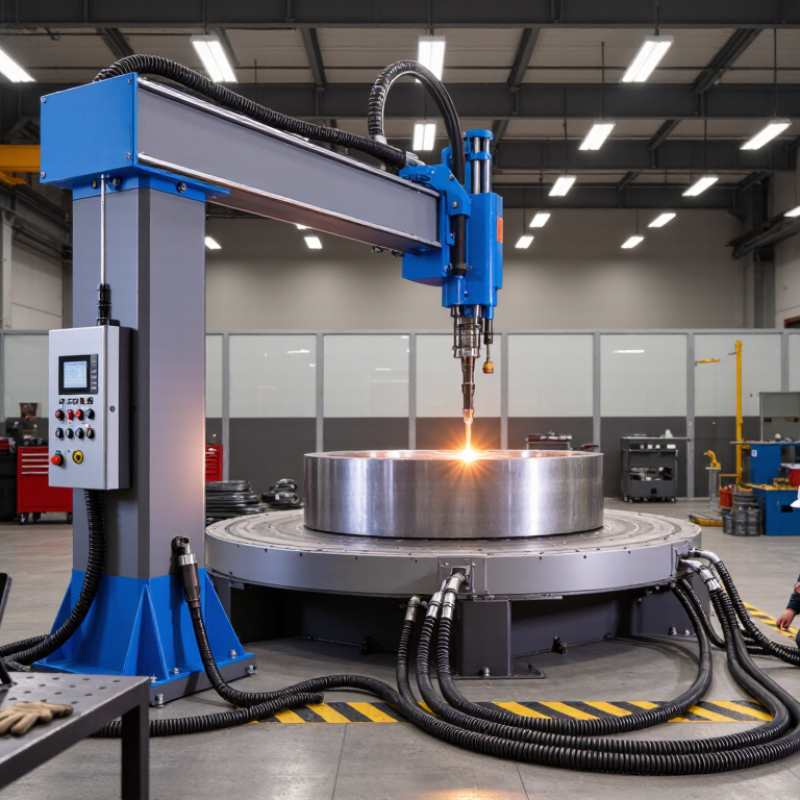
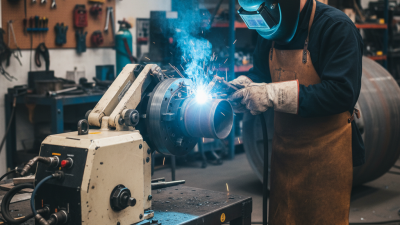
A welding manipulator is a powered column-and-boom machine that positions a welding torch around large workpieces. It helps maintain a steady torch angle, travel speed, and distance from the joint. Operators commonly use it for tanks, pipes, pressure vessels, and long structural welds.

The vertical column raises or lowers the boom. The boom travels horizontally, while a carriage moves the torch along the weld path. A control system coordinates these movements with the welding power source. In many installations, a separate positioner or turning roll rotates the workpiece. This combination keeps the joint within a comfortable working zone. Some manipulators also include seam tracking, camera monitoring, oscillation, or automatic voltage control.

Real workshop experience shows that automation does not remove every welding problem. Poor alignment, uneven fit-up, or changing plate thickness can still produce defects. A manipator follows its programmed path, sometimes too faithfully. Buyers should check rated load, boom reach, vertical travel, travel speed, control accuracy, and duty cycle. The working envelope matters more than a large headline capacity. Measure the largest planned workpiece, including fixtures and temporary supports. Allow extra clearance for torch cables and maintenance access. Local electrical standards and operator training also affect safe installation. A practical trial weld is valuable, because drawings rarely reveal vibration, heat distortion, or awkward access. կառավար
Which Welding Manipulator Types and Configurations Are Available?

2026 Best Welding Manipulator Buying Guide for Global Buyers

Which Welding Manipulator Types and Configurations Are Available?

Welding manipulators usually combine a vertical column, horizontal boom, and powered travel system. Fixed-column models suit repeatable work inside a dedicated welding cell. Traveling-column versions move along floor rails and cover long vessels or structural sections. Telescopic booms reach deeper seams, but they need stronger support and more careful alignment. Choose the type according to workpiece length, weld location, and available floor space.

Common configurations include fixed-height, adjustable-height, and rotating boom designs. A basic unit may provide boom lifting, extension, and 360-degree rotation. Advanced systems can add powered rail travel, welding torch oscillation, seam tracking, and synchronized control with a positioner. Load capacity matters, but reach matters just as much. A manipulator rated for five tonnes may still perform poorly when the weld sits far from its column.

In practical shop trials, smooth low-speed movement often matters more than impressive maximum speed. Operators need clear controls, emergency stops, limit switches, and stable braking. Check the working envelope with the largest planned workpiece, not today’s smaller one. One easy mistake is selecting by rated load alone. I have seen buyers overlook rail foundation accuracy and later face vibration during long welds. That detail deserves more attention. Configuration drawings, service access, power requirements, and local installation support should be reviewed before purchase.

2026 Best Welding Manipulator Buying Guide for Global Buyers? - Which Welding Manipulator Types and Configurations Are Available?

Typical industrial specifications and configuration options for welding manipulators. Actual values vary according to engineering design, safety requirements, and workpiece geometry.
Manipulator Type Typical Load Capacity Typical Vertical Stroke Typical Horizontal Stroke Column or Boom Movement Recommended Workpiece Range Common Applications Advantages Important Buying Considerations
Fixed Column-and-Boom Manipulator Approximately 1–20 tonnes 1.5–6 m 1.5–8 m Vertical elevation with motorized boom extension; fixed floor position Small to large cylindrical vessels and longitudinal seams Pressure vessels, storage tanks, pipe seams, structural fabrication Simple layout, stable welding position, economical for dedicated production lines Confirm floor loading, welding envelope, boom rigidity, and access for maintenance
Traveling Column-and-Boom Manipulator Approximately 3–100 tonnes 2–10 m 2–12 m Motorized travel along floor rails or a prepared track, plus vertical and horizontal boom movement Long vessels, large pipe sections, beams, and multi-joint assemblies Large pressure equipment, wind-tower components, shipbuilding, heavy structural work Covers a large production area and supports several welding stations Check rail alignment, travel accuracy, floor foundation, collision protection, and emergency stops
Wall-Mounted Manipulator Approximately 0.5–10 tonnes 1–5 m 1–6 m Boom travels from a wall-fixed column or bracket Small and medium vessels, pipe fittings, and confined production bays Fabrication workshops with limited floor space and repeatable seam locations Saves floor area and can be positioned close to existing welding equipment Verify wall or structural-frame strength, anchor design, reach, and operator visibility
Telescopic Boom Manipulator Approximately 1–30 tonnes 2–8 m 3–15 m effective reach Telescopic horizontal extension combined with vertical elevation; optional travel axis Deep vessels, large-diameter pipes, and assemblies requiring extended reach Internal vessel welding, circumferential seams, nozzle connections, and long components Provides greater reach without an extremely long fixed boom Evaluate boom deflection, payload at maximum extension, cable management, and access clearance
Rotating-Column Manipulator Approximately 1–50 tonnes 1.5–8 m 2–10 m Column rotates around its vertical axis, with additional boom elevation and extension Multiple vessels or workstations arranged around one manipulator Flexible fabrication cells, pressure-vessel welding, and multi-position production Expands working coverage and reduces the need for multiple fixed units Confirm rotation envelope, base stability, cable routing, stopping accuracy, and interference zones
Compact or Portable Manipulator Approximately 50 kg–2 tonnes 0.5–2.5 m 0.5–3 m Manual or motorized positioning; usually fixed to a compact base Small vessels, pipe sections, brackets, and short production runs General fabrication, repair work, educational facilities, and flexible workshops Low installation cost, easy relocation, and suitable for varied small components Check stability, maximum arm reach, manual handling limits, and available electrical supply

Key Configuration Options for Global Buyers

Configuration Dimension Available Options Typical Selection Criteria Practical Recommendation
Mounting Method Floor-mounted, rail-mounted, wall-mounted, or integrated with a welding cell Available floor area, foundation strength, required coverage, and production layout Use rail-mounted systems for long components or when multiple welding positions must be reached
Number of Motion Axes Two-axis, three-axis, four-axis, or multi-axis systems Seam location, component geometry, welding process, and required tracking accuracy Select only the axes required for stable torch positioning; unnecessary axes increase cost and maintenance
Vertical Elevation Motorized lift, screw lift, rack-and-pinion lift, or hydraulic lift Payload, stroke length, positioning accuracy, duty cycle, and maintenance preference Motorized mechanical lifting is commonly preferred for repeatable industrial positioning
Boom Extension Fixed-length, motorized horizontal travel, or telescopic extension Required reach, load at full extension, workpiece depth, and deflection control Specify payload at maximum extension rather than only the rated payload near the column
Column Rotation Non-rotating, limited-angle rotation, or continuous rotation Number of workstations, required working radius, cable routing, and collision risks Use rotation when one manipulator must serve several fixtures or vessels
Control System Pendant control, push-button control, programmable control, or integrated cell control Operator skill, repeatability, production volume, data recording, and automation level Choose programmable control for repeated weld paths and manual pendant control for varied jobs
Welding Process Compatibility SAW, GMAW, FCAW, GTAW, or multi-process arrangements Material type, plate thickness, joint design, deposition rate, shielding method, and weld quality requirements Confirm torch mounting, wire-feeder support, cable length, flux recovery, and power-source interface
Positioning Accuracy Basic positioning, variable-speed positioning, or servo-assisted positioning Joint tolerance, weld tracking requirements, production repeatability, and inspection standards Request repeatability data under the intended payload and extension conditions
Safety Package Emergency stops, upper and lower limit switches, overload protection, travel limits, guarding, and warning signals Local regulations, risk assessment, operator access, load size, and integration with other equipment Require a documented risk assessment, emergency-stop circuit, and clearly defined safe working envelope
Electrical Standard Different supply voltages, frequencies, control voltages, and enclosure protection levels Destination-country power supply, factory environment, dust, moisture, and service availability Confirm voltage, frequency, grounding, control-panel requirements, and applicable conformity documentation before ordering
Buyer’s data checklist: workpiece length and diameter, maximum mass, seam position, required welding process, welding current, duty cycle, stroke dimensions, positioning accuracy, floor conditions, power supply, local safety requirements, and expected production hours per day.

How to Match Manipulator Size and Capacity to Your Welding Tasks

For global buyers in 2026, selecting a welding manipulator starts with the weld, not the catalog. Map the workpiece length, diameter, weight, and center of gravity. Then record joint locations and required torch angles. These details determine the needed reach, lifting height, and rotation range. A small unit may lift the load but still position the torch poorly. Fit matters. Measure it.

During a vessel project, I saw a manipulator handle its rated load while struggling with an off-center fixture. The movement became slow, and torch alignment needed frequent correction. Dynamic movement creates different forces than static lifting. Choose rated capacity above the workpiece weight, especially with long or eccentric loads. A practical margin improves stability. However, excessive capacity can increase cost and floor space without improving weld quality.

Ask for a load chart, not only a maximum capacity figure. Verify horizontal reach, vertical stroke, rotation speed, and duty cycle against your actual welding schedule. Run a trial with a representative fixture, torch package, and cable arrangement. Watch for vibration at full extension. Do not ignore cable routing. Poor routing can restrict travel and damage components. Review control visibility, emergency stopping, maintenance access, and local electrical requirements. One honest limitation remains: calculated capacity cannot replace a realistic shop-floor test.

2026 Welding Manipulator Sizing Guide

Typical planning values for matching manipulator capacity and travel to common welding tasks. Select a rated payload above the combined workpiece, fixture, and tooling weight, with sufficient vertical travel for the weld zone.

How to use this chart: Smaller pipe and vessel work commonly fits manipulators rated around 0.5–2 tonnes, while large vessels, tank shells, and heavy structural assemblies may require 5–20 tonnes or more. Confirm the required boom reach, column height, rotation speed, fixture weight, and workpiece center of gravity before purchasing.

Which Technical Features Matter When Comparing Global Suppliers?

2026 Best Welding Manipulator Buying Guide for Global Buyers

When comparing global suppliers, begin with payload, reach, and positioning accuracy. The manipulator must handle the torch, boom, fixtures, and cable weight safely. Ask for repeatability data under real welding loads, not empty-machine testing. A 0.1-millimeter claim means little without its measurement method. The International Federation of Robotics reported 541,302 industrial robots installed worldwide in 2023, showing stronger demand for reliable automation. Welding manipulators now need better integration with robotic cells, sensors, and programmable controllers.

Check rotation speed, travel range, duty cycle, and control compatibility. A wide speed range helps welders manage different diameters and joint positions. Servo drives usually provide smoother starts than basic motor systems. Look for overload protection, emergency stops, guarded moving parts, and documented risk assessments. ISO 12100 and ISO 13849 provide useful references for machine safety and control reliability. Ask suppliers for factory acceptance test records, wiring diagrams, spare-parts lists, and remote-support response times.

Do not choose only by maximum capacity. A stronger frame may increase floor loading and installation costs. I have seen specifications that looked excellent, yet cable routing caused frequent interference. That detail deserves attention. Request a sample weld test using your actual workpiece, positioner, and welding process. Review heat distortion, arc stability, access clearance, and maintenance time. Energy consumption also matters, although many buyers overlook it during tender reviews. The lowest quotation can become expensive when calibration, training, and replacement parts are excluded.

How to Evaluate Safety, Compliance, Installation, and After-Sales Support

2026 Best Welding Manipulator Buying Guide for Global Buyers

A welding manipulator must protect people before it improves production speed. During a factory assessment, inspect emergency stops, guarding, limit switches, and overload protection. Ask whether operators can reach controls without entering the movement zone. Check the load rating at the actual arm extension, not only the advertised maximum. Safety labels should remain readable after years of heat, dust, and cleaning.

Compliance needs careful verification. Request risk assessments, electrical diagrams, test records, and material certificates. Confirm that the equipment can meet the safety and electrical requirements of its installation country. A supplier’s declaration alone may not answer every local inspection question.

That detail is often missed. Review welding cables, grounding points, noise levels, and radiation controls with a qualified engineer. Requirements differ across regions.

Installation quality affects alignment, repeatability, and service life. Measure floor strength, anchor positions, ceiling clearance, and power capacity before ordering. Ask for foundation drawings, commissioning steps, operator training, and spare-parts lists. Remote support is useful, but it cannot replace practical troubleshooting when a gearbox overheats. After-sales terms should define response times, warranty limits, replacement procedures, and technician availability. I would not trust vague promises. Ask for service examples, maintenance schedules, and clear escalation contacts. Even experienced buyers can overlook software updates or incompatible welding equipment, so leave room for a second technical review.

Contact Us