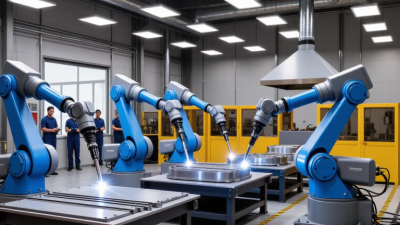
China Top Cobot Welding Robot Manufacturers and Suppliers
China has become a major source of collaborative welding solutions for factories of many sizes. A cobot welding robot can support repetitive welding tasks while preserving valuable floor space. However, choosing a reliable manufacturer requires more than comparing online prices.
This guide examines leading Chinese manufacturers and suppliers through practical purchasing criteria. These include welding accuracy, payload capacity, reach, torch compatibility, programming methods, and cycle consistency. It also considers installation support, operator training, spare parts, and documented quality controls. Factory visits, sample welds, and application testing often reveal more than product brochures. Look closely at bead appearance, heat distortion, fixture stability, and restart performance after interruptions.
Experience matters. A supplier serving automotive, metal furniture, agricultural equipment, or stainless-steel workshops may understand different production pressures. Professional engineering teams should explain robot limits clearly. They should also recommend suitable power sources, positioners, safety devices, and extraction systems. Certification records and traceable testing improve confidence, especially for overseas buyers.
No supplier is perfect. Some product data remains difficult to verify remotely. After-sales response times may also vary between regions. That uncertainty deserves attention. Readers should request reference projects, maintenance procedures, warranty terms, and realistic delivery schedules before signing an agreement. A capable cobot welding robot supplier does not simply sell equipment. It helps create a safer, repeatable, and measurable welding process. The final choice should reflect actual workpiece geometry, production volume, operator skill, and long-term service expectations.
Cobot Welding Robots: Definition, Components, and Core Applications
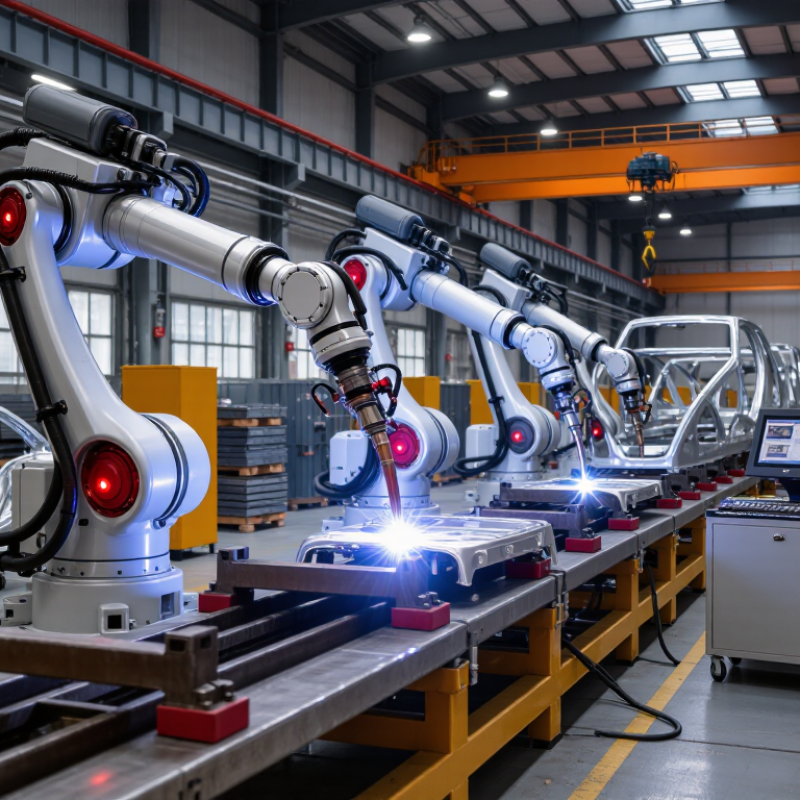
A collaborative welding robot, or cobot, is a programmable arm designed to work near trained people. Unlike a fixed industrial cell, it supports smaller batches and frequent product changes. Its system includes the robot arm, controller, welding power source, torch, wire feeder, gas supply, sensors, and safety devices. The controller coordinates torch speed, angle, current, voltage, and travel path. A teach pendant records points along a joint. This sounds simple. It is not.
Core applications include MIG/MAG fillet welds, tack welding, seam tracking, fixture loading, and repetitive repair work. Cobot welding suits frames, cabinets, agricultural parts, and fabricated steel assemblies. Strong results require stable fixtures, clean joint preparation, and consistent material thickness. In shop testing, a small gap can cause porosity, undercut, or an uneven bead. Human welders still inspect fit-up, select procedures, and respond to changing surfaces. A cobot improves repeatability, but it cannot fix poor design or careless setup.
Tips:
Check torch access before choosing a supplier or system. Request sample welds using your actual material and joint position. Confirm training, spare-part support, software access, and documented safety functions. Keep a skilled operator involved during commissioning. Review welds through proper inspection methods, not appearance alone. Some production estimates look attractive, yet changeover time may reduce real savings. Measure cycle time honestly, including loading and correction work.
China’s Robot Market: 276,288 Installations in 2023, IFR Data
China’s robot market reached 276,288 industrial robot installations in 2023, according to IFR data. This figure shows strong manufacturing demand, but it does not represent collaborative robots alone. Cobot welding is one specialized segment within this broader market.
For buyers comparing Chinese cobot welding robot manufacturers and suppliers, installation volume is only one signal. A reliable supplier should explain payload, working radius, torch compatibility, seam tracking, and welding process control. Factory trials matter. Watch the robot weld short fillets, corners, and uneven joints. Ask for repeatability records, operator training, maintenance procedures, and local spare-part support.
Safety also needs practical attention.
A collaborative arm may work near people, but the welding arc, heat, fumes, and moving fixtures still require proper safeguards. Suppliers should provide risk assessments and documented compliance information for the target market. Service response can matter more than a low initial quotation. One uncomfortable point remains: market statistics may suggest easy growth, while real deployment can face unstable parts, inconsistent workpieces, or limited programming skills. A careful evaluation should include production data from a similar workshop, not only a polished demonstration.
How to Rank Chinese Cobot Welding Manufacturers and Suppliers
To rank Chinese cobot welding manufacturers and suppliers, begin with verified delivery records, not attractive websites.
The International Federation of Robotics reported 541,302 industrial robots installed worldwide in 2023. China accounted for 276,288 installations, or about 51% of global demand. However, general robot volume does not prove welding competence. Ask for customer references, weld samples, production cycle data, and uptime records from comparable workshops.
Technical scoring should cover arc stability, seam tracking, torch accessibility, payload accuracy, and programming time.
A strong supplier should demonstrate repeatable welds on steel, stainless steel, and uneven joints. Request results from destructive testing and visual inspection. These details matter more than maximum reach.
Safety integration also deserves serious attention. Check risk assessments, protective devices, collaborative operating limits, and documentation aligned with applicable machinery standards. Service response time matters too. A robot that waits two weeks for a technician can erase labor savings quickly.
The International Federation of Robotics also reported more than 1.7 million industrial robots operating in China by the end of 2023. That installed base suggests stronger local support networks, but it does not guarantee cobot welding expertise.
Score suppliers using weighted evidence: 30% welding performance, 20% reliability, 15% engineering support, 15% safety documentation, and 20% total ownership cost.
This model is imperfect. Small suppliers may lack polished reports yet deliver excellent integration. Independent factory visits remain essential. Test the system on your actual parts. Fancy demonstrations can mislead.
Leading Chinese Brands: Payload, Reach, Precision, and Certifications
China’s cobot welding manufacturers and suppliers serve applications from light sheet-metal work to heavy structural fabrication. Their product ranges often cover payloads of 3 to 20 kilograms. Smaller models suit compact welding cells and thin assemblies. Larger models handle longer torches, cable packages, and heavier fixtures.
Reach commonly spans 600 to 1,800 millimeters. A longer arm can reduce repositioning, but it may need more floor space.
Precision deserves closer attention than headline payload figures. Many suppliers publish repeatability between ±0.02 and ±0.05 millimeters.
Real weld quality also depends on torch alignment, fixture rigidity, wire feeding, and operator setup. Specifications can mislead.
In factory evaluations, buyers should request sample welds using their actual steel thickness and joint design. Inspect bead width, penetration, spatter, and restart performance. Ask for documented testing procedures, not only marketing charts.
Reliable suppliers should provide traceable quality records and support for ISO 9001 systems. Safety documentation should address applicable machinery requirements, collaborative operation, and risk assessment. Certifications may include CE-related conformity documents or compliance with ISO 10218, depending on the target market.
A torch may fit within the rating yet overload the wrist during rapid movement. Some suppliers also offer vision integration, seam tracking, teach pendants, and remote technical support. These features improve deployment, though software quality varies.
A practical trial often reveals limitations that brochures omit. Calibration routines, spare-part access, and technician response times deserve equal attention.