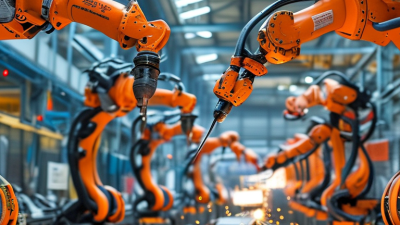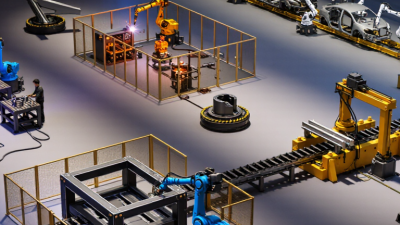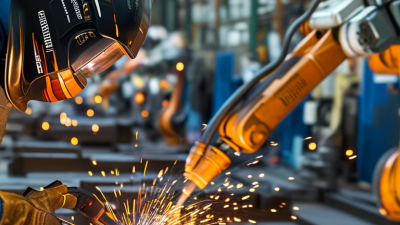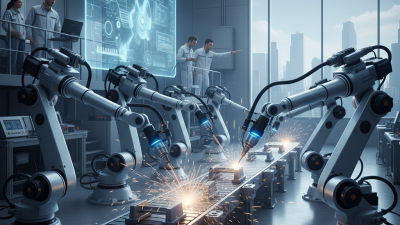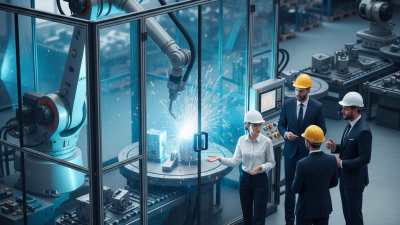
A robotic welding cell is not simply a robot beside a welding torch. It is a coordinated system of fixtures, safety equipment, power sources, software, and support. For global buyers, choosing a manufacturer means examining how these parts work together on real production tasks. A polished brochure helps, but it cannot prove that a cell will suit your parts, operators, and output targets.
Joseph F. Engelberger, a pioneer of industrial robotics, is often credited with saying, “I can’t define a robot, but I know one when I see one.” His line points to a practical truth: the label matters less than the system’s performance. Buyers should ask manufacturers for weld samples, cycle-time assumptions, fixture details, and clear service arrangements. Look closely at the bead, too. A consistent weld starts with repeatable positioning and a process suited to the material.
This guide compares robotic welding cell manufacturers through capabilities, customization, integration, training, and after-sales support. It also considers global delivery needs, such as documentation, spare parts, and local technical assistance. Those details can decide whether a cell stays productive after installation. Still, a shortlist cannot replace a plant-specific review. That part is easy to overlook. Share representative parts and production data before requesting a final proposal, then confirm the cell’s limits as carefully as its strengths.
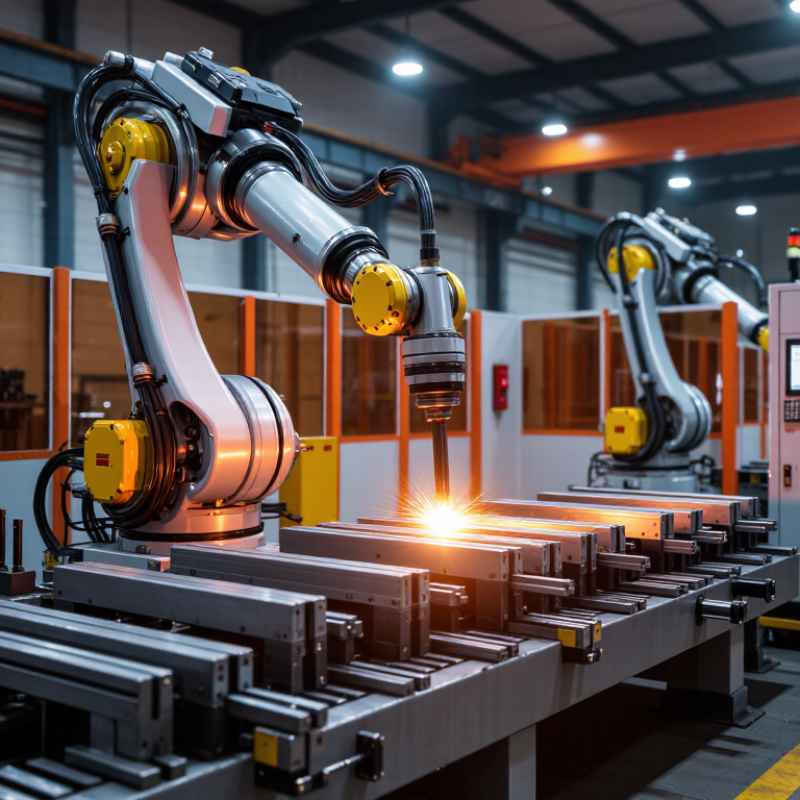
A robotic welding cell is a coordinated work area where a robot, welding equipment, fixtures, and safety systems perform repeatable joining tasks. It is more than a robot arm behind a barrier. The cell’s layout must give the torch, cables, and workpiece enough clearance throughout each motion. Small details matter.
At its center, a robot follows programmed paths while a welding power source controls current and voltage. A torch, wire feeder, and gas delivery system support the weld process. Fixtures locate parts consistently; poorly seated components can create gaps that no polished program can correct. Sensors may check part position, seam location, or process conditions, depending on the application. The controller coordinates these devices and stores recipes for different jobs.
Safety fencing, access doors, and interlocks help keep operators outside hazardous motion zones. Fume extraction and cable management also affect daily usability, though they are sometimes treated as afterthoughts. Integration is rarely perfect on the first try. A cell may need adjustments when real parts vary from the clean samples used during setup. Buyers evaluating manufacturers should ask for cycle-time assumptions, supported materials and thicknesses, maintenance access, and clear operating documentation. Those details reveal whether the proposed cell fits the actual production floor.
| Cell Component | Purpose | Common Configurations | What Buyers Should Evaluate | Useful Acceptance Evidence |
|---|---|---|---|---|
| Industrial robot | Moves the welding torch along programmed paths and coordinates motion with the welding process. | Articulated multi-axis robot; floor-, wall-, or ceiling-mounted installation depending on the cell layout. | Payload and reach for the torch and cables; working envelope; repeatability; service access; compatibility with the intended welding process. | Application-specific reach study, cycle-time trial, and documented repeatability specifications. |
| Welding power source | Supplies controlled current and voltage to create the weld arc. | Process-specific equipment for methods such as gas metal arc welding (GMAW/MIG), gas tungsten arc welding (GTAW/TIG), or flux-cored arc welding. | Process capability, output range, duty cycle, communication with the robot controller, and availability of qualified process settings. | Process test results on representative material, thickness, joint design, and consumables. |
| Welding torch and cable package | Directs the electrode, shielding gas, and electrical current to the joint. | Air-cooled or water-cooled torch; torch neck and cable arrangement selected for access and duty requirements. | Joint accessibility, cable routing, consumable availability, cooling requirements, and ease of replacement. | Demonstration of torch access, cable clearance, and a practical consumable-change procedure. |
| Workholding fixture | Locates and secures parts so joints are presented consistently to the torch. | Dedicated fixture for a stable part family; modular or adjustable fixture for a wider range of parts. | Part location repeatability, clamping access, distortion control, loading ergonomics, and protection from weld spatter. | Fixture drawings, datum strategy, loading trial, and checks using representative production parts. |
| Positioner or workpiece manipulator | Rotates or reorients the part to improve torch access and maintain a suitable welding position. | Single-axis rotary positioner, multi-axis positioner, or fixed worktable where part geometry permits. | Rated load and moment, usable rotation range, synchronization with robot motion, and safe loading method. | Load and reach validation using the actual workpiece and fixture, including cable-clearance checks. |
| Seam-finding or tracking sensors | Help locate a joint or adjust the torch path when part fit-up varies. | Touch sensing, through-arc sensing, or optical laser-based sensing, selected for the joint and production conditions. | Required joint variation, surface condition, sensor access, calibration needs, and behavior when a seam cannot be detected. | Trials covering the expected range of part and joint variation, with documented detection limits. |
| Robot controller and cell software | Coordinates robot motion, welding parameters, peripheral equipment, and operator interface. | Robot controller integrated with a welding system and cell-level control; recipe or job selection for repeatable production. | Program management, fault recovery, data exchange, language and interface requirements, and access control. | Demonstration of job selection, program backup and restore, alarm handling, and production-data access. |
| Safety guarding and interlocks | Protect personnel from hazards such as robot motion, arc radiation, hot workpieces, and welding spatter. | Fixed guarding with interlocked access doors; light curtains or other protective devices where the risk assessment supports their use. | Risk assessment, access points, safe operating modes, emergency-stop coverage, and applicable local safety requirements. | Documented risk assessment and verification of safety functions before production use. |
| Fume extraction and filtration | Captures and manages welding fumes at or near their source to help control workplace exposure. | Local extraction hood, torch extraction, or an engineered combination with suitable filtration and discharge arrangements. | Capture position, airflow needs, filter maintenance, interference with shielding gas, and applicable workplace regulations. | Extraction performance checks and a maintenance plan appropriate to the process and materials. |
| Process monitoring and quality checks | Records selected process information and supports inspection of completed welds. | Welding parameter monitoring, part-presence checks, visual inspection, and additional inspection methods where required by the specification. | Traceability needs, data retention, inspection criteria, and the difference between process monitoring and weld verification. | Approved inspection plan, sample weld evaluations, and clearly defined records for each production job or batch. |
| Wire feed and consumable handling | Supplies filler wire and other process consumables at a controlled rate where the welding method requires them. | Wire feeder, spool or bulk-pack supply, and compatible liners and contact tips for the selected wire. | Wire type and diameter, feed stability, changeover time, storage conditions, and availability of consumables. | Continuous feed trial using the intended wire and documented replenishment and changeover instructions. |
| Cell layout and production interface | Connects the welding operation to part loading, unloading, material flow, and adjacent production equipment. | Manual-load cell, dual-station arrangement, or integrated automated handling, depending on throughput and staffing needs. | Part presentation, operator reach, cycle balance, maintenance access, floor space, utilities, and upstream/downstream interfaces. | Layout drawing, interface list, utility requirements, and a production trial with the intended operating sequence. |