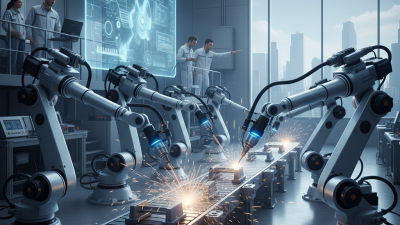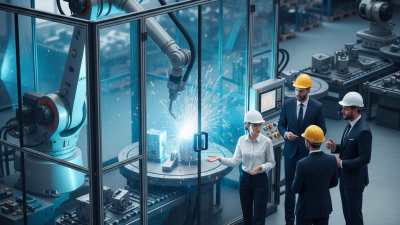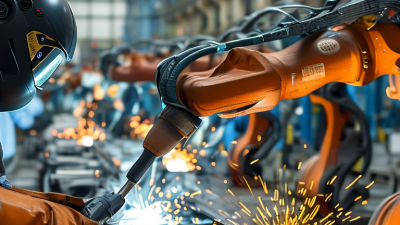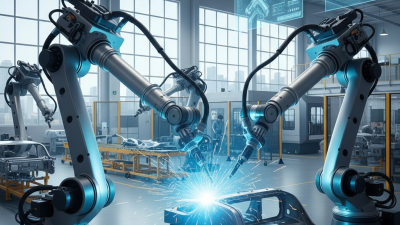
What Are the 2026 Top Robotic Welding Cell Types? This question matters as manufacturers face tighter delivery schedules, labor shortages, and demanding weld-quality targets. A robotic welding cell combines robots, power sources, positioners, sensors, safety systems, and process software. Its value depends on how these elements fit the real production floor.
The International Federation of Robotics reported 541,302 industrial robots installed worldwide in 2023, showing continued automation across manufacturing. Its World Robotics 2024 report also recorded a global robot density of 162 units per 10,000 manufacturing employees. These figures do not measure welding alone. However, they reveal the expanding automation base supporting automotive, heavy equipment, fabrication, and metal-component production. Industry research from Grand View Research also identifies welding as a major industrial robotics application, driven by repeatability and productivity requirements.
The leading 2026 cell types will likely include fixed single-station cells, dual-station cells, positioner-based cells, track-mounted systems, collaborative welding cells, and flexible multi-robot lines. Each type solves a different problem. A dual-station cell may weld one fixture while an operator unloads the other. A track-mounted robot can reach a three-meter frame without repeated repositioning. A collaborative system may improve access for low-volume work, but it cannot replace every guarded high-speed cell.
The choice is rarely obvious. Floor space, joint access, part variation, fixture accuracy, fume extraction, and operator training all influence results. A technically impressive cell can still underperform when fixtures drift or programming takes too long. This overview compares the main robotic welding cell types for 2026, using practical production factors and established industry evidence rather than optimistic marketing claims.
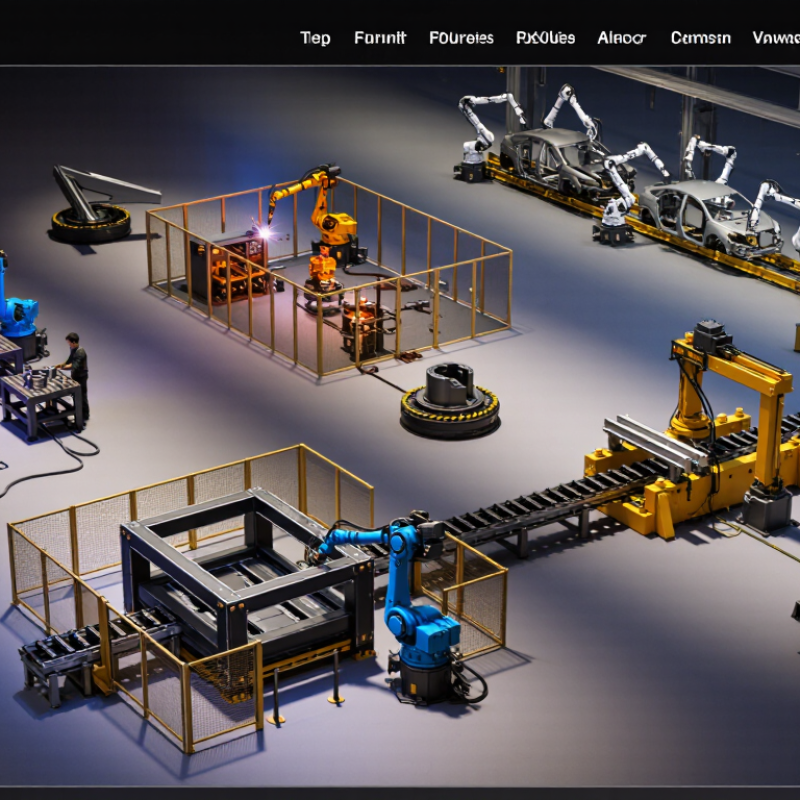
Robotic welding cells combine a robot, power source, fixture, sensors, guarding, and control software. Their classification usually begins with motion, workpiece flow, and operator access.
A fixed-position cell welds one assembly at a time. It suits repeatable frames, brackets, and medium-volume production. Rotary indexing cells use two stations. One side welds while the operator loads the other. This can reduce idle time.
Track-mounted cells move along a rail and reach several fixtures. They fit long structures, but rail alignment needs careful inspection. Multi-axis cells rotate the workpiece or use coordinated positioners. They improve torch angles and reduce awkward welds.
In 2026, sensor-assisted cells are gaining attention because seam tracking can correct small fit-up changes. Small changes matter.
Collaborative cells support selected low-risk tasks near trained workers, although welding still requires controlled access and suitable protection. Hybrid cells combine robotic welding with manual loading, inspection, or finishing. The best type depends on joint design, batch size, floor space, and required tolerances.
I have seen efficient cells underperform because fixtures were treated as an afterthought. That mistake is expensive.
A practical review checks cable routing, fume extraction, calibration records, emergency stops, and access around every fixture.
Classification is useful, but real performance depends on the complete work system. There is no perfect layout.
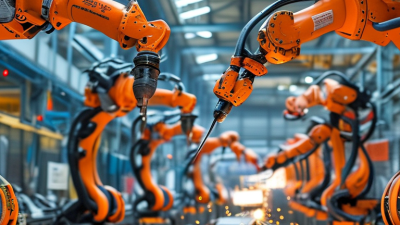
Single-station robotic welding cells support flexible production when product variety matters. Each cell combines a robot, welding power source, fixture, safety enclosure, and operator controls. A compact layout can handle frames, brackets, housings, and other medium-sized assemblies. Operators load one part while the robot completes programmed weld paths. This arrangement reduces walking distance and keeps material flow visible.
In practical factory assessments, fixture design often decides cell performance. A rigid fixture may improve repeatability, but quick-change locating pins support more product variations. Sensors can verify part presence, clamp position, and correct loading before welding begins. A positioner can rotate the workpiece, helping the torch maintain a stable angle. That detail affects bead shape, penetration, and rework rates.
Single-station cells are not automatically flexible. Poor access around the joint can force extra robot movements and slow the cycle. I have seen cells with advanced controls still lose time because operators struggled with heavy fixtures. The design was technically sound, but uncomfortable in daily use. Engineers should test loading height, visibility, changeover steps, and maintenance access with real operators. Some production teams also underestimate programming time for new parts. That weakness deserves attention. A useful 2026 cell design should balance automation, operator control, weld quality, and practical changeover speed.
What Are the 2026 Top Robotic Welding Cell Types?
Multi-Station Cells for High-Throughput Manufacturing
Multi-station robotic welding cells are becoming central to high-throughput manufacturing in 2026. They reduce idle time by loading one fixture while another is being welded. Rotary dual-station cells suit repeated frames, brackets, and tubular assemblies. Linear transfer cells handle longer parts and controlled production flow. Pallet-shuttle cells support mixed models with faster fixture changes. Modular cells offer flexibility when product designs change often.
In a well-planned cell, robots reach fixtures without awkward repositioning. Sensors can verify part presence, while seam tracking helps manage small fit-up variations. A typical layout separates loading, welding, inspection, and unloading zones. This improves movement and reduces unnecessary handling. However, higher speed is not automatically better. Poor fixture accuracy can create weld defects faster. The perfect layout rarely exists. Production trials still reveal surprises.
Tips: Measure real cycle time, not theoretical speed. Leave space for maintenance access and safe material movement. Test clamps with dirty, warm, and slightly varied parts. Review weld quality after several shifts, not one successful sample. Also, train operators to recognize fixture wear, cable damage, and unusual arc behavior. A short checklist helps. For reliable results, compare station balance, changeover time, extraction performance, and inspection data before choosing a cell type.
| Robotic Welding Cell Type | Typical Station Configuration | Best-Fit Production Profile | Typical Part Handling and Changeover | Throughput Characteristics | Key Advantages | Main Limitations | Common Welding Processes | Recommended Applications |
|---|---|---|---|---|---|---|---|---|
| Dual-Station Positioner Cell | One robot serves two workholding stations, usually through a rotating or indexing positioner. One station can be welded while the other is loaded or unloaded. | Medium-volume production with repeated parts and moderate product variation. | Manual or assisted loading; changeover commonly uses removable fixtures, quick clamps, and programmed fixture offsets. |
High utilization potential Welding can continue during operator loading, reducing robot idle time. Practical output is strongly affected by load and unload duration. |
Lower footprint Good labor efficiency Straightforward programming Moderate investment | Limited simultaneous welding capacity; the robot may wait if loading or fixture access takes longer than the weld cycle. | Gas metal arc welding, pulsed arc welding, flux-cored arc welding, and robotic stud or tack operations. | Frames, brackets, agricultural components, structural subassemblies, and medium-sized fabricated parts. |
| Rotary Indexing Multi-Station Cell | A rotary table or indexing carousel carries multiple fixtures through loading, tack, welding, inspection, and unloading positions. | High-volume production with a stable product family and repeatable routing. | Dedicated fixtures provide repeatable location. Changeover may require fixture replacement or modular tooling plates. |
Very high repetitive throughput Indexing time and station balance determine the line rate; the slowest station generally controls output. |
Balanced takt time Reduced non-welding time Consistent positioning Easy line integration | Less suitable for frequent design changes; fixture investment and station balancing can be substantial. | Gas metal arc welding, pulsed arc welding, resistance spot welding, and hybrid welding where configured. | Repeated chassis parts, seat structures, appliance frames, automotive-style subassemblies, and welded housings. |
| Palletized Multi-Station Cell | Multiple fixture pallets circulate between loading, welding, inspection, and buffer locations. One or more robots can access each welding zone. | High-mix, medium- to high-volume manufacturing requiring product buffering and controlled material flow. | Pallets can carry dedicated or modular fixtures. Offline pallet preparation supports faster changeovers and improved operator separation from the weld zone. |
High throughput with product buffering Buffer capacity helps protect robot utilization from variation in loading, inspection, or upstream processes. |
Flexible routing Reduced waiting Good operator access Scalable stations | Requires accurate pallet location, material-flow control, safety guarding, and reliable fixture identification. | Gas metal arc welding, pulsed arc welding, laser welding, and multi-process welding cells. | Construction equipment assemblies, machine bases, battery enclosures, frames, and mixed-model fabrication. |
| In-Line Transfer Welding Cell | Parts move through sequential stations using conveyors, lift-and-carry units, transfer beams, or automated guided transfer systems. | Very high-volume production with standardized parts and a defined sequence of welding operations. | Dedicated tooling and automated part transfer are typical. Product changeover is usually planned during scheduled production windows. |
Highest potential line rate Output is governed by the takt time of the bottleneck station and the availability of the transfer system. |
Continuous flow Low manual handling Repeatable cycle times Easy traceability | High initial engineering effort; low flexibility when part geometry or production sequence changes. | Resistance spot welding, gas metal arc welding, laser welding, and automated seam welding. | Body-in-white style structures, standardized frames, high-volume enclosures, and repeatable tubular assemblies. |
| Multi-Robot Synchronous Cell | Two or more robots weld the same assembly or adjacent components simultaneously, coordinated through shared work envelopes and positioners. | Large or complex assemblies with long weld lengths and sufficient access for parallel operations. | Large fixtures or positioners hold the assembly. Changeover is feasible with modular tooling, but robot reach and collision clearances must be revalidated. |
High arc-on time for large assemblies Parallel welding can shorten total cycle time when weld assignments are well balanced and heat distortion is controlled. |
Parallel welding Large-part capability Shorter assembly cycle Reduced repositioning | More complex synchronization, programming, collision avoidance, fixturing, and thermal distortion management. | Gas metal arc welding, pulsed arc welding, flux-cored arc welding, and tandem or coordinated arc processes. | Heavy frames, trailers, structural beams, industrial machinery, and large welded modules. |
| Gantry or Track-Mounted Robotic Cell | One or more robots travel along a linear track or overhead gantry to reach multiple welding zones or large workpieces. | Large, elongated, or heavy fabrications that cannot be efficiently covered by a fixed-arm robot. | Workpieces remain on large fixtures, positioners, or floor-mounted pallets. Changeover depends on fixture access and robot travel calibration. |
High coverage for large parts Throughput improves by reducing repositioning and manual handling, although travel and setup time must be included in cycle calculations. |
Extended reach Large work envelope Fewer manual repositioning steps Suitable for long seams | Larger floor area, higher guarding requirements, and more demanding calibration and maintenance. | Gas metal arc welding, flux-cored arc welding, submerged arc welding, and automated seam welding. | Rail components, truck frames, ship sections, long structural assemblies, and heavy equipment frames. |
| Flexible Multi-Model Cell | One or more robots operate with modular fixtures, automatic tool or program selection, part identification, and recipe-based welding parameters. | High-mix manufacturing with frequent model changes and moderate-to-high production demand. | Barcode, RFID, vision, or fixture identification can select the correct program. Modular tooling reduces mechanical changeover time. |
Strong mixed-model productivity Output depends on recipe switching, fixture changeover, part recognition, and the range of weld geometries supported. |
High flexibility Reduced setup labor Digital traceability Supports product variety | More extensive sensing, programming, validation, and data-management requirements than a dedicated cell. | Gas metal arc welding, pulsed arc welding, laser welding, and robotic inspection-assisted welding. | Contract manufacturing, configurable equipment, industrial cabinets, vehicle variants, and frequently changing product families. |
Collaborative welding cells will remain important in 2026. They place a robot beside a trained welder, not behind a distant safety fence. The worker positions parts, checks fit-up, and handles finishing tasks. The robot repeats the torch path with steadier speed. This division suits short runs and frequent product changes.
The International Federation of Robotics reported 541,302 industrial robots installed worldwide in 2023. Its World Robotics 2024 report also recorded more than 4.28 million robots operating globally. These figures show a mature automation base, but welding still demands practical judgment. A collaborative cell needs controlled torch access, fume extraction, fixture stability, and validated speed limits. ISO/TS 15066 provides useful guidance for collaborative applications, although welding heat adds risks beyond simple contact.
Human involvement matters.
A 2024 Interact Analysis report projects continued growth in collaborative robot shipments through the decade. That growth does not guarantee better welds. Poor part presentation can still create porosity, undercut, or inconsistent penetration. I have seen automation plans overvalue robot flexibility and undervalue fixture discipline. That is an expensive lesson.
The strongest 2026 cell designs may combine vision checks, quick-change fixtures, and guided programming. Operators can correct a seam, approve the change, and restart production quickly. Yet shared workspaces require documented risk assessments and continuous training. Collaborative does not mean automatically safe.
What Are the 2026 Top Robotic Welding Cell Types?
For large and complex weldments, standard fixed cells are rarely sufficient. The leading 2026 designs will likely combine articulated robots with positioners, linear tracks, and programmable external axes. These systems can reach long seams on bridge sections, pressure vessels, frames, and heavy machinery without repeated repositioning. The International Federation of Robotics reported 541,302 industrial robots installed worldwide in 2023. That growth supports wider automation, but complex welding still demands careful engineering.
Track-mounted cells are suited to oversized structures. The robot travels along the workpiece while a positioner rotates or tilts the assembly. Multi-robot gantry cells offer another option for large weldments, especially when two operators need independent access. Modular cells also matter. They allow clamping, sensing, welding, and inspection equipment to be adjusted as product designs change. Digital work instructions can reduce setup errors, but they cannot correct poor joint preparation.
That limitation is easy to underestimate. Weld distortion remains a practical problem. The American Welding Society identifies heat control, joint fit-up, and process consistency as major quality factors. Vision-guided cells can locate seams, while through-arc sensing can follow changing joint geometry. Still, sensors may struggle with reflective surfaces, spatter, or uneven tack welds. I would not automate every large weldment. A hybrid cell, combining robotic deposition with skilled manual finishing, may deliver better reliability when tolerances remain uncertain.
Contact Us
Pemamek Ltd