What Is the Best Pipe Welding Positioner to Buy?
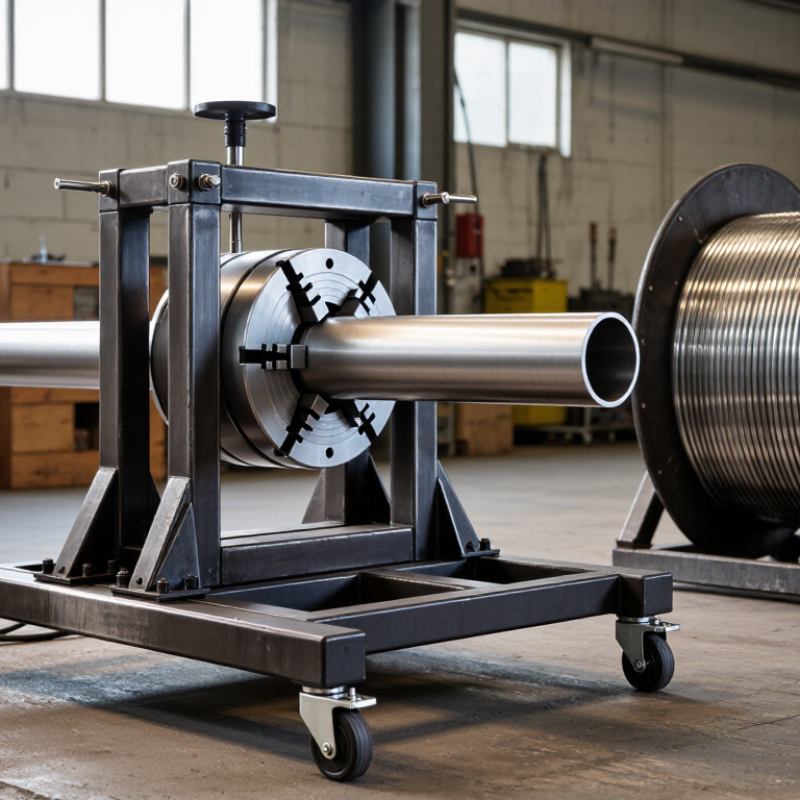
Choosing the best pipe welding positioner is less about buying the largest machine and more about matching it to real shop work. The right pipe welding positioner should turn the work smoothly, hold it securely, and keep the weld area accessible. A six-inch stainless pipe and a heavy, large-diameter spool create very different demands. Load capacity, pipe diameter range, rotation speed, and chuck or roller design all matter. So does fit. A machine that looks capable on paper may not suit your fixtures or floor space. That matters.
Before comparing models, check the combined weight of the pipe, fittings, and fixtures—not just the pipe alone. Review the manufacturer’s rated capacity and operating limits, then consider whether the positioner tilts and offers useful speed control. For repetitive work, controls that allow steady rotation can help maintain a consistent welding pace. In practical shop use, awkward loading height or a hard-to-reach foot pedal can become daily frustrations. Small details. Ask about replacement parts, service support, and the warranty, and verify that the unit can be safely installed and operated in your workspace. I would be cautious about choosing on price alone; still, a premium feature is not automatically worth paying for. The best choice depends on your pipe sizes, production volume, available space, and operator needs. This guide compares those factors and points out where specifications deserve a closer look.
Define the Job: ASME Section IX Uses 1G, 2G, 5G, and 6G Pipe Positions
Choosing a pipe welding positioner starts with the qualification and production job, not brochure load capacity.
ASME BPVC Section IX, QW-461.9, charts the
1G,
2G,
5G, and
6G
positions. These describe joint orientation and welder access, not machine features. In 1G, the pipe’s axis is horizontal and the pipe rotates. In 2G, the pipe is vertical and the weld is horizontal. In 5G, the pipe stays horizontal and fixed, requiring flat, vertical, and overhead welding. In 6G, it is fixed at a 45-degree incline.
Details matter.
Tack locations and torch-head clearance can determine whether a positioner actually helps.
For repeatable 1G work, look for controlled rotation, steady low-speed travel, suitable chuck range, and a load rating that includes fixtures. A positioner can improve access, but it cannot turn a 5G or 6G qualification test into 1G. Confirm the WPS, test position, and applicable qualification range against the governing code edition. The U.S. Bureau of Labor Statistics’ Employment Projections, 2023–33, project 2% growth for welders and about 45,800 annual openings. That is workforce context, not a machine-sizing formula.
One easy oversight:
offset fixtures shift the load’s center of gravity and affect torque.
I would recheck this. Ask for a loaded trial.
Match Rated Capacity to the Combined Weight of Pipe, Chuck, and Fixtures
A pipe positioner’s rated capacity should cover the complete rotating load, not just the pipe. Add the pipe, chuck, backing rings, clamps, and any custom fixtures. A 220-pound pipe, a 70-pound chuck, and 25 pounds of tooling create a 315-pound load before small accessories are counted. Leave room for uncertainty. Shop estimates are rarely perfect.
Capacity alone is not the whole story. Confirm that the published rating applies during rotation at your intended speed, not only to static support. Pipe extending far from the chuck can shift the center of gravity and increase strain. Ask how the rating changes with overhang, offset, and speed. Those details matter.
Before buying, weigh each component or use reliable specifications, then compare the total with the positioner’s stated operating limits. Follow the manufacturer’s guidance for a suitable safety margin; no single margin fits every setup. Include the heaviest fixture likely to stay on the table, even if it is used only occasionally. I might choose more capacity than today’s job needs. It can feel wasteful, but a larger fixture or longer pipe can change the load quickly. Check the machine’s limits against that real setup, not an idealized one.
What Is the Best Pipe Welding Positioner to Buy? — Match Rated Capacity to the Combined Weight of Pipe, Chuck, and Fixtures
| Typical Job |
Pipe Weight |
Chuck Weight |
Fixture Weight |
Combined Load |
Suggested Rated Capacity |
Capacity Used |
Selection Guidance |
| Light pipe spools and small assemblies |
90 lb (41 kg) |
25 lb (11 kg) |
15 lb (7 kg) |
130 lb (59 kg) |
250 lb (113 kg) |
52% |
A compact positioner may suit frequent light-duty work, provided its rotation and tilt ratings also meet the job requirements. |
| General-purpose shop pipe fabrication |
210 lb (95 kg) |
35 lb (16 kg) |
25 lb (11 kg) |
270 lb (122 kg) |
500 lb (227 kg) |
54% |
A 500 lb class provides useful capacity headroom for this example load; confirm the load’s center of gravity and mounting arrangement. |
| Medium pipe assemblies with heavier clamps |
420 lb (191 kg) |
55 lb (25 kg) |
45 lb (20 kg) |
520 lb (236 kg) |
1,000 lb (454 kg) |
52% |
Consider a 1,000 lb class when the assembly, chuck, and fixtures total about 520 lb; verify allowable eccentric and off-center loading. |
| Large-diameter or multi-piece pipe assemblies |
780 lb (354 kg) |
75 lb (34 kg) |
65 lb (29 kg) |
920 lb (417 kg) |
1,500 lb (680 kg) |
61% |
A 1,500 lb class is a reasonable starting point for this load calculation, subject to the manufacturer’s operating limits. |
| Heavy assemblies with substantial workholding |
1,450 lb (658 kg) |
110 lb (50 kg) |
90 lb (41 kg) |
1,650 lb (748 kg) |
2,500 lb (1,134 kg) |
66% |
For heavier work, compare rated capacity with the complete rotating load and check that the unit supports the required tilt angle and duty cycle. |
How to use the table: Combined load = pipe weight + chuck weight + fixture weight. Capacity used is the combined load divided by the suggested rated capacity. These are illustrative planning examples, not specifications for a particular machine. Before purchase, confirm the manufacturer’s rated capacity at the required orientation, load center of gravity, eccentric-load limits, rotation and tilt torque, speed, and duty cycle.
Compare Rotation Speed and Tilt Range for the Required Welding Position
A pipe welding positioner should match the rotation speed to the weld process, pipe diameter, and deposition rate. If the pipe turns too quickly, the weld pool can trail or become uneven. If it turns too slowly, heat may build up in one area. For a thin-wall tube, look for smooth, low-speed control. A heavy, large-diameter pipe may need higher torque more than high rotational speed. Smooth starts matter.
Check the usable speed range, not just the maximum figure. During a trial run, rotate a representative pipe and watch whether you can keep the joint moving steadily beneath the torch. A speed display is useful, but it does not replace a stable drive or precise adjustment. The spec sheet can look impressive; actual control may feel less refined.
Tilt range determines whether the joint can be brought into a comfortable, accessible position. Consider the pipe’s diameter, length, and fixture clearance, then check the full tilt path for collisions. More range is not automatically better if the setup becomes difficult to secure. A practical test is to position the joint at the intended working angle and confirm the pipe stays balanced. It is easy to overlook clearance until the fixture is loaded.
What Is the Best Pipe Welding Positioner to Buy?
Compare rotation speed and tilt range with the welding position you need. The chart shows broad, commonly listed equipment ranges—not a universal specification. Confirm the usable range at your workpiece’s weight and dimensions.
Choose smooth, adjustable rotation for consistent travel speed, and enough tilt to bring the weld into a comfortable position. Check rated load, workpiece offset, and speed control before buying.
Verify Controls and Safety Features Against the Manufacturer’s Load Rating
When comparing pipe welding positioners, treat the manufacturer’s load rating as a limit, not a shopping target. Confirm what the rating includes: the pipe, chuck or clamps, backing bars, and any offset tooling. A heavy assembly positioned off-center can place extra torque on the turntable, even when its total weight appears acceptable. Check the rated capacity for the exact setup and rotation conditions.
Then inspect how the controls behave under real shop conditions. A clearly marked speed dial, forward and reverse controls, and an accessible emergency stop are practical essentials. If a foot pedal is used, check that the operator can stop rotation without moving away from the weld. Test any brake, overload protection, or interlock described in the manual. Don’t assume these features compensate for an overloaded machine. They do not.
Look for operating limits in the manufacturer’s documentation, including allowable workpiece dimensions, center-of-gravity guidance, and duty cycle. Ask whether the published rating changes with pipe length or a particular fixture. A control panel may look reassuring, but unclear ratings deserve a closer question. Small details count. It is easy to overlook clamp weight when planning a purchase, and that is worth checking twice.