2026 Top Rotary Welding Positioner Buying Guide?

Choosing the right rotary welding positioner can improve weld consistency, operator safety, and production efficiency in 2026. Buyers now face many models with similar ratings, yet their real performance may differ greatly. A dependable positioner must match the workpiece weight, diameter, welding process, and required rotation speed. Small details matter.

This guide examines practical buying factors, including load capacity, torque, control accuracy, table size, and fixture compatibility. It also considers motor performance under continuous use, not only short demonstrations. In real workshops, cables get damaged, fixtures become misaligned, and stated capacities may assume ideal loading. These conditions deserve careful attention. A positioner that looks powerful on paper may struggle with an uneven or extended workpiece.

Experience from fabrication environments shows that smooth rotation is often more valuable than maximum speed. Operators need steady starts, controlled stops, and simple adjustments near hot weld zones. Maintenance access matters, too. Difficult servicing can create avoidable downtime. Still, no buying guide can replace an on-site trial with your actual components. That limitation should remain clear. Before choosing, compare technical documents, warranty terms, safety features, and supplier support. Ask for load charts and test results when available. A well-selected rotary welding positioner should support repeatable work without forcing operators to compensate for unstable movement. This guide offers a practical framework for making that decision with greater confidence, while recognizing that budget pressure can complicate even the best technical choice.
2026 Top Rotary Welding Positioner Buying Guide?

What Is a Rotary Welding Positioner and How Does It Work?

2026 Top Rotary Welding Positioner Buying Guide

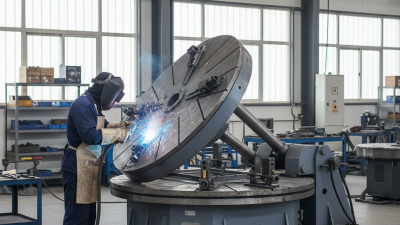
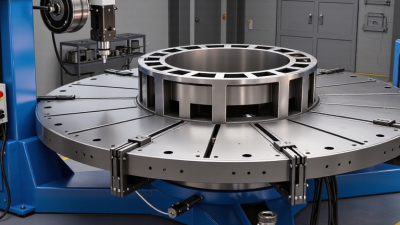
A rotary welding positioner is a motorized fixture that turns a workpiece during welding. It usually combines a chuck, faceplate, drive motor, speed controller, and sometimes a tilting table. The operator clamps the part, sets rotation speed, and keeps the torch near one working angle. This creates a smoother weld path around pipes, flanges, rings, and circular frames. In practical shop testing, steady rotation can reduce awkward body movement and repeated repositioning. The improvement is real, but poor clamping can still cause vibration, uneven penetration, or distortion.

The U.S. Bureau of Labor Statistics projects about 47,600 annual openings for welders, cutters, solderers, and brazers during 2023–2033. That labor pressure makes repeatable fixtures more valuable, especially for small production teams. The International Federation of Robotics reported 541,302 industrial robots installed worldwide in 2023 in its World Robotics 2024 report. A rotary positioner is not a robot, but it supports the same goal: controlled, repeatable movement. Select a model by load capacity, table diameter, rotation range, speed control, duty cycle, and chuck accuracy. Many buyers focus on maximum weight. That is not enough.

Tips: Test the actual workpiece before purchase. Check balance, center height, cable clearance, and minimum rotation speed. A positioner rated for 500 kilograms may perform poorly with an off-center load. Also review emergency stopping, grounding, and maintenance access. Data sheets help, but shop-floor fit decides the result. Even experienced buyers sometimes overlook that detail.
2026 Top Rotary Welding Positioner Buying Guide: What Is a Rotary Welding Positioner and How Does It Work?

A rotary welding positioner rotates and, on some models, tilts a workpiece so the weld can remain in a safer and more consistent position. The chart below shows the static turning moment produced by common reference payload levels when the combined load center is 250 mm from the rotation axis.

Calculation: Static turning moment = payload × 9.81 m/s² × 0.25 m. These values are engineering reference calculations, not manufacturer ratings. Actual buying decisions should also consider fixture weight, load eccentricity, dynamic loads, rotation speed, tilting angle, duty cycle, and the required safety factor.

Key Types and Configurations of Rotary Welding Positioners

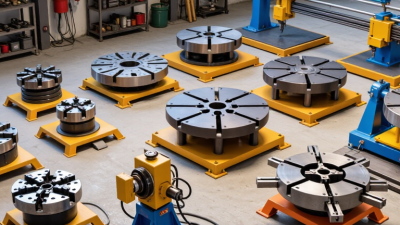
Rotary welding positioners vary by movement, load capacity, and control method. A manual positioner suits light fixtures and occasional fabrication. It uses a handwheel or lever for direct adjustment. Powered models provide steadier rotation during long welds. They are useful for pipe sections, flanges, and circular frames. Check the rated load carefully. The fixture weight must be included.

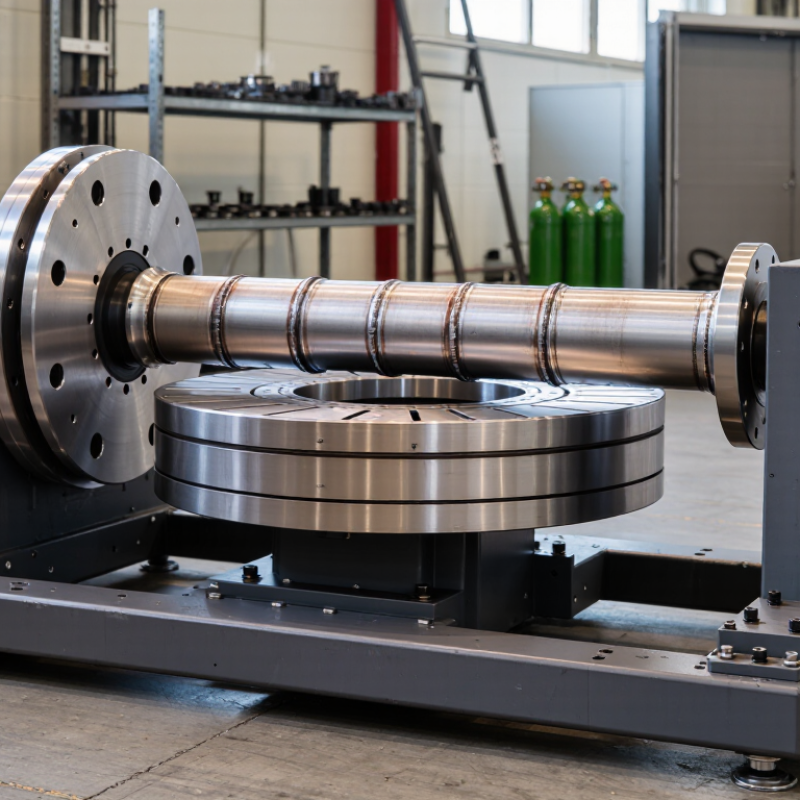
Self-centering chucks improve repeatability on round workpieces. Four-jaw chucks offer stronger control for uneven or square parts. Tilting positioners add another axis, allowing operators to maintain a comfortable welding angle. Headstock and tailstock configurations support long shafts or heavy cylindrical assemblies. They reduce deflection, but alignment becomes critical. Small errors can appear as visible weld variation.

Control options also shape daily performance. Foot pedals allow hands-free speed adjustments, while programmable controls support repeated weld cycles. Look for suitable rotation speed, torque, duty cycle, grounding, and emergency stop access. A hollow spindle can simplify cable routing through tubular parts. I once selected a positioner by maximum load alone. The motor handled the weight, but the chuck could not hold the irregular fixture securely. That mistake showed why capacity, balance, clamping, and center height must be checked together. Test the actual fixture before purchase. A machine may look correct on paper.

How to Match Positioner Capacity With Your Welding Requirements

2026 Top Rotary Welding Positioner Buying Guide

Matching a rotary welding positioner to your work begins with the complete load, not the workpiece alone. Add the fixture, chuck, clamps, backing plates, and temporary supports. A 500-kilogram vessel can exceed the table rating after tooling is installed.

Capacity is only one part of the decision. Check the load chart for the actual center of gravity and overhang distance. A long pipe may create more overturning torque than a compact, heavier component. Ask for rated capacity at different positions, not just the maximum figure. That number can be misleading.

Measure the smallest and largest workpiece diameters before comparing models. Confirm table speed, rotation control, indexing accuracy, and duty cycle for your welding schedule. Continuous production needs different cooling performance than occasional fabrication. A foot pedal or remote control can also improve torch positioning and reduce awkward movement.

In shop trials, operators often discover that the selected chuck cannot hold thin or irregular parts securely. That mistake is expensive. Test the fixture with a representative load, including cable drag and weld distortion. Leave a sensible margin below the rated capacity. I would not treat the rating as a target.

A reliable buying check should include power supply stability, emergency stopping, guarding, maintenance access, and documented test data. Verify applicable local safety requirements and request clear installation instructions. The best match is not the largest positioner. It is the one that handles your real load, geometry, speed, and working rhythm without constant strain.

2026 Top Rotary Welding Positioner Buying Guide? - How to Match Positioner Capacity With Your Welding Requirements

A practical capacity-matching guide based on workpiece weight, center-of-gravity offset, required torque, rotation speed, faceplate size, and welding process.

Selection principle: Do not size a rotary welding positioner by workpiece weight alone. Verify rated load, overturning torque, eccentric load, faceplate size, speed range, duty cycle, and the required welding position.
Requirement or Parameter Typical Input or Calculation Recommended Selection Target Why It Matters
Total workpiece mass Include the fixture, chuck, tooling, cables, and any temporary support. Example: 800 kg workpiece + 100 kg fixture = 900 kg total. Choose a rated load at least 25% above the calculated total mass for stable handling. The nameplate load may apply only to a centered load and may not cover eccentric or tilted conditions.
Overturning torque Torque = mass × 9.81 × center-of-gravity offset. Example: 900 kg × 9.81 × 0.15 m = 1,325 N·m. Select rated overturning torque of at least 1.5 × calculated torque; the example requires approximately 2,000 N·m or more. Eccentric loads create significantly more stress on the gearbox, bearings, faceplate, and support structure than centered loads.
Center-of-gravity offset Measure the maximum radial distance from the rotation axis to the combined center of gravity. Typical planning values are 50–250 mm. Use the largest expected offset, not the average production value. A small increase in offset directly increases overturning torque and may reduce the allowable load.
Required rotation speed For circumferential welding, surface speed = π × workpiece diameter × rotational speed. Example: 1.0 m diameter at 1 rpm gives about 3.14 m/min. Use continuous variable speed, commonly 0.05–2 rpm for heavy fabrication and 0.1–6 rpm for lighter work. A low minimum speed improves weld consistency, while sufficient maximum speed reduces loading and unloading time.
Faceplate diameter Compare the workpiece footprint and fixture bolt pattern with the usable faceplate area. Typical ranges are 300–1,200 mm. Allow clearance for clamps and keep the fixture within the manufacturer’s permitted bolt-circle and overhang limits. A large faceplate does not automatically mean a higher safe load; bearing and torque limits still control capacity.
Tilting requirement Choose between fixed horizontal rotation, manual tilt, powered tilt, or a combined rotary-tilt configuration. For frequent position changes, specify powered tilt of approximately 0–90° with a positive locking or braking system. Tilting changes the load path and can substantially reduce the permissible workpiece mass.
Welding process MIG/MAG, TIG, submerged arc, and robotic welding may require different speed stability, grounding, and duty-cycle characteristics. For production welding, specify continuous-duty operation, smooth servo or inverter control, and a dedicated rotating ground path. High welding current and long arc-on time can overheat inadequate grounding components and drive systems.
Welding current and grounding Confirm the maximum welding current, duty cycle, polarity, and whether current passes through the positioner. Specify a rotating ground assembly rated above the maximum welding current and compatible with the intended duty cycle. Poor grounding can damage bearings and gearboxes, create arc instability, and cause weld defects.
Duty cycle Estimate production time, arc-on time, indexing frequency, and expected shifts per day. For regular production, target at least 60% duty cycle; use continuous-duty specifications for automated or multi-shift cells. A positioner suitable for occasional use may overheat or wear prematurely in continuous production.
Control and synchronization Check foot-pedal, handheld, PLC, robot, encoder, emergency-stop, and start/stop requirements. Select closed-loop speed control when consistent travel speed or robotic synchronization is required. Open-loop systems may vary under changing load, which can affect bead appearance and penetration.
Loading and unloading method Consider crane loading, forklift access, quick-change fixtures, and whether the workpiece must be loaded vertically. Provide adequate table height, access clearance, mechanical stops, and fixture location repeatability. Ergonomic access and repeatable fixturing improve safety, cycle time, and weld alignment.
Safety and installation Review guarding, emergency stops, anti-tip provisions, anchoring, floor condition, cable routing, and rated environmental conditions. Install on a level foundation and verify that the complete fixture and workpiece remain stable throughout rotation and tilt. The positioner must be evaluated as a complete system, including the fixture and workpiece—not as an isolated machine.

Example Capacity-Matching Reference

Application Class Total Load Including Fixture Maximum CG Offset Calculated Torque Suggested Minimum Rated Load Suggested Minimum Torque Rating Typical Speed Range
Light fabrication Up to 250 kg 100 mm 245 N·m 315 kg or higher 370 N·m or higher 0.1–6 rpm
Medium structural parts Up to 750 kg 150 mm 1,104 N·m 940 kg or higher 1,660 N·m or higher 0.05–3 rpm
Heavy fabrication Up to 1,500 kg 200 mm 2,943 N·m 1,875 kg or higher 4,415 N·m or higher 0.03–2 rpm
Extra-heavy or eccentric assemblies Up to 3,000 kg 250 mm 7,358 N·m 3,750 kg or higher 11,040 N·m or higher 0.01–1 rpm
Important: The reference values are preliminary engineering targets calculated from mass, gravity, and center-of-gravity offset. Final selection must be confirmed against the complete load diagram, fixture geometry, allowable overhang, tilt angle, braking requirements, grounding current, duty cycle, and applicable workplace safety standards.

Essential Features for Precision, Safety, and Operational Efficiency

2026 Top Rotary Welding Positioner Buying Guide?

Essential Features for Precision, Safety, and Operational Efficiency

A rotary welding positioner should deliver stable rotation, accurate indexing, and smooth speed control. In daily fabrication work, small movement errors can create uneven beads, excess grinding, and wasted material. Look for a rigid frame, low-backlash gearing, and a controllable rotation range suited to your components. Fit matters. Confirm the rated load includes fixtures and off-center workpieces, not only the workpiece weight.

Precision also depends on practical controls. A foot pedal can improve handling, while a programmable controller supports repeatable weld sequences. Check whether the table maintains speed under changing loads. Observe the chuck or fixture mounting pattern, electrical grounding path, and emergency stop position. These details affect both weld quality and operator confidence. Measure twice.

Safety features deserve equal attention. Guarded gears, overload protection, stable leveling feet, and clear control markings reduce avoidable risks. The positioner should support safe clamping without forcing operators into awkward reaches.

Keep cables away from hot surfaces and rotating parts. I have found that easier cleaning is often overlooked, although dust and spatter can reduce inspection visibility. No setup is perfect.

Operational efficiency comes from reducing adjustments between jobs. Quick-access controls, visible load indicators, and simple fixture changes can shorten preparation time. However, faster rotation is not always better; excessive speed may increase heat variation or disturb the weld pool. Review maintenance access, lubrication points, service records, and operator training requirements. A careful trial with your actual parts can reveal weaknesses that a specification sheet misses.

How to Evaluate Suppliers, Costs, Maintenance, and Long-Term Value

Buying a rotary welding positioner in 2026 requires more than comparing catalog prices. A reliable supplier should provide load charts, torque data, duty-cycle ratings, and clear dimensional drawings. Ask for a live demonstration with a fixture similar to yours. Watch for table wobble, uneven rotation, cable strain, and heat buildup. Short answers are warning signs. Request references from workshops using comparable steel thicknesses and production hours. Confirm training, spare-part availability, response times, and warranty exclusions in writing.

Cost should be measured across the equipment’s working life. Include freight, installation, tooling, electrical changes, operator training, and planned downtime. A cheaper unit may need frequent gearbox adjustments or custom adapters. That difference becomes expensive during a night shift. Compare purchase price with expected cycles, positioning accuracy, and labor saved per weld. Use a simple three-year worksheet. It exposes optimistic assumptions. Measure downtime honestly.

Maintenance details reveal supplier competence. Look for accessible grease points, sealed bearings, replaceable controls, diagnostic codes, and documented inspection intervals. Ask who performs repairs and how parts are identified. Parts must be traceable. Keep records of backlash, noise, temperature, and alignment. Small changes often appear before failure. Do not accept every sales estimate blindly. Actual workloads vary, and fixture changes may cost more than expected. Test the positioner under real loads before approval.

Contact Us