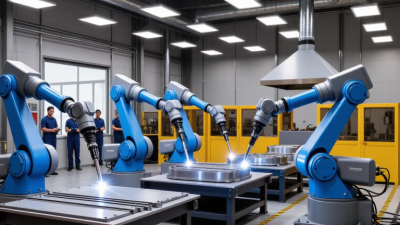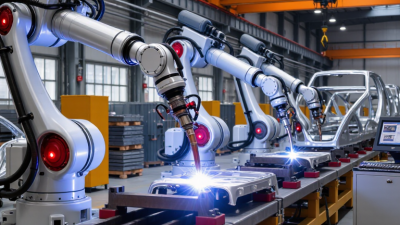
Buying a cobot welding robot is not simply a matter of choosing payload and reach. Global buyers must connect automation goals with real production conditions, safety requirements, and local service capability. The International Federation of Robotics’ World Robotics 2024 report recorded 541,302 industrial robot installations in 2023. More than 4.28 million industrial robots were operating worldwide. The direction is clear. However, growth does not remove purchasing risk.
A welding cell may look impressive in a showroom. Your factory may have uneven floors, reflective stainless steel, changing joint gaps, or a fixture that shifts by two millimeters. Small details matter. Torch angle, wire delivery, shielding gas, programming time, and operator training can decide the return on investment. Esben Østergaard, Universal Robots co-founder, described the core idea plainly: “Cobots are designed to work alongside humans.” That principle should guide evaluation, not marketing language.
This guide presents ten practical buying tips for global purchasers. It examines weld quality, payload, reach, sensing, programming, safety validation, integration, after-sales support, and total ownership cost. ISO 10218 and ISO/TS 15066 provide important reference points, but regional requirements still differ. Confirm compliance with qualified local professionals. Do not assume one certificate fits every market.
The uncomfortable truth is simple. A cobot welding robot can reduce repetitive strain and improve consistency, yet it cannot repair poor process planning. Factory trials reveal more than brochures. Bring sample joints, actual materials, and your most difficult seam. Then measure cycle time honestly. Even experienced buyers sometimes underestimate integration work. That is where reflection becomes valuable.
Before choosing a cobot welding robot, define the job in measurable terms. Record material types, thickness ranges, joint designs, weld lengths, and required positions. A production team may say, “We need faster welding,” but that goal is too vague. Measure current cycle time, rework rate, daily output, and operator hours. These figures reveal the real gap.
Test the hardest regular weld, not only the easiest sample. Include imperfect fit-up, small gaps, surface variation, and awkward access. A cobot that performs well on clean coupons may struggle beside a busy fabrication table. Specify the welding process, wire diameter, torch angle, shielding gas, and expected arc-on time. Also check payload, reach, positioner capacity, and fixture repeatability. Small errors matter.
Set production goals around quality and people, not speed alone. Define acceptable porosity, undercut, dimensional variation, and inspection methods. Decide whether one operator will load parts, manage two stations, or correct programs. Training time should be part of the plan. It is often overlooked. Leave room for maintenance, wire changes, and fixture adjustments. A simple spreadsheet can estimate capacity, but it will not predict every stoppage. Validate assumptions through a representative trial and record what failed. That evidence is more reliable than a confident sales claim.
| No. | Buying Tip | Welding Requirement to Define | Useful Production Data and Practical Benchmarks | Why It Matters | Buyer Action |
|---|---|---|---|---|---|
| 1 | Map the Parts and Weld Joints | Identify material type, thickness range, joint design, weld position, part dimensions, tolerance, and the number of welds per assembly. | Record carbon steel, stainless steel, or aluminum applications separately. Typical light-to-medium fabrication work may involve material thicknesses from approximately 1.5 to 12 mm, but the correct range depends on the process, joint preparation, and power source. | A cobot system should be selected around the actual weld envelope rather than a general-purpose specification. | Create a representative part list and select the three most frequent assemblies for sample trials. |
| 2 | Choose the Correct Welding Process | Define whether the application requires short-circuit MIG/MAG, pulsed MIG/MAG, TIG, or another qualified process. | MIG/MAG is commonly used for higher-throughput steel fabrication. TIG is generally suited to cleaner, lower-deposition work and often requires slower travel speeds. Pulsed processes can help control heat input and spatter on suitable materials. | Process selection affects deposition rate, appearance, penetration, shielding-gas consumption, consumables, and operator training. | Compare at least two qualified weld procedures using the same joint, material, wire diameter, gas, and acceptance criteria. |
| 3 | Calculate Required Cycle Time | Separate arc-on time from loading, clamping, repositioning, wire trimming, inspection, and unloading time. | A basic calculation is: Required cycle time = available production time ÷ required good parts. Arc-on time alone may represent only part of the complete work cycle; fixture and handling time can significantly influence output. | A robot with a fast welding speed may not meet the target if parts are difficult to load or require frequent repositioning. | Measure the current manual cycle for at least 20 representative parts and set a target for total cycle time, not only welding speed. |
| 4 | Set Quality and Repeatability Targets | Define acceptable weld size, penetration, visual appearance, spatter level, distortion, porosity limits, and inspection method. | Use the applicable welding procedure specification and quality standard for the market and product. Dimensional tolerances should be stated separately from robot repeatability because fixture accuracy and part variation also affect results. | Robot repeatability alone cannot compensate for inconsistent cut edges, gaps, fit-up, contamination, or unstable fixtures. | Prepare sample acceptance criteria covering visual inspection and any required non-destructive or destructive testing. |
| 5 | Match Reach, Payload, and Torch Access | Define the largest work envelope, torch angles, cable routing, torch weight, dress-pack requirements, and access to internal or obstructed joints. | Common collaborative welding systems often use arm reaches of roughly 1.2 to 1.8 m and payload capacities that must include the torch, cables, mounting hardware, and any accessories. The required specification should be verified from the complete system configuration. | Insufficient reach can force extra repositioning, while excessive reach may increase cost and occupied floor space. | Build a digital or physical reach study with the actual torch and dress pack, including the most difficult weld positions. |
| 6 | Design for Part Variation and Fixturing | Document gap variation, distortion, tolerances, clamping points, part presentation, and the time needed to change fixtures. | Consistent locating surfaces and repeatable clamping generally improve robotic welding more than simply increasing robot accuracy. Quick-change fixtures can reduce changeover time when several assemblies share a work area. | Welding cobots perform best when the part location and joint geometry are predictable from cycle to cycle. | Include fixture cost, setup time, poka-yoke features, and access for loading and unloading in the investment plan. |
| 7 | Define Programming and Changeover Needs | Estimate the number of product variants, new part introductions, operator skill level, and the frequency of program changes. | Products with short runs and frequent changes benefit from intuitive programming, guided teaching, reusable weld routines, and offline preparation where practical. Actual programming time should be validated with a representative operator. | A system that is productive for one high-volume part may be inefficient for a mixed-product environment. | Ask for a live demonstration using one existing part, one difficult part, and one future product variant. |
| 8 | Plan Safety and Workspace Integration | Define access points, operator interaction, pinch points, hot-work hazards, fume extraction, guarding, emergency stops, and the required risk assessment. | Collaborative operation does not remove the need for application-specific risk assessment. Welding introduces arc radiation, heat, fumes, sparks, compressed gas, and moving equipment hazards; suitable screens, extraction, PPE, and safeguarding may still be required. | Safe integration depends on the complete cell, workpiece, tooling, process, and operating mode—not only the robot arm. | Request a documented safety concept and verify compliance with the regulations and standards applicable in the installation country. |
| 9 | Estimate Total Cost of Ownership | Include the robot, welding power source, torch, wire feeder, positioner, fixtures, extraction, shielding gas, consumables, training, maintenance, and integration. | Operating cost is influenced by wire usage, gas flow, electricity, contact tips, liners, nozzles, anti-spatter products, fixture maintenance, downtime, and labor allocation. A simple payback model should use good parts per shift rather than theoretical robot speed. | The lowest purchase price may not provide the lowest cost per accepted weld or the fastest return on investment. | Compare capital cost, annual operating cost, expected utilization, scrap reduction, labor redeployment, and planned service expenses over a multi-year period. |
| 10 | Verify Support, Training, and Scalability | Define installation support, spare parts, response time, remote assistance, local service capability, training, software updates, and future expansion. | Confirm availability of critical consumables and replacement parts, electrical compatibility, language options, documentation, and technician training. A scalable cell should allow additional fixtures, positioners, sensors, or production programs when demand increases. | Long-term availability and operator competence strongly influence uptime after commissioning. | Put acceptance testing, training hours, service-level expectations, documentation, and spare-parts recommendations into the purchase contract. |