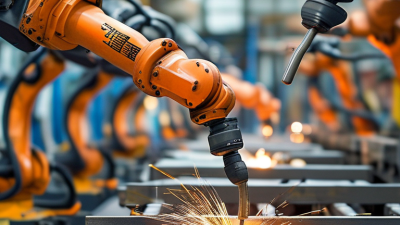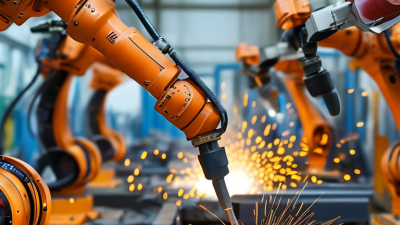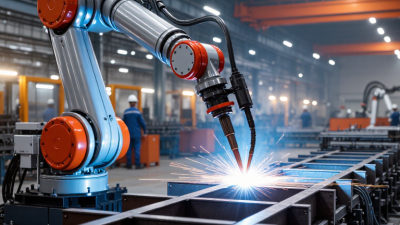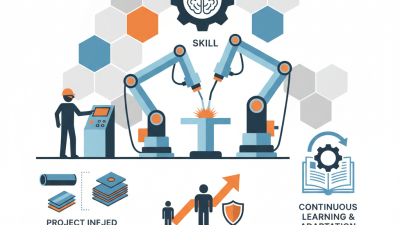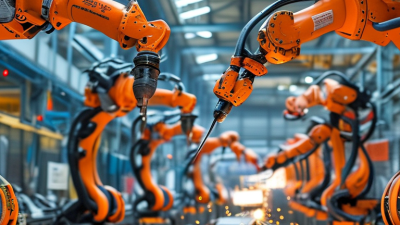
An automated welding machine combines a power source, welding torch, motion system, sensors, and control software. It performs repeated welds with measured speed, angle, and heat input. Picture a steel frame moving beneath a robotic torch. The arc stays steady. The operator watches the joint and verifies the result.
The International Federation of Robotics reported 541,302 industrial robots were installed worldwide in 2023. Manufacturing robot density reached 162 robots per 10,000 employees. These figures do not isolate welding equipment, but they show the expanding industrial foundation for automation. The American Welding Society also emphasizes procedure control, operator qualification, inspection, and safe working practices. An automated welding machine cannot correct every poor design or contaminated joint. That limitation matters.
Dr. Robert W. Messler Jr., a recognized welding and materials-engineering author, describes welding as “a materials joining process.” His statement remains useful because automation does not change the basic engineering purpose. It changes how consistently that purpose is delivered. Sensors can track joint position. Programmable motion can repeat a qualified path. Data logging can expose drift before defects spread.
Still, automation is not magic.
A reliable system requires suitable fixturing, stable material dimensions, correct shielding gas, and disciplined maintenance. Industry reports often highlight productivity gains, yet real factories may face integration costs, training gaps, and difficult part variation. This guide explains what an automated welding machine is, how its major systems interact, and where human judgment still protects quality. The discussion draws on published robotics data, welding standards, and practical manufacturing experience.
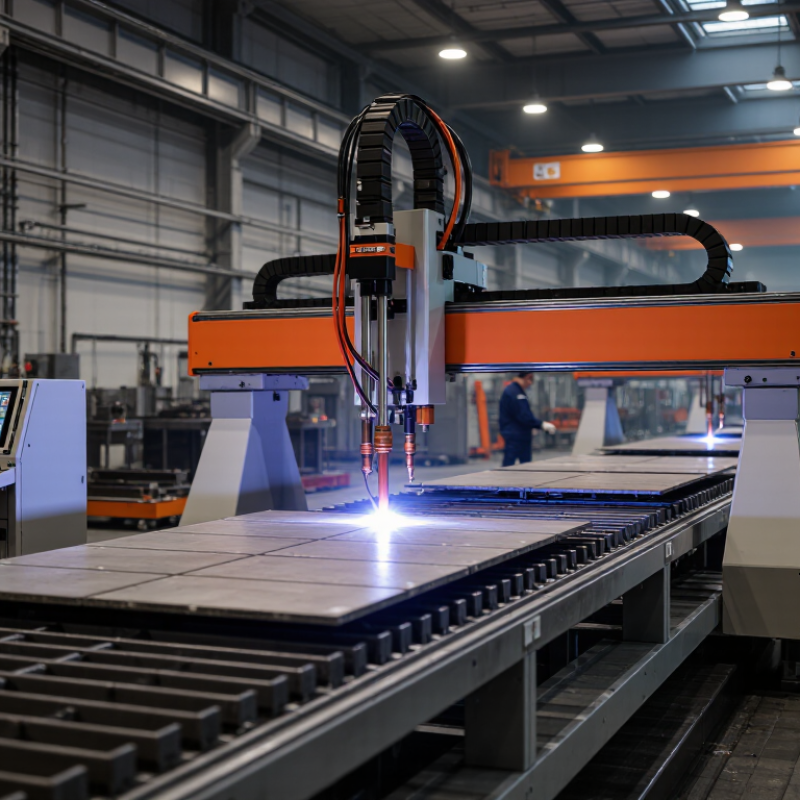
An automated welding machine is equipment that controls welding movements, timing, and process settings with limited human intervention. It may use a robotic arm, a fixed welding head, or a programmable gantry. The system combines a power source, wire feeder, torch, fixture, controller, and safety enclosure. Unlike manual welding, it follows programmed paths repeatedly. However, it does not “understand” a joint like an experienced welder.
The International Federation of Robotics reported 542,000 industrial robots were installed worldwide in 2023. This figure shows how programmable automation has become important in modern manufacturing. In a typical welding cell, an operator loads metal parts into a fixture. Sensors or programmed coordinates confirm their position. The controller then manages travel speed, torch angle, arc voltage, wire feed, and shielding gas. Some systems adjust the path when cameras or seam-tracking sensors detect variation.
Precision has limits. A poorly clamped joint still produces a precise mistake. Material distortion, dirty surfaces, and inconsistent gaps can reduce weld quality. Practical commissioning therefore requires test coupons, parameter checks, and regular inspection. Reports often highlight productivity, but maintenance records reveal another truth: downtime can begin with a blocked nozzle or misaligned fixture. Human oversight remains essential, especially when products change or tolerances become tighter. A careful operator can improve the process; automation alone cannot repair weak preparation.
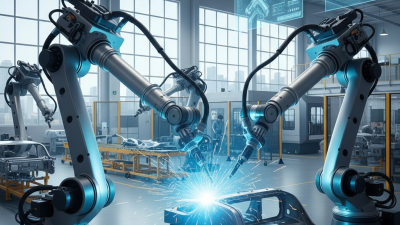
An automated welding machine combines mechanical movement, electrical control, and process monitoring. Its frame supports a robotic arm or gantry, while a welding power source supplies controlled current. A wire feeder pushes filler wire through the torch at a programmed speed. Shielding gas flows around the arc and limits atmospheric contamination. Small changes matter.
The controller is the machine’s decision center. It coordinates travel speed, welding current, voltage, torch angle, and start-stop timing. An operator sets these values through a human-machine interface. Fixtures hold parts in repeatable positions, reducing movement between welds. Sensors may detect joint location, arc stability, temperature, or wire position. Cameras and laser trackers can correct alignment, although they cannot repair poor part preparation. The enclosure, interlocks, ventilation, and emergency stops protect workers from arc radiation, heat, fumes, and moving equipment.
The International Federation of Robotics reported 541,302 industrial robots installed worldwide in 2023. This figure shows the wider shift toward automated production, but it does not measure welding quality alone. Industry welding reports commonly identify fixture accuracy and parameter control as major productivity factors. In practice, a stable fixture often improves results more than faster arm movement. The weak point is frequently maintenance. A worn contact tip, blocked gas nozzle, or drifting sensor can create porosity and inconsistent penetration. Experienced technicians therefore inspect consumables, cable connections, gas flow, and calibration before trusting production data. Mistakes still happen. Good systems make them visible early.
An automated welding machine joins metal with programmed movement, controlled heat, and continuous monitoring. It may use a robotic arm, welding torch, wire feeder, sensors, and safety guarding. The process begins with a digital drawing or approved weld program. An operator loads clean parts into a fixture and checks alignment. Small gaps can create large defects.
The machine then clamps the components and runs a pre-start inspection. Sensors may verify part position, torch distance, and joint location. The controller starts shielding gas, wire feeding, and electrical power in a fixed sequence. The torch travels along the joint at a selected speed. Heat melts the wire and base metal, forming a weld pool. As the torch moves, the pool cools into a solid bead. Simple in theory.
During welding, cameras or arc sensors can track the joint and detect movement. Current, voltage, travel speed, and gas flow are recorded for quality review. The International Federation of Robotics reported 541,302 industrial robot installations worldwide in 2023, showing how widely automated motion is entering production. After welding, the machine stops the arc, retracts the torch, and releases the fixture. An operator or inspection system checks bead shape, penetration, spatter, and distortion. The U.S. Bureau of Labor Statistics projects a 2% decline in welding-related employment from 2023 to 2033, but skilled supervision remains necessary. Automation does not remove judgment. Poor programming, dirty surfaces, or incorrect fixturing can still produce weak joints. The process is repeatable, not automatically perfect.
Automated welding machines can handle several processes, but the best choice depends on joint design, material, thickness, and production volume. Gas metal arc welding, or GMAW, is widely automated because a wire feeder supplies filler metal continuously. A robotic arm follows programmed paths while sensors monitor torch position and arc conditions. It is fast. GMAW suits steel, stainless steel, and aluminum when shielding gas and settings remain stable. Flux-cored arc welding, or FCAW, also works well, especially on thicker steel and outdoor structures. Its flux supports penetration, but smoke and slag require controlled extraction and cleaning.
Submerged arc welding, or SAW, is effective for long, straight seams on large steel components. The arc stays beneath granular flux, creating consistent welds with high deposition rates. It is less flexible.
Gas tungsten arc welding, or GTAW, can be automated for precise, clean welds on thin stainless steel and selected nonferrous alloys. However, it demands careful fit-up and slower travel speeds.
Resistance spot welding is common for overlapping sheet metal. Electrodes clamp the sheets, then electrical current forms a weld quickly. No filler wire is needed.
Laser welding and laser-arc hybrid welding can automate narrow, accurate seams. They require tight tolerances, reliable fixturing, and guarded work cells.
In practice, automation is not simply pressing start. Engineers qualify parameters, inspect sample welds, and verify penetration through testing. A camera may correct small position changes, but it cannot rescue poor joint preparation. That limitation matters.
Some systems still need an operator to load parts, remove spatter, or respond to alarms. Results can vary when surface condition, fit-up, or consumables change. That is where experience remains essential.
What Is an Automated Welding Machine and How Does It Work?
An automated welding machine joins metal parts with limited human control. It uses programmed movements, sensors, and a welding power source. A fixture holds each workpiece in the same position. Then, a robotic arm or mechanical carriage follows a planned weld path. The system controls travel speed, current, wire feeding, and shielding gas. This repeatable process suits high-volume production and carefully measured components.
The main benefit is consistency. Automated welding can produce uniform beads, stable penetration, and fewer pauses between parts. It also reduces direct exposure to heat, fumes, sparks, and awkward working positions. Production teams may gain faster cycle times and clearer quality records. However, automation is not automatically better for every job. Equipment requires significant investment, accurate programming, regular maintenance, and trained operators. Poorly aligned parts can still create weak joints. Sensors may miss surface contamination or unusual gaps. Small batches can make setup time difficult to justify. Human inspection remains valuable, especially when materials or joint designs change. Real workshops often need adjustments that manuals do not mention.
Tips: Check joint fit-up before welding. Keep surfaces clean and dry. Test the program on sample parts first. Watch wire delivery, gas flow, and torch alignment during operation. Record defects instead of hiding them. A failed weld can reveal a fixture problem, an incorrect setting, or an unrealistic production target. Allowing time for review makes the system safer and more dependable.
| Data Dimension | Automated Welding Machine | How It Works or Practical Effect | Key Consideration |
|---|---|---|---|
| Definition | A welding system that controls torch movement, welding parameters, or workpiece positioning with limited continuous manual intervention. | A controller executes a programmed welding path while power sources, positioners, sensors, and safety devices coordinate the process. | Automation may cover only selected operations or the complete welding cycle. |
| Main Components | Welding power source, torch or welding head, motion system, controller, workholding fixture, shielding-gas equipment, and safety enclosure or interlocks. | Each component performs a defined task: supplying energy, guiding the arc, positioning parts, or protecting operators and equipment. | Component selection depends on welding process, joint geometry, material, and production volume. |
| Common Welding Processes | Gas metal arc welding, gas tungsten arc welding, submerged arc welding, resistance welding, and laser welding can be automated. | The system repeats the selected process using programmed current, voltage, travel speed, wire-feed rate, pressure, or laser settings. | The process must match the material thickness, joint design, required penetration, and allowable heat input. |
| Operating Sequence | Part loading, fixture clamping, seam locating, welding, cooling or inspection, unclamping, and unloading. | A programmable logic controller or industrial computer coordinates the sequence and can exchange signals with sensors and auxiliary equipment. | Reliable fixturing and consistent part presentation are essential for repeatable results. |
| Motion Control | May use linear slides, orbital equipment, robotic arms, turning rolls, or rotary positioners. | The motion system maintains the programmed torch angle, travel path, speed, and distance from the joint. | Complex motion improves access to multi-axis joints but increases programming and maintenance requirements. |
| Sensors and Monitoring | May include arc-voltage monitoring, wire-feed monitoring, seam tracking, temperature sensing, vision systems, and weld-data logging. | Sensors can detect deviations and support real-time adjustments or alarms when operating conditions move outside defined limits. | Sensors improve control but cannot replace correct joint preparation and qualified procedures. |
| Productivity Benefit | Supports repeatable welding cycles and can operate for extended periods with planned material replenishment and maintenance. | Reduced variation in travel speed and torch positioning can increase arc-on consistency and reduce avoidable interruptions. | Actual output depends on cycle time, loading method, changeovers, downtime, and part complexity. |
| Weld Quality | Provides consistent execution of qualified welding parameters and programmed paths. | Consistency can reduce defects related to irregular travel speed, torch angle, or operator fatigue. | Automation does not eliminate defects caused by contamination, poor fit-up, incorrect parameters, or unsuitable consumables. |
| Labor and Safety | Reduces direct exposure to arc radiation, fumes, heat, sparks, and repetitive welding movements when properly enclosed and controlled. | Operators can focus more on setup, supervision, inspection, material handling, and maintenance rather than continuous arc manipulation. | Guarding, ventilation, personal protective equipment, training, and lockout procedures remain necessary. |
| Flexibility | Highly effective for repeatable parts and stable joint designs; programmable systems can handle multiple approved recipes. | Programs, fixtures, and tooling can be changed for different products, although changeover requires time and validation. | Frequent product changes or low production volumes may reduce the financial benefit. |
| Initial Investment | Requires spending on equipment, integration, tooling, safety systems, programming, installation, and workforce training. | The investment is recovered through higher utilization, reduced rework, improved consistency, or lower long-term labor exposure. | A payback evaluation should include utilization, maintenance, changeover time, and total operating cost. |
| Maintenance Requirements | Needs routine inspection of cables, contact tips, liners, gas lines, motion components, fixtures, sensors, and safety devices. | Preventive maintenance helps preserve positioning accuracy, arc stability, uptime, and safe operation. | Neglected maintenance can cause downtime, poor weld quality, and accelerated component wear. |
| Best-Fit Applications | Repeated welds on frames, structural assemblies, pipes, tanks, vehicle components, and other products with consistent geometry. | Automation is most valuable where joints are accessible, cycle conditions are predictable, and production demand is sufficient. | Highly variable, inaccessible, or frequently repaired welds may still require skilled manual welding. |
| Primary Limitations | Higher complexity, substantial setup requirements, dependence on accurate fixturing, and reduced adaptability to unexpected conditions. | The machine follows its program, so deviations in part dimensions, gaps, contamination, or joint location may affect the result. | Skilled personnel are still needed for programming, procedure qualification, inspection, troubleshooting, and repair. |
| Quality Assurance | May use parameter records, visual inspection, dimensional checks, and non-destructive testing such as ultrasonic, radiographic, magnetic-particle, or dye-penetrant testing. | Recorded process data supports traceability, while inspection confirms that the finished weld meets the applicable specification. | Inspection requirements depend on material, joint category, governing code, and product risk. |
Contact Us
Pemamek Ltd