Who Are the Top Welding Fabrication Companies in China?
China’s welding fabrication market includes large industrial groups, specialist workshops, and export-focused manufacturers. Their capabilities can differ sharply, even when their websites show similar equipment. A polished factory photograph cannot confirm a consistent weld, reliable delivery, or suitable documentation. Buyers need evidence.
Sindo Kou, author of Welding Metallurgy, emphasizes a central principle: weld performance depends on the interaction of materials, heat, and process. That idea matters when comparing companies that build pressure vessels, steel structures, machinery frames, or custom components. A sound assessment looks beyond price. It checks process range, qualified personnel, material traceability, inspection methods, and the clarity of technical communication. Ask for relevant project records and sample inspection reports. Where appropriate, review how the supplier manages dimensional checks, non-destructive testing, and corrective work.
This guide examines leading Chinese welding fabrication companies through practical, verifiable signals—not rankings based on marketing claims alone. Some suppliers excel at high-volume production; others suit complex, low-volume orders. The difference matters. A shop with impressive capacity may still be a poor fit for a small custom build, while a compact specialist may lack the throughput a large project needs. No comparison is perfect. Company capabilities also change, so confirm current equipment, certifications, and production capacity before selecting a partner.
What Is Welding Fabrication and How Is It Used in China?
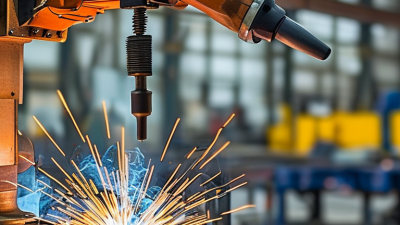
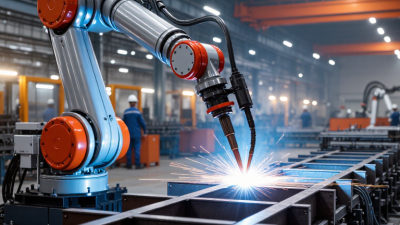
Welding fabrication turns metal stock into usable structures through cutting, forming, fit-up, welding, and inspection. In a Chinese workshop, a technician may align thick steel plates with clamps, tack the joints, then run a continuous weld before checking for defects. The process supports construction frames, industrial equipment, transport infrastructure, shipbuilding, and energy projects. Details matter: poor joint preparation can cause porosity or cracking, even when the finished bead looks smooth.
China’s scale makes the work especially significant. World Steel Association’s World Steel in Figures 2024 reports that China produced 1,019.1 million tonnes of crude steel in 2023. Steel output is not the same as fabrication demand, but it shows the depth of the country’s material supply. Automation is also changing production. The International Federation of Robotics’ World Robotics 2024 reports 276,288 industrial robot installations in China in 2023. Robots can repeat weld paths on high-volume parts; skilled workers still handle complex joints and setup. Not every seam. A neat weld is not proof of a sound structure, so inspection and process records remain essential—and quality can vary between shops.
How Is China’s Welding Fabrication Industry Structured?
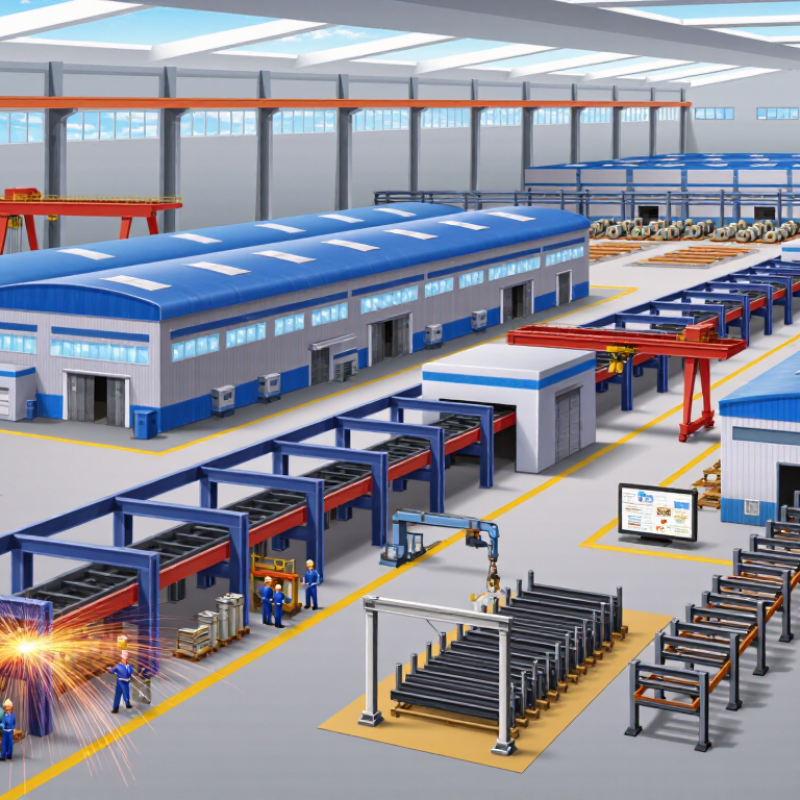
China’s welding fabrication industry is best understood as a connected production chain, not a single group of factories. Material suppliers provide plate, pipe, and structural sections. Cutting and forming shops prepare parts, while fabrication plants handle fit-up, welding, and assembly. Some facilities also provide machining, surface preparation, and coating. Small workshops often serve nearby equipment makers. Larger plants may take on heavy structures, repeat orders, or export projects.
The sector is organized by both capability and project role. A subcontractor may weld parts to customer drawings, while an integrated manufacturer can coordinate design review, production planning, inspection, and delivery. Quality practices vary, so buyers should check how a supplier controls materials, welding procedures, dimensions, and records. A tidy workshop helps, but it does not prove consistent production. The structure is not perfectly neat; companies may specialize in one process or combine several.
Tips: Match the supplier’s equipment and experience to the job. Ask to see sample inspection records and confirm how changes to drawings are handled. For a frame, for example, clarify who checks fit-up before welding. Small details matter.
What Criteria Identify Leading Welding Fabrication Companies?
China’s manufacturing scale makes capacity easy to advertise, but capacity alone does not prove fabrication competence.
World Steel Association’s World Steel in Figures 2025 reports 1,005.1 million tonnes of crude steel production in China for 2024. This is useful context, not a supplier scorecard.
A leading fabricator should demonstrate repeatable weld quality across real plate thicknesses, joint designs, and production shifts. Request qualified welding procedures, welder records, material certificates, and traceability from steel heat number to finished assembly. Details matter. Inspection plans should identify visual checks and suitable non-destructive testing, with acceptance criteria agreed before production.
Assess the shop floor as well as its paperwork. Ask how it controls fit-up, distortion, consumables, and rework on a representative project. Standards such as ISO 3834 can help structure quality controls, but a certificate alone cannot show how consistently a team follows them.
Request recent on-time delivery and weld-repair figures, including the reporting period and project scope. A supplier with clear, complete records is easier to evaluate than one offering broad promises. Still, metrics can hide difficult jobs or changing conditions; ask what caused delays and how corrective actions were verified.
Which Chinese Welding Fabrication Companies Are Notable?
Who Are the Top Welding Fabrication Companies in China?
Which Chinese Welding Fabrication Companies Are Notable?
Notable Chinese welding fabricators are best assessed by their process control, inspection capacity, and fit for a specific project—not by scale alone. The World Steel Association’s World Steel in Figures 2025 reports that China produced 1,005.1 million tonnes of crude steel in 2024, about 53.4% of global output. That points to a deep industrial supply base. It does not, by itself, prove fabrication quality.
Look for companies that can show qualified welding procedures, welder records, material traceability, and documented inspection results. For pressure vessels, bridges, or heavy machinery, ask how they control heat input, distortion, and weld defects. Ask to see sample inspection reports. Small details matter: a clear weld map, calibrated gauges, and legible material certificates can reveal more than a polished brochure. Check whether their testing methods suit the component and project specification.
Some capable suppliers specialize in custom heavy structures; others excel at repeat production of smaller assemblies. A workshop with automated welding may offer consistency, but automation is not a substitute for sound engineering or skilled inspection. That benchmark is useful, but incomplete. Visit the production floor when possible, and verify claims against recent project records. One awkward truth: supplier information can be uneven, so comparisons are not always straightforward.
China's Crude Steel Output: Industrial Context for Welding Fabrication
China’s large steel-production base provides important industrial context for welding fabrication. These figures show national crude steel output, not the performance or ranking of individual companies. Source: World Steel Association.
How Do Their Capabilities and Industries Served Compare?
Who Are the Top Welding Fabrication Companies in China?
Comparing Chinese welding fabricators by capability means looking beyond shop size. Some specialize in heavy steel structures, with large-bed cutting, submerged-arc welding, and nondestructive testing. Others handle thinner stainless components, tight tolerances, and repeat production for machinery or transport equipment. The right fit depends on drawings, material grades, batch size, and inspection needs. One detail buyers sometimes overlook: a large workshop does not automatically mean strong process control.
Industry data helps explain the range. The World Steel Association reported that China produced 1,019.1 million tonnes of crude steel in 2023, about 54% of global output. That scale supports broad access to steel supply, but it does not prove a fabricator’s quality. China’s Ministry of Industry and Information Technology reported that the country completed 42.3% of global shipbuilding volume in 2023. This points to substantial demand for welding in marine structures, alongside construction machinery, rail, energy equipment, and industrial plants. Capabilities still vary sharply between suppliers.
Tips: Ask for sample inspection records, welding procedure qualifications, and evidence of similar projects. Check how the supplier controls distortion on thick plate. A small trial order can reveal more than a polished capability sheet. And be candid about tolerances; vague drawings invite avoidable rework.