Why Do You Need a Cleanroom Chiller System?
A cleanroom can look calm while machines, lights, and people steadily add heat. Even a modest temperature drift may affect sensitive processes, product quality, or equipment performance. Precision matters. That is where a Cleanroom Chiller System becomes essential. It removes process heat and helps maintain the temperature conditions specified for the room and its equipment. Without stable cooling, a system may cycle unevenly, creating fluctuations that are difficult to spot during routine checks. Small changes can matter.
Choosing a chiller involves more than matching a cooling-capacity number. Engineers need to assess heat loads, operating schedules, room requirements, and the effects of changing production demands. They should also consider water quality, controls, alarms, and how the chiller will connect with existing HVAC equipment. Redundancy may be appropriate when an interruption would seriously affect operations. Monitoring helps teams identify trends before they become disruptive. Maintenance matters, too: clogged strainers or neglected heat exchangers can reduce performance. But a chiller alone cannot guarantee cleanroom compliance or control airborne particles. That distinction is easy to overlook. A few degrees may seem minor, yet the acceptable range depends on the process. This guide examines why cleanroom cooling matters, what to evaluate when selecting a system, and which operating details deserve regular review. It also leaves room for a practical question: is the existing setup truly sized for today’s workload?
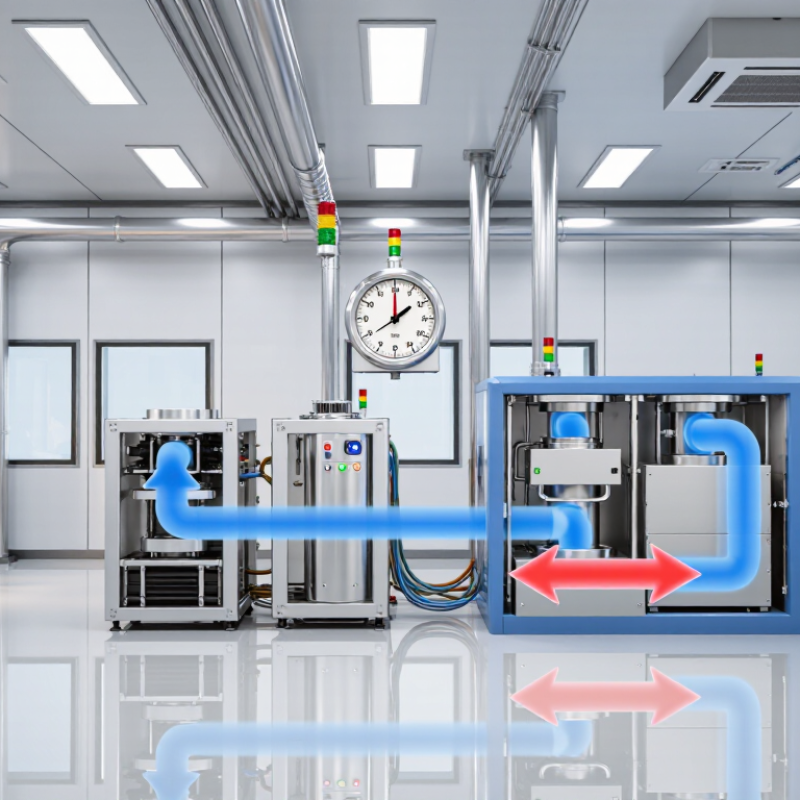
What a Cleanroom Chiller Does in a Controlled HVAC System
Why Do You Need a Cleanroom Chiller System?
What a Cleanroom Chiller Does in a Controlled HVAC System
A cleanroom chiller removes heat from circulating water and sends chilled water to air-handling coils. Those coils cool incoming air before it enters the controlled space. The chiller does not clean the air or control every room condition by itself. Filters, airflow design, and humidity controls also matter. That distinction is easy to overlook.
In a controlled HVAC system, stable cooling helps keep temperature within its specified range as equipment and people add heat. Sensors track water and room conditions, while control valves adjust flow through the coils. If cooling varies, temperature shifts can affect processes and comfort. Small changes count. A chiller is not a complete cleanroom solution, and focusing only on its cooling capacity can miss the wider system.
Tips: Review temperature trends, alarms, and water flow together, not in isolation. Keep coil and strainer maintenance on schedule. Ask qualified HVAC personnel to check system performance under real operating loads. Records help reveal recurring problems, though they do not explain every fluctuation.
Why Do You Need a Cleanroom Chiller System?
How a chiller supports temperature control in a cleanroom HVAC system
What the chart shows: A chiller supplies chilled water to HVAC cooling coils, which remove heat from the air before it enters the cleanroom. The bars show calculated sensible cooling loads for airflow cooled from 30°C to 22°C, assuming air density of 1.2 kg/m³ and specific heat capacity of 1.006 kJ/(kg·K). These are illustrative calculations, not universal design values. Actual chiller sizing also depends on factors such as equipment and process heat, occupants, outdoor air, humidity control, and the room’s envelope.
How Equipment, People, and Airflow Determine Cleanroom Cooling Loads
Why Do You Need a Cleanroom Chiller System?
How Equipment, People, and Airflow Determine Cleanroom Cooling Loads
A cleanroom chiller must handle more than room temperature. Process equipment often releases steady heat from motors, ovens, pumps, and control cabinets. Start with measured power and operating schedules; nameplate ratings alone can overstate or understate actual heat. People add sensible heat, moisture, and particles, especially during gowning and busy shifts. Door openings also bring in warm, humid air. Small details matter.
Airflow can be a major cooling driver because filtered supply air must be cooled and dehumidified. ISO 14644-1:2015 sets a Class 5 limit of 3,520 particles per cubic metre at particle sizes of 0.5 micrometres or larger. That cleanliness target does not prescribe one universal airflow rate, so design conditions must reflect the process and room classification. ASHRAE’s HVAC Applications guidance likewise treats clean spaces as specialised environments requiring coordinated air treatment. A spreadsheet can still miss real operating peaks.
Tips: Log equipment heat, occupancy, humidity, and airflow during a representative production shift. Check exhaust and replacement-air loads, too. Compare measured conditions with design assumptions before sizing the chiller. Leave room for uncertainty; actual use rarely follows a perfect schedule.
Why Stable Temperature and Humidity Matter to Sensitive Processes
In a cleanroom, temperature and humidity are process variables, not comfort settings. Even small shifts can affect evaporation, material dimensions, static charge, and instrument readings. Small changes matter. ISO 1:2022 sets 20°C as the standard reference temperature for geometrical product specifications, highlighting why dimensional work needs a stable thermal environment. A chiller helps maintain that stability by supplying consistent cooling to the air-handling system.
Humidity needs equal attention. Low relative humidity can increase electrostatic risk, while excess moisture may affect hygroscopic materials or create condensation on cold surfaces. These effects matter in weighing, coating, drying, and electronics assembly. The ASHRAE Handbook—HVAC Applications guidance on clean spaces emphasizes matching environmental control to process requirements; there is no single humidity setpoint suitable for every cleanroom. I would not assume a chiller alone controls humidity. Dehumidification, airflow, and sensor placement also shape conditions at the work surface.
A practical design starts with the process window, then checks how temperature and humidity vary across the room during equipment operation and door openings. Log readings near sensitive work, not only beside the chiller. One detail is easy to miss: a stable room average can hide local swings. That deserves a second look.
ISO 14644-1 Class 5 Allows 3,520 Particles/m³ at ≥0.5 µm
Why Do You Need a Cleanroom Chiller System?
ISO 14644-1:2015 sets the ISO Class 5 limit at 3,520 airborne particles per cubic metre, measured at sizes of 0.5 micrometres and above. This is a strict ceiling, not a target for every moment of operation. A chiller helps maintain stable temperatures for cleanroom air-conditioning and sensitive process equipment. It does not remove particles; filtration and airflow control do that work. Yet temperature swings can disrupt equipment performance and make environmental control harder to maintain.
Think of a production room with heat from lights, people, and running tools. If cooling varies, HVAC components may struggle to hold steady conditions. Particle counts still depend on many factors, including operator practices and filter performance. The ISO figure alone cannot describe the whole room. That is worth remembering. A chiller should be selected around the actual heat load and operating pattern, then monitored alongside temperature, humidity, and particle data.
Tips: Compare logged room conditions with the ISO 14644-1 Class 5 limit, rather than relying on a chiller’s setpoint alone. Record temperature near critical equipment and review trends during peak production. Check sensor placement, too; a reading from the wrong corner can mislead.
How Engineers Size Chillers for Capacity, Redundancy, and Control
A cleanroom chiller must handle the room’s real heat load, not just its floor area. Engineers estimate heat from process equipment, lighting, people, air-handling units, and heat entering through walls. They also check the required chilled-water supply temperature and flow rate. A laser instrument and a packed equipment bay can create very different loads. That estimate can change.
Capacity should cover peak demand without making the chiller oversized. An oversized unit may cycle frequently at low loads, making temperature control less stable. Engineers compare calculated loads with operating schedules and consider future equipment carefully. A modest allowance can be sensible; a guessed buffer is not.
Redundancy depends on the cost of losing cooling and the time available for recovery. An N+1 arrangement can keep service running during maintenance or a unit failure, but pumps, valves, and power supplies need attention too. Control matters just as much. Chillers should respond steadily to changing loads while maintaining water temperature and flow. Trend logs and alarms help teams spot drift before room conditions are affected. We sometimes focus too much on the chiller itself. Small details count. A well-sized system is defined by its full operating behavior, including low-load periods and maintenance conditions.