

Why Use an Electronic Vacuum Gauge?

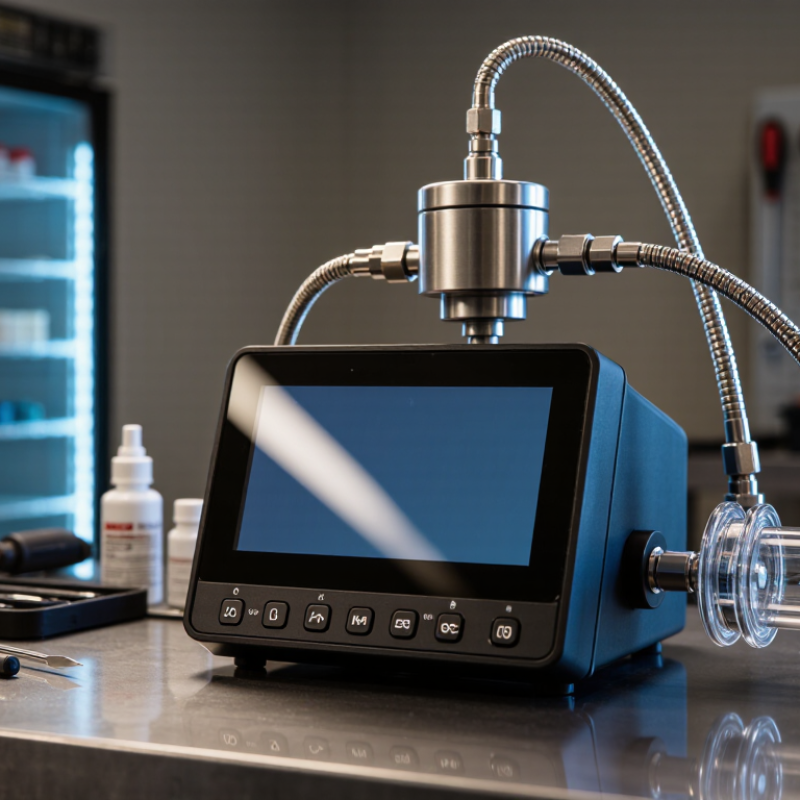
Vacuum work can look simple: connect a pump, open a valve, and watch the pressure fall. Yet a low reading does not always mean a system is dry or ready. An Electronic Vacuum Gauge gives technicians a direct way to monitor pressure changes during evacuation, rather than relying on pump sound or elapsed time. The display makes trends easier to see. That matters. A reading that stalls, rises, or changes slowly can prompt a closer check of connections, moisture, or system leaks.

Electronic gauges are useful in refrigeration, HVAC, laboratory, and other controlled vacuum tasks. Their clear readings can support repeatable checks and better records, especially when several people share the work. Some models also offer features such as data logging or alarms, though availability varies. A gauge is not a substitute for sound procedures. Sensor range, placement, cleanliness, and calibration all affect what the display can tell you. A sensor near the pump may not reflect conditions at a distant part of the system. Small details count.

Choosing a gauge should start with the pressure range and accuracy the job requires. Then consider durability, ease of reading, and the manufacturer’s instructions for maintenance. It is tempting to trust a digital number simply because it looks precise. Not quite. Compare readings with sensible process checks, and investigate results that do not fit expectations. Used carefully, an Electronic Vacuum Gauge helps turn an invisible process into useful evidence—and reminds us that measurement still needs judgment.
Why Use an Electronic Vacuum Gauge?

What an Electronic Vacuum Gauge Measures

An electronic vacuum gauge measures residual gas pressure inside a chamber; it does not measure “vacuum” as an absence of matter. The reading may be absolute pressure, referenced to zero pressure, or gauge pressure, referenced to local atmosphere. That distinction matters when checking a pump-down: a chamber reading of 500 Pa absolute is not the same as a 500 Pa difference from ambient pressure. The BIPM SI Brochure defines one pascal as one newton per square metre and standard atmospheric pressure as 101,325 Pa. These reference values help make readings comparable across instruments and sites.

Different sensors infer pressure in different ways. A capacitance diaphragm gauge detects a pressure-driven change in a flexible membrane, while a thermal-conductivity gauge infers pressure from how gas carries heat away from a heated element. The result depends on the sensor type and, for thermal gauges, the gas being measured. A helium-filled system and an air-filled system can therefore produce different readings at similar pressures. ISO 3567:2011 describes comparison methods for calibrating vacuum gauges; NIST’s Special Publication 250-39 documents vacuum-measurement calibration services. Check the calibration range, not just the display resolution. A crisp number can still mislead. I’ve seen readings treated as interchangeable when they were not. That’s worth questioning.

How Electronic Vacuum Gauges Detect Pressure

Why Use an Electronic Vacuum Gauge?
How Electronic Vacuum Gauges Detect Pressure

An electronic vacuum gauge turns a physical effect into a readable signal. At lower pressure, fewer gas molecules carry heat away from a heated wire in a Pirani-type sensor. Electronics track the wire’s resistance or temperature and convert that change into pressure. The response depends on gas type, so readings may shift when process gas changes. Small detail, big consequence.

Other gauges rely on different physics. A capacitance diaphragm gauge senses pressure-driven movement of a thin diaphragm, making readings less dependent on gas composition. Ionization gauges create charged particles and measure their current, which helps at very low pressures but demands clean surfaces. NIST Special Publication 250-90 describes vacuum calibration spanning about 10^-7 to 10^5 Pa. That range shows why one sensor cannot cover every operating point equally well. It is easy to overtrust a crisp digital number.

Tips: Match the sensor to the pressure range and gas. Let the gauge stabilize, keep its port clean, and compare it with a traceable reference during calibration. Record units and gas settings, too. A small setup error can look like a real pressure change.

Key Advantages Over Mechanical Vacuum Gauges

Why Use an Electronic Vacuum Gauge?

Key Advantages Over Mechanical Vacuum Gauges

An electronic vacuum gauge presents pressure as a number, making readings easier to compare during pump-down and leak checks. A technician can see small changes without judging a pointer against a crowded scale. That matters. Digital models may also provide selectable units, alarms, or data logging, depending on their design. These features help teams record trends instead of relying on handwritten notes.

Mechanical gauges can be simple and useful, but their moving pointers may be harder to read at a glance. Electronic gauges reduce parallax errors and can send readings to a controller or monitoring system. They are not automatically more accurate, though. Sensor type, range, calibration, contamination, and temperature all affect results. A display with extra digits can still mislead if the sensor is unsuitable or overdue for calibration. I would check the instrument against a known reference before trusting a surprising reading.

Tips: Match the gauge’s measurement range to the vacuum level you expect. Keep the sensor clean, allow it to stabilize, and note the units in every record. If readings drift, compare with another calibrated instrument before changing the process.

Why Use an Electronic Vacuum Gauge? - Key Advantages Over Mechanical Vacuum Gauges

Comparison Dimension Electronic Vacuum Gauge Mechanical Vacuum Gauge Practical Advantage of Electronic Gauges
Measurement method Uses an electronic sensor. Depending on the instrument, this may be a capacitance diaphragm, thermal-conductivity, piezoelectric, or other sensor. Uses a mechanical element, such as a Bourdon tube, or measures pressure through a liquid column in a manometer. Electronic instruments offer a choice of sensing technologies suited to different pressure ranges and measurement needs.
Readout Typically shows a numerical value on a digital display; some models also provide status indicators or selectable units. Usually indicates pressure with a pointer and scale, or by reading the height difference in a liquid-column instrument. A numeric display can make readings easier to record and may reduce interpolation between scale marks.
Resolution and readability Display resolution depends on the sensor, electronics, selected range, and instrument specifications. Readability depends on scale divisions, pointer width, viewing angle, and—on liquid manometers—the ability to read the fluid level. Digital readout can be convenient for small changes, but displayed digits do not by themselves guarantee accuracy.
Measurement range Range is sensor-specific. Some instruments cover a limited interval; others combine sensor types or ranges. Range is also design-specific. A mechanical gauge or manometer is generally intended for its stated operating interval. Electronic options can cover a broad range of vacuum applications when the correct sensor technology and range are selected.
Accuracy and calibration Accuracy varies by model, sensor type, pressure range, temperature, and calibration status. Check the specified error format and conditions. Accuracy varies by instrument design, scale, condition, installation, and calibration. Electronic gauges can provide convenient, specification-based readings, but they are not automatically more accurate than mechanical gauges.
Data recording and communication Some models offer data logging, alarms, or electrical outputs for a controller or computer; these features are not included on every model. Many basic models provide a local indication only. Recording or remote monitoring usually requires additional equipment. Optional logging and outputs can support process monitoring, automated systems, and traceable records.
Power requirements Requires a battery or external power source for the display and electronics. Many basic mechanical gauges operate without electrical power. Electronic functions add convenience and connectivity, while mechanical gauges can be preferable when power is unavailable.
Response and monitoring Response time depends on the sensor, instrument settings, and measurement conditions. Some models can continuously monitor pressure. Response depends on the gauge mechanism, damping, installation, and pressure changes. Electronic models can make continuous monitoring and alarm integration easier when those functions are supported.
Environmental and application factors Sensor choice matters: gas composition, contamination, temperature, vibration, and pressure range can affect suitability and readings. Mechanical instruments can be affected by vibration, orientation, wear, and the properties of any manometer fluid. Choose a gauge based on the actual process conditions; neither type is suitable for every application.
Typical use case Useful where numerical readout, repeatable monitoring, alarms, or optional data transfer are important. Useful for straightforward local indication, simple checks, or applications where independent operation is preferred. Electronic gauges are often selected for measurement visibility and integration; mechanical gauges remain useful for simplicity.
Selection note: Performance depends on the specific instrument and sensor. Compare the stated pressure range, accuracy, calibration requirements, environmental limits, and available outputs before choosing a gauge.

Common Applications of Electronic Vacuum Gauges

Electronic vacuum gauges help technicians monitor pressure inside sealed systems and process chambers. Common applications include laboratory vacuum ovens, refrigeration service, thin-film equipment, and leak-testing setups. A digital reading is easier to track than a needle when pressure changes quickly. It can show whether a pump-down is progressing or a chamber has reached its working range. The gauge does not diagnose every fault, though. A slow reading may point to moisture, trapped gas, a loose connection, or sensor contamination.

During routine maintenance, readings taken before and after a repair provide useful comparison points. In research labs, stable pressure supports repeatable drying and material preparation. Manufacturing teams may check vacuum levels during packaging or coating. Choose a gauge with a measurement range suited to the system; one instrument may not measure both rough and high vacuum accurately. Placement matters, too. A sensor near the pump can report a different pressure from one near the workpiece. A reassuring number is not always the whole story.

Tips: Let the reading settle before recording it. Check calibration and sensor condition regularly, and note the gauge location with each measurement. Small details can explain inconsistent results.

Factors to Consider When Choosing a Gauge

Why Use an Electronic Vacuum Gauge?

Factors to Consider When Choosing a Gauge

Start with the pressure range your process actually needs, not the widest range on a catalog page. NIST lists standard atmospheric pressure as 101.325 kPa, a useful reference point when checking whether a gauge covers pump-down from ambient pressure. At lower pressures, gauge technologies behave differently. Thermal gauges can respond to gas composition, while capacitance diaphragm gauges measure pressure independently of gas type. Check the instrument’s stated accuracy across your working range; a percentage of full scale can hide large errors near the bottom. ISO 3567:2011 describes comparison calibration for vacuum gauges, reinforcing that calibration method and traceability matter.

Small details matter.

Also consider response time, display resolution, process gas, vibration, and exposure to oil or condensation. A fast reading is useful during pump-down, but it does not guarantee accuracy. Select compatible electrical outputs and logging options if readings feed an automated system. I would question any choice based on resolution alone; extra digits can look reassuring without improving measurement quality.

Tips: Compare the gauge’s calibration uncertainty with your process tolerance, and confirm calibration at pressures you use. Keep the sensor away from direct pump exhaust where practical. Record the gas and temperature during calibration; otherwise, comparisons may mislead.

Contact Us