

Why Choose a Water Cooled Condenser?

Why Choose a Water Cooled Condenser?

A Water Cooled Condenser transfers refrigerant heat into circulating water. That water then moves toward a cooling tower or dry cooler. The arrangement can deliver stable condensing temperatures, especially in large commercial and industrial systems. HVAC energy expert Dr. Moncef Krarti has stated, “Energy efficiency depends on performance under real operating conditions.” This principle matters here. A condenser may look efficient on paper, yet poor water treatment can quickly reduce its performance.

Water cooled designs often need less compressor power than comparable air cooled systems. They also operate quietly because large outdoor condenser fans are reduced or eliminated. In a plant room, this can mean steadier operation and fewer noise complaints. The equipment can remain compact, even when cooling loads become substantial. That makes it useful for hotels, hospitals, data centers, and process facilities. However, water is not free. Pumps consume electricity. Towers require space, cleaning, and careful control.

Maintenance decides much of the result. Scale can form inside tubes like a thin stone shell. Fouling then restricts heat transfer and raises condensing pressure. Corrosion creates another concern. Water chemistry must be monitored, and strainers should be inspected regularly. Small oversights become expensive.

There is no perfect choice.

A Water Cooled Condenser may perform exceptionally well in a dense urban building. It may be less practical where water is scarce or maintenance access is limited. Engineers should compare climate, operating hours, water quality, lifecycle cost, and local regulations. The honest answer is conditional. Good design balances efficiency with real-world discipline.
Why Choose a Water Cooled Condenser?

Definition and Heat Path: How Water-Cooled Condensers Reject Heat

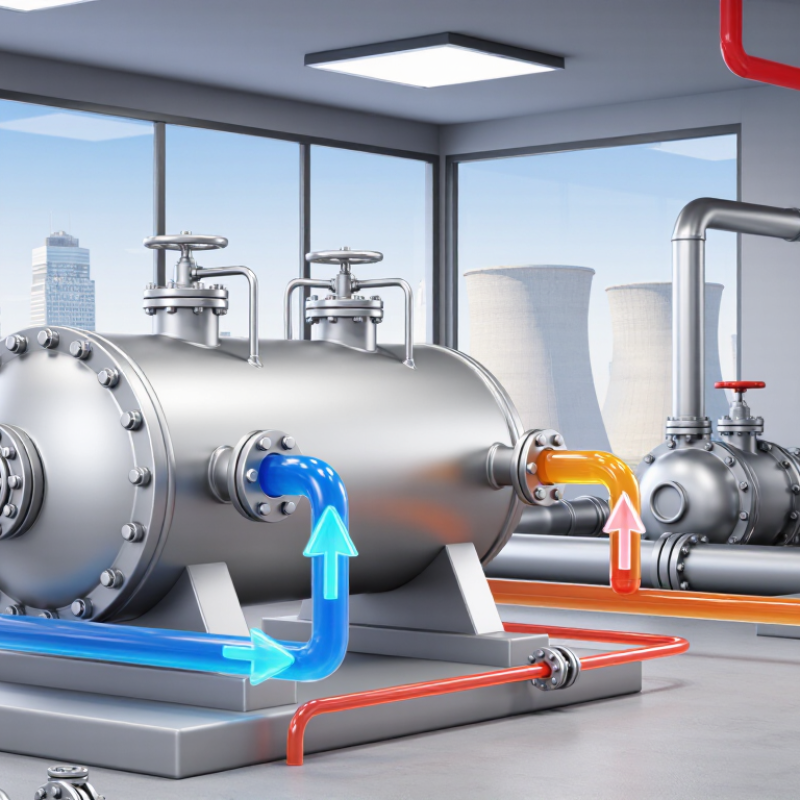
A water-cooled condenser removes heat through a controlled water circuit. Inside the condenser, hot refrigerant vapor contacts the cooler outer surface of tubes. Heat crosses the tube wall, moving from the refrigerant into the circulating water.

The refrigerant then changes into a liquid. The warmed water travels toward a cooling tower, dry cooler, or another heat rejection device. There, the heat leaves the system before cooler water returns to the condenser. This continuous path supports stable condensing pressure and efficient compressor operation. The process is compact. It is not effortless.

In practical maintenance, water quality often decides performance. Mineral scale can coat the tubes, while dirt can restrict water flow. Both problems reduce heat transfer and may raise energy use. Flow temperature, pressure, and refrigerant readings should be checked together. One reading can mislead. A clean condenser can still perform poorly when the pump is weak or the water circuit contains air. Engineers should also inspect corrosion risks and treatment records. I have found that small measurement gaps create large troubleshooting delays. The design is reliable, but it still needs disciplined monitoring.

Why Choose a Water-Cooled Condenser?

Definition and Heat Path: How Water-Cooled Condensers Reject Heat

This representative energy balance uses a 100 kW refrigeration load. The evaporator absorbs 100 kW from the conditioned space, while the compressor adds approximately 25 kW of work. The water-cooled condenser therefore rejects about 125 kW to the condenser-water loop, which transfers the heat to a cooling tower or another heat-rejection device.

Thermal Advantage: Cooling-Tower Approaches Commonly Reach 5–10°F

Why Choose a Water Cooled Condenser?

Thermal Advantage: Cooling-Tower Approaches Commonly Reach 5–10°F

A water-cooled condenser can reject heat more effectively than an air-cooled design. Cooling-tower water approaches the outdoor wet-bulb temperature, not the higher dry-bulb temperature. ASHRAE Handbook—HVAC Systems and Equipment identifies 5–10°F as a common cooling-tower approach range under suitable design conditions. A smaller approach can reduce condensing temperature and compressor lift. That may improve efficiency, especially during hot weather or heavy process loads. The gain is practical, not magical.

The Cooling Technology Institute’s performance-testing guidance emphasizes entering-water temperature, flow, and wet-bulb conditions. These variables must be measured together. A tower showing a 6°F approach during mild weather may perform differently during a humid afternoon. Fouled tubes, poor water distribution, or incorrect flow can erase the expected advantage. Real sites are messier. The U.S. Department of Energy also identifies fan control, condenser-water reset, and regular maintenance as important energy-saving measures. Yet lower temperature is not always better. Excessive tower operation can increase fan energy and water consumption.

Tips: Verify the approach with calibrated sensors. Record wet-bulb temperature, entering water, leaving water, and condenser pressure. Inspect fill, nozzles, strainers, and tubes before blaming the compressor. Allow for seasonal drift. A design assumption should be tested, not trusted.

Efficiency Impact: A 1°C Condensing Drop Can Cut Energy Use 2–4%

Why Choose a Water Cooled Condenser?

A water cooled condenser can lower condensing temperature more consistently than many air cooled systems. That matters because compressor pressure lift directly affects electrical demand. In practical operation, a 1°C condensing temperature reduction may cut total energy use by about 2–4%. The exact result depends on compressor design, refrigerant, load, and control settings. The number is conditional.

Field checks often reveal the difference at the control panel. A system condensing at 38°C may operate near 34°C after improving condenser water flow and heat transfer. The compressor then works against a smaller pressure difference. Energy meters can show the change within hours, especially during steady production. However, short tests can mislead. Outdoor temperature, product load, and defrost cycles should be recorded together.

Water quality remains a serious detail. Scale on a tube surface acts like insulation, while blocked strainers restrict flow. Pumps and cooling towers also consume energy, so the condenser is not free efficiency. A 1°C drop may disappear when maintenance is poor. It may also demand more water treatment or higher airflow elsewhere. Engineers should compare compressor savings with pump power, water use, approach temperature, and seasonal conditions. This broader review feels less impressive, but it produces a more reliable decision.

System Requirements: Water Treatment and Legionella Control Under ASHRAE 12

Why Choose a Water Cooled Condenser?

A water cooled condenser can deliver stable heat rejection in buildings with reliable water systems. Yet performance depends on more than condenser size. Poor water treatment can cause scale, corrosion, blocked tubes, and unsafe microbial growth.

ASHRAE 12 should guide the risk review where applicable, alongside current cooling-tower guidance and local requirements. Legionella control begins with a documented water management plan. Identify tanks, piping, cooling loops, drains, and areas where water can stagnate. Control temperature, maintain disinfectant levels, and inspect equipment at defined intervals. Testing should match the system’s risk, occupancy, and operating conditions. Keep clear records of readings, cleaning, corrective actions, and responsible personnel.

Small oversights matter.

Tips: Use calibrated instruments and record readings near the equipment, not from memory. Remove dead legs where practical, keep strainers clean, and prevent warm water from sitting during shutdowns. Review the plan after construction changes, long outages, or unusual operating conditions. A clean logbook does not prove a clean system. Field conditions can differ from the design, and even experienced teams may miss hidden stagnation points. Regular review with qualified water-treatment and HVAC professionals helps reveal those gaps.

Selection Criteria: Compare Capacity and Efficiency Under AHRI 550/590 Conditions

Why Choose a Water Cooled Condenser?

Selection Criteria: Compare Capacity and Efficiency Under AHRI 550/590 Conditions

A water cooled condenser can deliver strong capacity with lower condensing temperatures. The comparison must begin under identical AHRI 550/590 rating conditions. Check leaving chilled-water temperature, entering condenser-water temperature, flow rate, and fouling assumptions. Otherwise, the numbers may look precise but remain misleading.

Capacity is only one part of the decision. Compare rated tons with compressor input, condenser-water pump power, and cooling-tower energy. Efficiency should be reviewed in kW per ton at full load and part load. A unit showing excellent full-load efficiency may perform differently during mild weather. Look closely at integrated part-load values and operating curves. Small differences matter over thousands of annual hours.

Field conditions can change the result. A tower beside a humid loading area may approach a different wet-bulb temperature than the design case. Poor water treatment can add scale, increasing approach temperature and power consumption. I check condenser pressure drop twice. I still miss things sometimes. Piping length, pump selection, filtration, and service access deserve equal attention. Water cooling may reduce compressor energy, but it requires water management and regular maintenance. Compare the AHRI-rated data with local weather, available water, expected load profile, and the operator’s maintenance capability before selecting the condenser.

Why Choose a Water Cooled Condenser? - Selection Criteria: Compare Capacity and Efficiency Under AHRI 550/590 Conditions
Selection Criterion AHRI 550/590 Reference Condition or Basis Water-Cooled Condenser Air-Cooled Condenser Reference Selection Implication
Rating environment Standardized chiller rating point Entering condenser water: 85°F (29.4°C); leaving chilled water: 44°F (6.7°C) Entering outdoor air: 95°F (35°C); leaving chilled water: 44°F (6.7°C) Use the applicable AHRI rating condition when comparing published capacity and efficiency.
Cooling capacity basis Normalized example: 500 refrigeration tons 500 RT = approximately 1,758 kW of cooling, subject to equipment selection 500 RT = approximately 1,758 kW of cooling, subject to equipment selection The condenser type does not automatically determine capacity; compressor size, refrigerant, evaporator conditions, and fouling allowance also matter.
Typical full-load input Representative range for large comfort-cooling chillers at the stated rating point 0.55–0.65 kW/RT; approximately 275–325 kW for a 500 RT example 0.85–1.05 kW/RT; approximately 425–525 kW for a 500 RT example Water-cooled equipment generally requires less chiller compressor power at the common AHRI rating point.
Full-load COP COP = cooling capacity ÷ electrical input; 1 RT = 3.517 kW Approximately 5.4–6.4 COP, based on the representative input range Approximately 3.3–4.1 COP, based on the representative input range A higher COP indicates lower chiller-only power at the specified rating condition.
Condenser heat rejection Heat rejected is approximately cooling load plus compressor input Approximately 2,033–2,083 kW for a 500 RT example, before tower and pump power Approximately 2,183–2,283 kW for a 500 RT example, discharged directly to outdoor air Water-cooled systems reject heat through a cooling tower or other heat-rejection device; air-cooled systems require outdoor airflow and coil surface area.
Part-load efficiency Evaluate IPLV/NPLV or application-specific operating points, not full-load COP alone Often favorable where condenser-water temperature can be reset downward during cool weather Efficiency varies strongly with outdoor dry-bulb temperature and fan control Use annual load hours, weather data, and actual entering-water or entering-air temperatures for lifecycle comparison.
Water consumption Project-specific cooling-tower operating condition Requires condenser-water circulation and typically consumes makeup water through evaporation, blowdown, and drift No cooling-tower makeup water is required Choose water-cooled equipment when energy savings justify water treatment, water availability, and maintenance requirements.
Installation footprint Depends on the selected chiller and heat-rejection arrangement Usually requires a separate cooling tower, condenser-water pumps, water treatment, and service access Usually requires larger outdoor coil and fan assemblies but no cooling tower loop Compare total plant space, structural loading, acoustics, piping, and maintenance access rather than chiller dimensions alone.
Best-fit application Selection should reflect climate, load profile, water availability, and operating cost Large or continuously operating facilities where high efficiency and stable heat rejection are priorities Projects with limited water availability, simpler installation requirements, or smaller and intermittent loads Water-cooled condensers are most attractive when long annual operating hours and lower chiller energy use outweigh added system complexity.
Notes: The numerical ranges are representative engineering comparison values for large comfort-cooling chillers and are not manufacturer-specific ratings. AHRI 550/590 ratings should be compared on the same refrigerant, evaporator and condenser flow conditions, leaving-fluid temperatures, fouling factors, and efficiency metric. Chiller-only kW/RT does not include cooling-tower, condenser-water-pump, chilled-water-pump, or air-handler power unless those components are explicitly included in the stated rating.

Contact Us