What Are the Top Types of Welded Pipe in 2026?
Selecting the right Welded Pipe in 2026 requires more than comparing price and wall thickness. Project conditions usually decide the best option. Pressure, temperature, fluid chemistry, diameter, and installation method all matter.
This guide examines several leading types, including electric resistance welded pipe, longitudinal submerged arc welded pipe, and Spiral Welded Pipe. Each type offers different strengths. ERW pipe often suits water lines, structural work, and moderate-pressure systems. Longitudinal SAW pipe supports large diameters and demanding transmission applications. Spiral welded pipe can provide efficient production for long, wide sections.
Real purchasing decisions also depend on manufacturing controls. Mill certificates, weld inspection records, dimensional checks, and non-destructive testing deserve close attention. Standards such as API 5L, ASTM specifications, and relevant ASME requirements may guide material selection. However, the correct standard depends on the service and project jurisdiction.
Field experience shows that a visually clean weld does not prove complete reliability. Internal defects, poor coating adhesion, or weak traceability can remain hidden. That detail is easy to miss.
Performance also changes with handling and installation. A strong pipe can fail early when storage allows moisture, impact, or contamination. Engineers should confirm grade, schedule, end preparation, coating, and test requirements before ordering.
The rankings in this article are practical, not absolute. Supplier capability, regional availability, and project risk can change the result. Some conclusions may need further review as technologies and standards develop. Still, the comparison offers a clear starting point for engineers, buyers, and contractors seeking dependable welded pipe solutions in 2026.
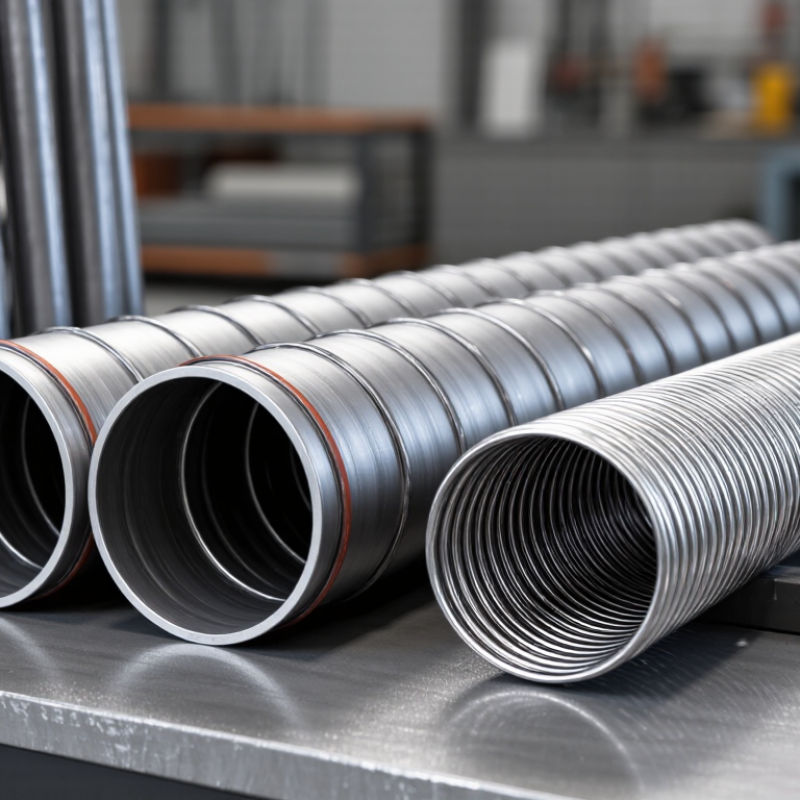
How Welded Pipe Is Made: Forming, Welding, and Inspection
In 2026, common welded pipe types include electric resistance welded (ERW), high-frequency welded (HFW), longitudinal submerged arc welded (LSAW), and spiral submerged arc welded (SSAW) pipe. Their differences begin with forming. Flat steel strip or plate passes through shaped rollers, creating a round shell. ERW and HFW then use electrical resistance to heat the edges. LSAW uses a straight seam, while SSAW forms a helical seam from coil stock. The 2024 World Steel in Figures report recorded 1,888.2 million tonnes of global crude steel production in 2023. That scale makes forming accuracy and material traceability essential.
During welding, operators control edge pressure, heat input, speed, and alignment. A small mismatch can create an internal lack of fusion. The pipe may look smooth outside. That is not enough. Shop-floor experience shows that mill settings, plate cleanliness, and cooling conditions can change weld quality quickly. After welding, pipes undergo dimensional checks, hydrostatic testing, and non-destructive testing. Ultrasonic or radiographic methods can reveal hidden cracks, pores, and incomplete fusion. Standards such as ISO 3183, API 5L, ASTM A53, and ISO 17640 provide widely used requirements for pipe production and weld inspection. Requirements vary by service.
Tips: Match the forming method to diameter, wall thickness, and pressure duty. Record heat numbers and inspection results. Recheck calibration when readings seem unusually perfect. No inspection plan is perfect. Human review still matters.
ERW and HFW Pipe: High-Frequency Resistance Welding Basics
What Are the Top Types of Welded Pipe in 2026?
ERW and HFW pipe remain important choices for efficient pipe production. Both use electrical resistance to generate heat along the pipe seam. Steel strip is formed into a round shape, then pressure joins the heated edges. The process creates a continuous longitudinal weld. ERW commonly describes resistance welding at controlled frequencies. HFW uses higher frequencies to concentrate heat near the strip edges. This focused heating can support faster production and a narrow heat-affected zone.
The finished pipe depends on more than welding speed. Strip cleanliness, edge preparation, forming accuracy, and heat control all affect seam quality. After welding, manufacturers may remove the internal bead and size the pipe precisely. Ultrasonic testing, hydrostatic testing, and dimensional checks help identify weak areas. Wall thickness, outside diameter, steel grade, and service temperature should match the project requirements. A pipe that looks smooth may still contain hidden defects.
ERW and HFW pipe suit many structural, mechanical, water, and low-to-moderate pressure applications. They offer consistent dimensions and efficient material use. However, they are not automatically suitable for every demanding service. Corrosive fluids, cyclic loading, and high-pressure conditions require careful engineering review. In practice, incorrect forming can create problems even when the welding current is correct. That point is easy to overlook. Specification review, traceable inspection records, and qualified technicians remain essential when selecting welded pipe in 2026.
LSAW and SSAW Pipe: Longitudinal vs. Spiral Seam Construction
In 2026, welded pipe selection will depend heavily on seam direction, diameter, wall thickness, and site conditions. LSAW pipe uses a longitudinal seam, formed by bending steel plate and welding along its length. This process supports controlled geometry and consistent wall thickness. It suits high-pressure transmission lines, structural piles, and large-diameter water systems. The American Petroleum Institute’s Specification 5L covers line pipe requirements, including grades, testing, and dimensional controls.
SSAW pipe uses a spiral seam. Steel strip forms a helix around the pipe during production. This method can produce long, large-diameter sections with efficient material use. It often fits lower-pressure water, piling, and certain oil and gas applications. However, the helical weld creates a longer seam path. Inspection planning becomes more important, especially near bends, supports, and cyclic-load zones. Field experience shows that design assumptions can fail when soil movement is underestimated.
The World Steel Association reported 1,888.2 million tonnes of global crude steel production in 2023. That scale supports broad plate and coil availability, but it does not guarantee equal pipe quality. A 2024 infrastructure outlook from the International Energy Agency also projects continued investment in grids and energy transport. Demand may rise. Specifications still matter more than market volume. LSAW is not automatically superior, and SSAW is not merely a budget option. Mill certification, ultrasonic testing, weld procedure qualification, and corrosion allowance should guide the final choice. Mistakes often begin with choosing by diameter alone.
Welded Pipe Standards: API 5L PSL 1 and PSL 2 Requirements
Welded pipe remains central to transmission, gathering, and process systems in 2026. API Spec 5L covers welded and seamless line pipe for these services. PSL 1 provides the basic manufacturing and inspection framework. PSL 2 adds tighter controls for chemistry, tensile performance, toughness, hardness, and traceability. It also requires more detailed non-destructive examination of welded seams. The difference is not cosmetic. It can affect fracture resistance near low-temperature sites.
Pipe selection usually involves ERW, HFW, LSAW, or SSAW production. The right process depends on diameter, wall thickness, pressure, and project length. The World Steel Association reported 1,888.2 million tonnes of crude steel production in 2023. Meanwhile, the International Energy Agency’s Oil 2024 report projects global oil demand at 105.4 million barrels per day by 2030. These figures indicate continuing infrastructure activity, but they do not directly measure line-pipe demand. That limitation matters. Market forecasts can look precise while project specifications remain uncertain.
Tips: Match the purchase order to the exact API 5L edition and PSL level. Check heat numbers, chemical results, weld-seam inspection, hydrostatic records, and Charpy test temperatures. Review mill certificates against the pipe markings. Small documentation gaps can become expensive field disputes. In practice, PSL 2 is not automatically the best choice; service conditions should justify its added controls.
ASTM A53 Welded Pipe: Standard Sizes from NPS 1/8 to 26
What Are the Top Types of Welded Pipe in 2026?
ASTM A53 welded pipe remains a practical choice for water, air, steam, and general pressure service. It covers nominal pipe sizes from NPS 1/8 through NPS 26. The range suits small instrument connections and larger plant piping. ASTM A53 commonly includes Grade A and Grade B options. Grade B is often selected when higher strength is needed. The pipe may be supplied black or galvanized, depending on corrosion exposure. That range matters. However, nominal size does not define the complete product.
Engineers should confirm the outside diameter, wall thickness, schedule, grade, and manufacturing type. A53 welded pipe can be produced with electric-resistance welding or furnace welding, depending on the specified product category. Mill certificates should be checked against the purchase requirements. Hydrostatic testing and required mechanical tests also deserve attention. In practical specification work, I would not choose a pipe from size alone. Design pressure, temperature, joining method, and support spacing can change the correct selection. Details matter. A common mistake is treating ASTM A53 as a universal solution. It is not. Some projects may require a different material standard or tighter inspection level. Verification with the applicable project code remains essential, even when the pipe looks suitable on paper.
ASTM A53 Welded Pipe: Standard Sizes from NPS 1/8 to 26
The chart shows the nominal outside diameter associated with standard NPS sizes commonly specified for ASTM A53 welded pipe. Dimensions are shown in inches; wall thickness varies by schedule and grade.
Reference basis: standard nominal pipe size and outside-diameter dimensions used with ASTM A53/A53M carbon steel pipe specifications. Product availability and wall thickness may vary by specification and schedule.