Top 10 Mechanical Shaft Seal Manufacturers in China
A Mechanical Shaft Seal may look like a small component, but its performance can shape a pump’s reliability, maintenance schedule, and operating cost. A. O. Lebeck, a recognized researcher in mechanical face seals, offers a useful design principle: “Evaluate the seal in its operating system, not as an isolated part.” That means looking beyond catalog dimensions.
This guide reviews ten Chinese manufacturers through practical criteria: product range, material options, manufacturing capability, quality documentation, and technical support. A seal working with hot water faces different demands from one handling abrasive slurry. Face materials such as silicon carbide and carbon matter. So do elastomer compatibility, shaft runout, pressure, and installation quality. Details count.
The list is intended as a starting point, not a universal verdict. A supplier with strong export experience may not suit every plant, and a low purchase price can obscure longer-term service costs. Buyers should verify drawings, test records, and application references directly. Some details may remain unclear in public information; that deserves scrutiny, not assumption. The companies featured here represent options worth comparing, while final selection should reflect the actual equipment and process conditions. Check the fit carefully. Seal problems rarely announce themselves at a convenient time.
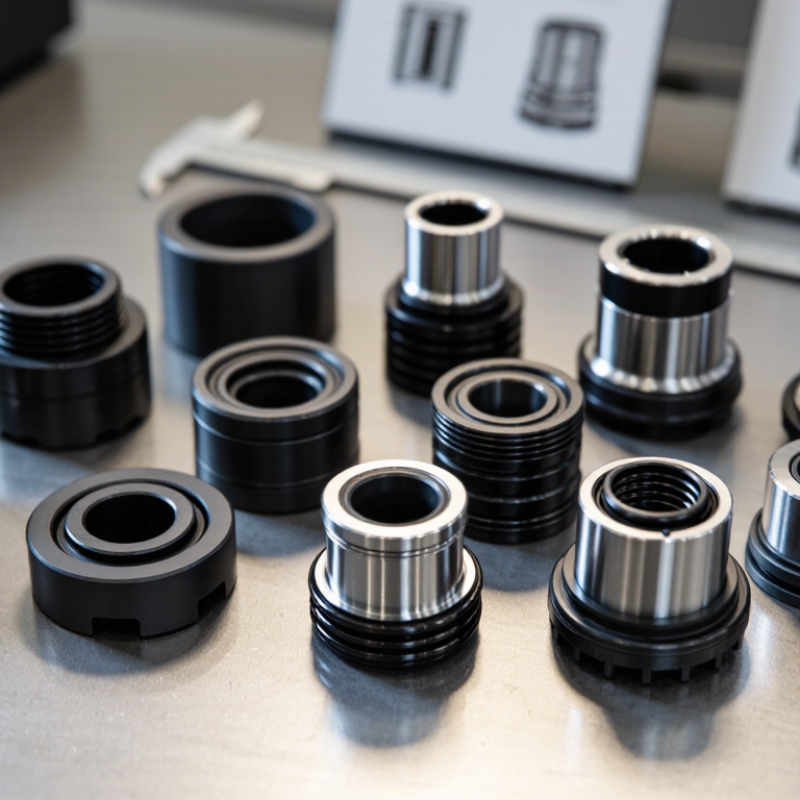
Mechanical Shaft Seals Explained: Components, Face Pairs, and Leakage Paths
A mechanical shaft seal controls fluid where a rotating shaft passes through a pump casing. Its main sealing pair consists of a rotating face and a stationary face, pressed together by spring force and fluid pressure. The faces are often made from different materials, such as carbon against a ceramic or silicon-carbide surface. The right pairing depends on the fluid, temperature, pressure, and operating speed. There is no universal best choice.
Other parts matter too. Secondary seals, commonly elastomer rings, close gaps between components and the shaft or gland. Springs maintain contact as the faces wear or move slightly. The gland holds the assembly against the equipment casing. Small details count. A damaged O-ring, poor shaft finish, or incorrect installation can create a leakage path even when the faces look undamaged.
Leakage may pass between the face pair, around a secondary seal, or through a cracked or distorted component. A thin fluid film between faces is often needed for lubrication, so “zero leakage” is not always a realistic operating description. Excessive leakage, heat, or visible deposits deserve investigation. Check alignment, shaft runout, flush flow, and face condition before replacing parts. In practice, diagnosis is not always neat; several small issues can combine, and a clean-looking seal can still be poorly supported by the system.
Seal Types in China: Pusher, Metal Bellows, Cartridge, and Split Designs
Mechanical shaft seals used in China cover several designs, and each suits a different installation problem. Pusher seals use a spring-loaded element that moves along the shaft as faces wear. They are common in general-purpose pumps, where straightforward maintenance matters. But abrasive particles can collect around moving parts. That detail is easy to overlook.
Metal bellows seals replace the sliding secondary seal with a flexible metal element. They can work well in hot service or where elastomers are a concern. Cartridge seals arrive preassembled on a sleeve, helping reduce installation errors and shaft-sleeve damage. Fit still matters. A cartridge cannot correct poor alignment or an unsuitable seal chamber.
Split seals separate into sections, allowing installation without removing connected equipment or dismantling a long shaft. This can save substantial maintenance time on large pumps. Yet the split faces demand careful assembly; a small gap may cause leakage. Selection should consider fluid properties, temperature, pressure, shaft movement, and available flush plans. There is no universally best design. Plant records often reveal more than a catalog description, though records can be incomplete. Engineers should verify operating conditions before choosing.
Selection Data: Pressure, Temperature, Shaft Speed, Media, and Flush Plans
A mechanical shaft seal should be selected from operating data, not from a product label alone. Record normal and peak pressure, including pressure during startup or a blocked discharge. Note the fluid temperature near the seal chamber, not only the vessel reading. A few degrees can matter when the fluid flashes or loses lubricity. Small details matter.
Shaft speed affects heat at the seal faces, so provide both rotational speed and shaft diameter. Describe the media plainly: viscosity, solids, abrasiveness, corrosiveness, and any tendency to crystallize. “Clean water” may still carry fine grit. That sounds neat on paper; plant data is often incomplete. Be honest about what is measured and what is estimated.
Flush plans should match the actual failure risk. A recirculation flush may help remove heat, while a clean external supply can protect faces from dirty or crystallizing process fluid. Check flush pressure, flow, temperature, and compatibility before specifying it. Include seal-chamber drawings and startup conditions when requesting quotations from manufacturers. A short data sheet helps, but it cannot replace a careful review of changing process conditions.
API 682 (4th Edition) and ISO 21049:2004: Standards for Seal Systems
For buyers comparing mechanical shaft seal manufacturers in China, API 682, 4th Edition, and ISO 21049:2004 offer a practical basis for evaluating seal systems. They address seal arrangements, qualification, materials, and supporting systems—not merely the seal face. The editions should not be treated as interchangeable by assumption. Confirm the exact standard, edition, and exceptions stated in each supplier’s technical documentation.
A useful review starts with the operating envelope: pressure, temperature, product properties, shaft movement, and expected startup conditions. Then check the proposed piping plan, instrumentation, and maintenance access. Small details matter. A flush line that is difficult to inspect can undermine an otherwise sound design. The U.S. Department of Energy’s Improving Pumping System Performance: A Sourcebook for Industry reports that pumping systems can consume 25–50% of energy use in some industrial facilities. That figure is not a seal-specific saving, but it shows why reliable pump operation matters. Ask manufacturers for documented qualification results, inspection records, and clear explanations of any deviations. Paper compliance alone is not proof of performance. Some specifications still leave room for interpretation; engineers should resolve that before procurement.
Top 10 Chinese Manufacturers Compared by Product Range and Industry Applications
Comparing the top 10 Chinese mechanical shaft seal manufacturers is more useful when product range matters more than rank alone. Some concentrate on standard seals for pumps, while others provide cartridge, metal-bellows, mixer, or custom designs. These options serve different needs. A compact cartridge seal can simplify installation in a water pump, while a mixer seal may need to handle viscous products and frequent cleaning.
Industry applications reveal important differences. Water treatment and general manufacturing often need dependable seals for continuous operation. Chemical processing may require carefully selected face materials and elastomers to suit the fluid and temperature. Food, pharmaceutical, and power applications bring their own hygiene, pressure, or thermal demands. A broad catalogue is helpful, but it does not prove that a particular seal fits a specific operating condition. A ranking can flatten these differences. That comparison is useful, but not perfect.
Tips: Check operating pressure, shaft speed, temperature, and fluid details before requesting a quotation. Ask for material specifications, dimensional drawings, and relevant test records. Compare support for installation and maintenance, too. Fit matters. A low purchase price may not reflect replacement time or downtime costs.