

What Are the Top Heavy Duty Storage Cabinet Types in 2026?

Choosing the right Heavy Duty Storage Cabinet in 2026 requires more than comparing steel thickness or advertised load capacity. Industrial workplaces now demand safer access, better space use, and clearer organization. A cabinet beside a busy workbench must open smoothly, remain stable, and protect tools from dust, impact, and daily misuse.

Warehouse design expert James A. Tompkins offers a useful principle: “Storage should support flow, not simply hide inventory.” That idea matters when comparing welded steel cabinets, modular drawer cabinets, mobile storage units, and adjustable-shelf models. Each type solves a different problem. A maintenance team may need shallow drawers for labeled fasteners. A fabrication shop may prefer deep shelves for heavy components. A narrow storeroom may benefit from a mobile cabinet with locking casters.

Strength alone is not enough. Check the rated load per shelf, cabinet anchoring options, drawer extension, lock quality, and corrosion resistance. Also consider user height and lifting frequency. Poorly positioned storage can create unnecessary strain, even when the cabinet never fails.

Some buying decisions remain imperfect. Product ratings may use different testing methods. Marketing language can sound stronger than the technical evidence. Therefore, readers should verify manufacturer specifications, warranty terms, workplace conditions, and applicable safety guidance.

This guide examines the top Heavy Duty Storage Cabinet types for 2026. It compares practical strengths, limitations, ideal applications, and overlooked details. The best cabinet is not always the largest or toughest. It is the one that fits the work.
What Are the Top Heavy Duty Storage Cabinet Types in 2026?

Heavy-Duty Storage Cabinets: Definition and Core Design Features

What Are the Top Heavy Duty Storage Cabinet Types in 2026?

Heavy-duty storage cabinets are engineered enclosures for demanding workplaces, workshops, warehouses, and service areas. They protect tools, components, records, and equipment from dust, impact, and disorder. Unlike light office cabinets, they use reinforced steel bodies, stronger hinges, and shelves designed for substantial loads.

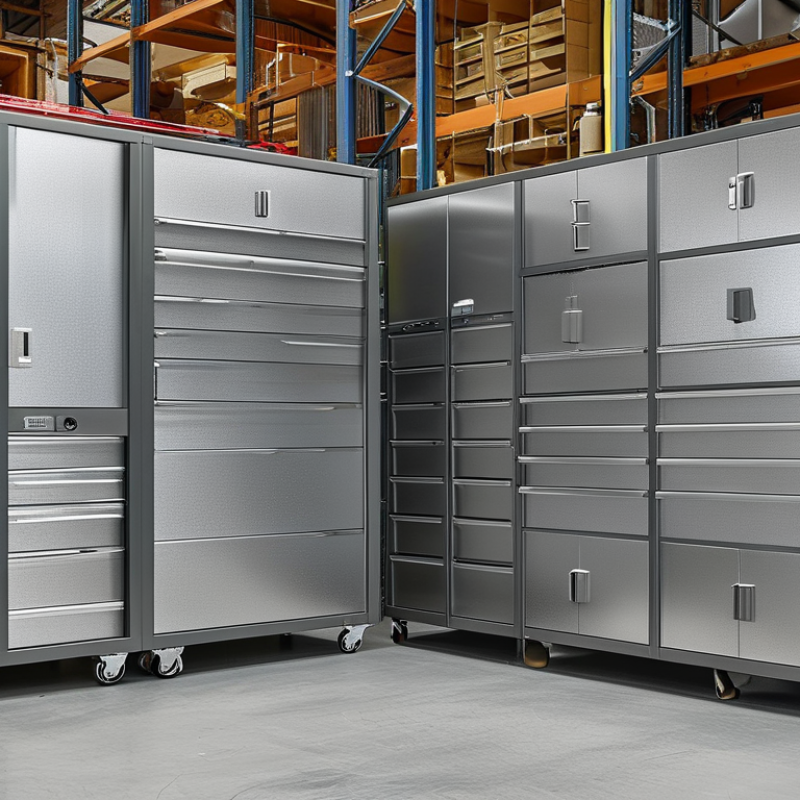
Common types include adjustable-shelf cabinets, drawer cabinets, mobile cabinets, and modular units. Adjustable-shelf models suit mixed equipment because shelf height can change as inventory develops. Drawer cabinets provide faster access to small parts, while mobile units support changing workstations. A practical design should include a tested load rating, even weight distribution, secure latching, and stable leveling feet. Anti-tip features matter when several drawers are opened. Small details matter.

Core design quality depends on more than thick metal. Welded joints, corrosion-resistant finishes, smooth drawer slides, and reinforced doors improve daily reliability. Ventilation may help protect sensitive contents, but it can reduce dust resistance. That trade-off needs careful review. Buyers should also check clear internal dimensions, not only external cabinet size. A cabinet may look spacious yet waste usable depth.

Tips: Measure the largest stored item first. Confirm shelf capacity with the supplier’s documentation. Place heavier equipment on lower levels. Inspect doors, locks, and floor contact points after installation. Do not assume every “industrial” cabinet has the same tested performance. A simple trial with real equipment can reveal awkward handles, unstable drawers, or wasted space before full deployment.

How Heavy-Duty Cabinet Types Are Classified

What Are the Top Heavy Duty Storage Cabinet Types in 2026?

How Heavy-Duty Cabinet Types Are Classified

Heavy-duty cabinets are classified by load capacity, construction, access, and working environment. A cabinet holding hand tools needs different features from one storing machine parts. Check the rated load per shelf, not only the total cabinet capacity. Steel thickness, welded joints, shelf supports, and locking mechanisms also reveal practical strength.

Common types include drawer cabinets, adjustable-shelf cabinets, locker-style units, mobile cabinets, and fire-resistant cabinets. Drawer models suit small tools and fasteners because each item stays visible. Shelf cabinets handle cartons, containers, and irregular equipment.

Locker-style designs separate personal gear or shared workplace supplies. Mobile cabinets add casters for flexible work areas, but uneven floors can reduce stability.

Then classification becomes more specific. Mobile units should have locking wheels and a low center of gravity. Cabinets for damp rooms need corrosion-resistant finishes and careful ventilation. Fire-resistant models require verified test data, since “heat resistant” is not the same as fire rated. That distinction matters.

A practical selection starts with an inventory audit. Measure item weight, dimensions, handling frequency, and available floor space. Leave clearance around doors and drawers. Overloading remains a common mistake. Shelves may look solid while their supports slowly bend.

I once underestimated how quickly mixed loads shift during daily use. A better review checks the cabinet after several weeks, not only on installation day. Classification should reflect real working conditions, not just a catalog label.

Steel, Modular, and Drawer-Based Heavy-Duty Cabinets

Steel, Modular, and Drawer-Based Heavy-Duty Cabinets

Heavy-duty steel cabinets remain practical for workshops, warehouses, and maintenance rooms. Their welded frames resist twisting, while powder-coated surfaces handle oil, dust, and frequent cleaning. Grand View Research’s industrial storage analysis identifies metal storage systems as a continuing growth segment through 2030, driven by organized production spaces and warehouse expansion. The report does not mean every steel cabinet performs equally. Load rating, shelf deflection, locking quality, and anchoring still require close inspection.

Modular cabinets suit facilities that change often. Teams can add shelves, bins, worktops, or connected units without replacing the entire system. That flexibility saves floor space, but poorly planned modules may create narrow walkways. Measure door clearance and aisle width first. Drawer-based cabinets offer faster access to tools, fasteners, and small components. Full-extension drawers reduce bending and searching time. However, heavy drawers need anti-tip protection and balanced loading. A tall cabinet with several open drawers can become unstable quickly.

The U.S. Bureau of Labor Statistics recorded about 2.6 million nonfatal workplace injuries in 2023. Storage design cannot prevent every incident, but it can reduce clutter and awkward handling. In real installations, the best results come from labeling, heavier items placed low, and routine inspections. One weakness deserves attention: published cabinet capacities often assume evenly distributed loads. Actual workshops rarely load shelves perfectly. Buyers should request test methods, safety factors, and maintenance guidance before comparing prices.

Top Heavy-Duty Storage Cabinet Types in 2026

Representative load-capacity benchmarks show how steel, modular, and drawer-based cabinets differ in typical heavy-duty storage applications. Steel cabinets generally provide the highest shelf capacity, while modular systems prioritize flexibility and drawer-based cabinets support organized access to smaller parts.

Data represents commonly published heavy-duty specification ranges and should be checked against the manufacturer’s certified rating for a specific cabinet model.

Specialized Cabinets for Tools, Chemicals, and Secure Storage

What Are the Top Heavy Duty Storage Cabinet Types in 2026?

Heavy duty storage cabinets now serve different risks, not just different room sizes. Tool cabinets remain popular in workshops, maintenance areas, and training facilities. Look for reinforced drawers, full-extension slides, and a load rating for each drawer. Shallow trays hold drill bits and fasteners, while deeper drawers protect power tools from dust. Lockable doors add useful control, but they cannot replace a clear checkout process.

Chemical storage cabinets require more careful selection. Their shelves should resist corrosion and support the container weight without bending. Adjustable shelves help separate small bottles from larger containers. Check material compatibility before storing acids, solvents, or cleaning agents together. Local fire and workplace rules still matter. They vary by location. A cabinet with ventilation openings may not suit every chemical, so guessing can create a serious hazard.

Secure storage cabinets protect documents, electronics, medication supplies, and restricted equipment from casual access. Models with multi-point locks, concealed hinges, and audit-friendly access logs offer stronger control. For heavier items, verify anchoring points and floor capacity before installation. In practice, people often focus on the lock and overlook visibility, lighting, and emergency access. That is a mistake worth reconsidering. A strong cabinet can still fail when labels fade, keys disappear, or shelves become overloaded. Regular inspections should record damage, shelf loads, and unused compartments. Safety is rarely dramatic. It is usually routine.

What Are the Top Heavy Duty Storage Cabinet Types in 2026? - Specialized Cabinets for Tools, Chemicals, and Secure Storage

Cabinet Type Primary Storage Use Typical Construction Typical Shelf Capacity* Key Safety and Security Features Best-Fit Environment Important Selection Considerations
Heavy-Duty Tool Cabinet Hand tools, power tools, dies, maintenance parts, and workshop equipment Welded steel body with reinforced drawers, adjustable shelves, or a combination of both 180–450 kg per shelf Lockable drawers Full-extension slides Anti-tip mechanism Load-rated shelves Manufacturing plants, maintenance rooms, repair workshops, and garages Confirm distributed load ratings, drawer slide capacity, cabinet anchoring points, and floor loading before installation.
Modular Parts Storage Cabinet Fasteners, electrical components, spare parts, small assemblies, and production consumables Powder-coated steel frame with adjustable shelves, bins, drawers, or compartment trays 75–250 kg per shelf Adjustable interiors Label holders Lockable doors Reconfigurable bins Factories, service centers, warehouses, laboratories, and inventory rooms Choose shelf spacing and bin dimensions according to item size; use drawer dividers to reduce part-mixing and retrieval time.
Chemical Storage Cabinet Corrosive, toxic, or reactive chemicals that require controlled storage Steel cabinet with chemically resistant coating, leak-containment shelves, and a raised liquid-tight sump 75–150 kg per shelf Spill containment Adjustable shelves Self-closing options Warning labels Laboratories, process areas, educational facilities, and industrial chemical rooms Segregate incompatible chemicals, maintain safety data sheets, provide suitable ventilation where required, and verify local regulations.
Flammable-Liquid Safety Cabinet Flammable and combustible liquid containers used in controlled work areas Double-wall steel construction with an air space between walls, spill-control shelves, and a low-level containment sump 45–100 kg per shelf Self-closing doors Three-point locking Spill containment Grounding provision Maintenance areas, laboratories, manufacturing facilities, and service workshops Check the cabinet’s tested construction, permitted liquid classes, storage limits, ventilation policy, and applicable fire code before purchase.
Hazardous-Waste Accumulation Cabinet Temporary storage of labeled waste containers, contaminated materials, and process residues Reinforced steel enclosure with a corrosion-resistant interior and removable spill tray or sump 75–150 kg per shelf Secondary containment Lockable doors Waste labeling area Easy-clean surfaces Industrial production areas, laboratories, healthcare facilities, and maintenance departments Use compatible containers, identify waste streams clearly, inspect for leaks, and follow regulated accumulation and disposal procedures.
Secure High-Value Storage Cabinet Precision instruments, controlled tools, sensitive components, records, and high-value inventory Heavy-gauge steel body with reinforced doors, concealed hinges, and a fixed or adjustable interior 100–250 kg per shelf Electronic or key lock Anti-pry door design Audit-capable access Floor anchoring Data centers, engineering departments, pharmacies, tool cribs, and secure stockrooms Consider access permissions, emergency override procedures, battery backup, audit logs, and resistance to forced entry.
Fire-Resistant Document Cabinet Paper records, certificates, contracts, personnel files, and other heat-sensitive documents Insulated multi-layer body with fire-resistant door seals and internal shelving 30–75 kg per shelf Fire-rated construction Heat-resistant seals Lockable door Document organization Offices, archives, financial departments, legal departments, and administrative facilities Review the independently tested fire-resistance duration and temperature rating; paper, digital media, and valuables require different protection levels.
Mobile Heavy-Duty Cabinet Frequently accessed tools, components, inspection equipment, and mobile maintenance supplies Welded steel cabinet mounted on industrial casters with locking drawers or doors 100–300 kg per shelf Locking casters Push handle Drawer interlock Impact-resistant finish Assembly lines, workshops, aircraft maintenance areas, laboratories, and field-service operations Never exceed the total mobile load rating; secure drawers during movement and assess ramps, thresholds, aisle width, and tipping risk.
Outdoor Weather-Resistant Cabinet Outdoor tools, electrical equipment, maintenance supplies, and utility components Powder-coated or galvanized steel enclosure with gasketed doors and corrosion-resistant hardware 75–200 kg per shelf Rain protection UV-resistant finish Padlock provision Drainage options Construction sites, utility compounds, transport facilities, and outdoor plant areas Weather resistance is not automatically waterproofing; verify the enclosure rating, condensation control, anchoring method, and corrosion protection for the site.

*Shelf capacities are typical planning ranges for heavy-duty cabinets and assume evenly distributed loads. Actual ratings vary by cabinet dimensions, shelf configuration, mounting method, and manufacturer testing. Always verify the certified load rating and applicable local safety requirements for the intended use.

How to Select the Right Heavy-Duty Cabinet in 2026

Choosing the right heavy-duty cabinet in 2026 starts with the working environment, not appearance. Welded steel cabinets suit workshops with heavy tools and frequent impact. Drawer cabinets organize small parts, fasteners, and measuring equipment. Mobile cabinets help technicians move supplies across large facilities, but loaded casters need careful checking.

Measure the available space, including doors, handles, and walking clearance. Then calculate the real load. A shelf holding metal components may need far more capacity than office files.

Check the rated load per shelf, drawer, and cabinet, not only the total rating. Adjustable shelves are useful, but thin shelves can bend under uneven weight. That detail is easy to miss.

Humidity, dust, and temperature also affect selection. Powder-coated surfaces can resist everyday corrosion, while sealed designs protect contents in dirtier areas. For valuable tools, choose controlled access and reinforced locks. In shared workplaces, a clear labeling system reduces searching time and misplaced equipment.

Anchor tall cabinets where stability is a concern. I once underestimated door-swing clearance by a few centimeters; the cabinet fit, but daily access became awkward. Allow service space around hinges and ventilation points. A verified load test, written warranty, and published material specification provide stronger evidence than polished product photos. Some choices remain imperfect. A mobile cabinet may improve efficiency but sacrifice maximum stability. The best decision depends on actual use, not a generic checklist.

Contact Us