

Flexible Busbar systems are becoming practical answers for compact switchboards, battery storage, data centers, and industrial power distribution. Their laminated copper or aluminum layers bend around tight cabinet corners. This reduces wiring congestion and can shorten installation time. However, global buyers need more than attractive product photographs. They must assess conductivity, insulation quality, thermal performance, bending durability, and documented production controls.
The International Energy Agency’s Electricity 2024 report expects global electricity demand growth to remain strong through 2026. This expansion increases pressure on manufacturers to deliver reliable, space-efficient connection systems. Copper availability also matters. S&P Global’s 2024 copper study projects a potential supply shortfall approaching 10 million metric tons by 2035. That projection is not a guarantee, but it highlights material risk. Buyers should compare copper grades, plating options, recycling practices, and supply continuity before selecting a supplier.
This guide examines leading Flexible Busbar manufacturers serving international markets. It considers engineering experience, factory capabilities, testing records, customization, certifications, and after-sales support. IEC 61439 requirements provide an important reference for low-voltage assemblies, while UL recognition may support acceptance in North American projects. Still, certification claims require verification. A polished certificate alone cannot prove consistent batch quality. Buyers should request test reports, sample inspections, dimensional drawings, and realistic lead times. A neat ranking is tempting, but it can mislead. The best manufacturer depends on voltage, current, enclosure space, environment, and installation method. Cost matters too, though the cheapest quote may create expensive rework later.
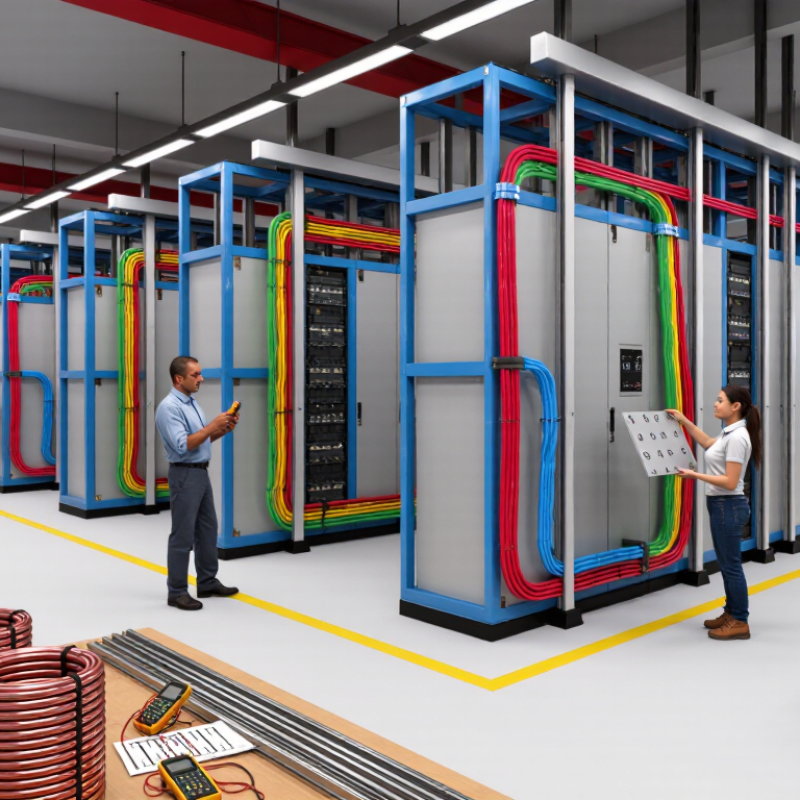
Flexible busbars are flat electrical conductors designed to carry current while allowing controlled movement. They usually contain layered copper or aluminum strips, with insulation added where touch protection is required. Unlike rigid bars, they can absorb vibration, thermal expansion, and small installation errors. This flexibility is useful in switchboards, battery assemblies, transformers, motor controls, and power conversion equipment. A compact connection can also reduce the space needed inside an enclosure. They are not simply wires made flat.
During installation, technicians route the busbar around terminals, then secure it without forcing sharp bends. The specified bend radius matters. Excessive folding can crack plating, damage insulation, or create a hot spot near the terminal. Buyers should compare continuous current, peak current, conductor material, operating temperature, insulation class, hole pattern, and available length. Copper often offers strong conductivity, while aluminum can reduce weight and cost. However, the complete joint design decides performance. Contact pressure, surface finish, fastener torque, and cooling deserve equal attention. A high current rating alone proves little.
For reliable procurement, request dimensional drawings, material certificates, resistance data, and routine test records. Samples should be checked under realistic temperature and vibration conditions, not only on a workbench. In field projects, a few millimeters of mismatch can delay assembly and encourage unsafe improvisation. I have found that early measurement prevents more trouble than late inspection. Still, testing cannot replace sound engineering judgment. Flexible busbars work best when their mechanical movement and electrical duty are specified together.
| Data Dimension | Typical Industry Data | Why It Matters to Global Buyers | Common Application |
|---|---|---|---|
| Product definition | A flexible busbar is an electrical conductor made from multiple thin copper or aluminum layers, usually laminated, insulated, or compressed together. | It combines high-current distribution with improved installation flexibility compared with rigid solid busbars and many cable assemblies. | Battery packs, power converters, switchgear, and compact power-distribution systems. |
| Typical conductor material | Electrolytic copper is widely used for its high electrical conductivity; aluminum is selected where lower weight and cost are priorities. | Material selection affects conductivity, weight, corrosion behavior, joint design, and total system cost. | Copper for compact high-current assemblies; aluminum for weight-sensitive distribution systems. |
| Common cross-sectional construction | Multiple foils or strips, commonly assembled in parallel layers. The final width, thickness, layer count, and insulation depend on the electrical and mechanical design. | Layer count and geometry influence current capacity, heat dissipation, flexibility, and connection space. | High-current links between cells, modules, inverters, breakers, and busbar systems. |
| Typical conductor thickness | Individual copper foil layers are often approximately 0.1–1.0 mm thick; engineered products may use thinner or thicker layers. | Thinner layers generally improve bending performance, while thicker conductors can simplify construction and increase mechanical robustness. | Repeated bends, offset connections, and tight electrical enclosures. |
| Typical overall width | Approximately 10–150 mm for many custom assemblies, with wider designs available for specialized high-current systems. | Width determines available conductive area, enclosure fit, creepage layout, and terminal compatibility. | Battery interconnects, DC-link assemblies, and industrial power panels. |
| Typical overall thickness | Approximately 1–10 mm, including conductor layers, insulation, separators, and protective coverings. | Thickness affects current capacity, bending radius, heat transfer, and available installation space. | Compact switchboards, power electronics, and battery enclosures. |
| Current-carrying capability | Common designs range from tens of amperes to several hundred amperes; larger assemblies can be engineered for higher currents. | Actual ampacity depends on conductor area, allowable temperature rise, ambient temperature, airflow, insulation, and installation method. | Battery systems, EV power electronics, renewable-energy inverters, and distribution equipment. |
| Operating voltage | Low-voltage and medium-voltage applications are possible, but the insulation system and applicable safety requirements must be specified for each design. | Voltage rating is determined by insulation, spacing, dielectric strength, pollution level, and system architecture—not by conductor size alone. | DC battery circuits, AC switchgear, motor drives, and power-conversion equipment. |
| Insulation options | Polyester, polyimide, PVC, EPDM, silicone, heat-shrink materials, and other engineered electrical insulation systems may be used. | The material must match the required temperature, voltage, flexibility, flame behavior, chemical resistance, and environmental exposure. | Automotive, industrial, energy-storage, aerospace, and enclosed power-equipment applications. |
| Temperature considerations | The permissible operating temperature is governed by the conductor, insulation, terminals, ambient conditions, and required temperature rise. | Thermal design is essential because excessive temperature accelerates insulation aging and increases electrical resistance. | High-load battery modules, inverters, circuit protection, and continuous-duty equipment. |
| Flexibility and bendability | Flexible foil constructions can accommodate bends, offsets, and limited movement; the minimum bend radius must be confirmed from the design drawing or test data. | A defined bend radius prevents foil cracking, insulation damage, terminal stress, and premature electrical failure. | Three-dimensional routing and misalignment compensation between fixed terminals. |
| Termination methods | Common options include drilled or punched holes, formed terminals, crimped ends, plated contact surfaces, and bolted connections. | The termination must provide low contact resistance, sufficient mechanical strength, and compatibility with the mating hardware. | Battery terminals, busbar supports, breakers, contactors, and power semiconductor modules. |
| Surface treatment | Tin, nickel, silver, or other finishes may be specified for contact areas, depending on conductivity, corrosion, temperature, and mating requirements. | Plating can improve solderability, corrosion resistance, contact reliability, and compatibility with dissimilar metals. | Outdoor equipment, battery systems, humid environments, and bolted electrical joints. |
| Key buyer customization data | Rated current, voltage, conductor material, width, thickness, layer count, insulation, terminal geometry, hole pattern, bend radius, and environmental conditions. | Complete specifications reduce quotation errors, tooling changes, fit problems, and validation delays. | Prototype development, OEM production, replacement parts, and system integration. |
| Recommended quality checks | Dimensional inspection, conductor resistance, insulation resistance, dielectric withstand, terminal pull or torque verification, visual inspection, and temperature-rise testing where applicable. | Testing confirms electrical safety, dimensional consistency, connection reliability, and suitability for the intended duty cycle. | Incoming inspection, qualification testing, production approval, and periodic quality audits. |