China Top Crimping Butt Connectors Manufacturers?
Crimping Butt Connectors may look like small components, but a poor crimp can interrupt power, weaken a repair, or create costly rework. Their reliability depends on more than the connector itself. Wire gauge, barrel dimensions, conductor preparation, crimping-tool compatibility, and insulation quality all matter.
The wider market is growing. Grand View Research estimated the global electrical connectors market at about USD 84.9 billion in 2023, with projected annual growth of 5.6% from 2024 to 2030. This figure covers many connector types; it does not measure butt connectors alone. Still, it reflects rising demand across automotive, industrial, and electrical applications, where dependable terminations are essential.
Choosing a manufacturer requires more than comparing prices or product photos. Buyers should examine material specifications, dimensional consistency, production controls, testing procedures, and traceability. A polished catalog is not evidence of a verified test program. Ask how products are checked, and request documentation relevant to the intended application. Then compare lead times and support against the realities of your project.
Small part. Big consequences.
This guide reviews leading China-based manufacturers of Crimping Butt Connectors and the practical criteria behind a responsible shortlist. The ranking should not replace sample testing or supplier due diligence. Even experienced buyers can miss details when specifications are vague. That is worth admitting.
What Are Crimping Butt Connectors and How Are They Made?
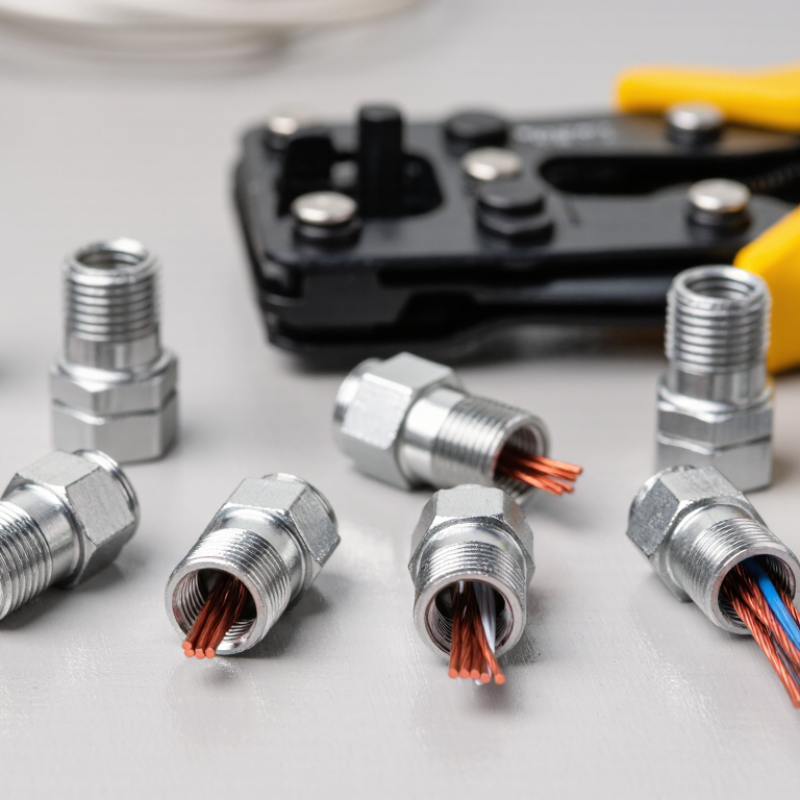
A crimping butt connector joins two wires end to end inside a short metal sleeve. The stripped copper ends enter from opposite sides, leaving no exposed conductor when the connection is properly made. The barrel is commonly copper or tinned copper; an outer layer of PVC, nylon, or heat-shrink material provides insulation and, in some designs, added environmental protection. It looks simple. The fit matters.
Manufacturing starts with forming metal strip into a tube, then sizing the barrel for specific wire gauges. Insulation is added or molded around it, and finished parts are checked for dimensions, material defects, and crimp performance. During installation, the correct die compresses the barrel around the strands. Too little compression can loosen the joint; too much can damage strands. A tug test helps, but it cannot replace a controlled crimp inspection. IPC/WHMA-A-620 provides widely used workmanship criteria for cable and wire-harness assemblies.
The market context is substantial: Fortune Business Insights estimated the global electrical connectors market at USD 84.6 billion in 2023, with growth projected in its 2024–2032 report. That figure covers many connector types, not butt connectors alone. Buyers should therefore compare the connector’s stated wire range, barrel material, insulation rating, and test documentation rather than infer quality from market growth. Small details count. A crimp may look neat and still need closer inspection.
China Top Crimping Butt Connectors Manufacturers? - What Are Crimping Butt Connectors and How Are They Made?
Crimping butt connectors join two wire ends in line. A crimping tool compresses the connector barrel around the conductors to form a mechanical and electrical connection. Specifications vary by product and applicable standard; check the connector’s markings and manufacturer’s datasheet before selection.
| Category | Typical details | Selection or production notes |
| Basic function | Connects two conductors end-to-end, keeping the joined wires approximately in line. | Choose a connector rated for the conductor material, wire size, current, voltage, and environment. |
| Common connector types | Uninsulated, vinyl-insulated, nylon-insulated, heat-shrink, and step-down butt connectors. | Heat-shrink versions use a heat-activated lining to help seal the splice when installed as directed. |
| Conductive barrel | Often made from copper or copper alloy; some products have a tin-plated surface. | The barrel size and crimp profile must match the wire range and specified crimping tool. |
| Insulation and sealing | Insulated types commonly use polymer sleeves; heat-shrink products may include an inner sealant lining. | Material, temperature rating, and environmental protection depend on the specific product design. |
| Wire-size compatibility | Products are offered for different conductor cross-sections or AWG sizes; ranges are product-specific. | Do not infer compatibility from color alone. Verify the printed size range or datasheet. |
| Manufacturing: metal barrel | Metal strip or tube stock is formed into a conductive barrel, then cut or finished to the required dimensions. | Processes and tooling depend on the barrel design and production method. |
| Manufacturing: surface and insulation | Where specified, the metal part may be plated. An insulating sleeve is formed or fitted around the barrel. | Heat-shrink constructions may add tubing and sealant components before final inspection. |
| Quality checks | Typical checks can include dimensions, visual condition, material or plating requirements, and electrical or mechanical performance. | Test methods and acceptance limits should follow the product specification and relevant requirements. |
| Installation essentials | Strip the wire to the specified length, insert each conductor fully, and crimp with the designated tool and die. | Follow the connector instructions; an incorrect tool, strip length, or crimp can compromise the connection. |
| Common applications | Electrical wiring in vehicles, appliances, control panels, and general wiring harnesses. | Use only in applications covered by the connector’s ratings and installation instructions. |
How China's Crimping Butt Connector Industry Is Structured
China’s crimping butt connector industry is made up of several types of suppliers. Some factories focus on high-volume production, while smaller workshops handle varied sizes and custom packaging. Around the factory floor, copper sleeves are stamped, plated, and formed into connectors. Insulating covers are produced separately, then paired with the metal barrels. Simple parts. Exacting work.
The supply chain often includes material processors, connector manufacturers, plating providers, and distributors. Their roles can overlap, especially in industrial regions where suppliers operate close together. Buyers may compare barrel dimensions, wire ranges, insulation materials, and plating thickness. A sample crimp can reveal more than a product sheet: the wire should sit firmly, with no loose strands or distorted insulation. Still, one test is not enough. Tool settings and operator technique can affect results.
Quality systems vary between manufacturers. Reliable suppliers typically maintain batch records and inspect dimensions, material finish, and crimp performance. Ask how they manage changes in copper supply or production tooling. These details matter when orders are repeated over time. Not every factory publishes the same level of technical information, and that can make comparisons difficult. It is worth requesting clear specifications and a small production sample before committing to a larger order.
Which Chinese Manufacturers Specialize in Crimping Butt Connectors?
Chinese manufacturers specializing in crimping butt connectors usually come from the terminal, cable accessory, and wiring harness industries. Many are based in Zhejiang, Guangdong, and Jiangsu, where electrical component production is well established. Their product lines often include insulated, non-insulated, heat-shrink, and waterproof butt connectors.
Experienced manufacturers normally support copper or tinned copper barrels, automated crimping, and controlled insulation stripping. They should provide material certificates, dimensional drawings, crimp-force testing, and production samples. A reliable factory also explains wire ranges clearly, rather than promising one connector for every application. That detail matters in real workshops.
However, factory capability is not always obvious from a polished website. Some suppliers trade products made elsewhere. Others offer low prices but limited testing records. I have found that sample inspection can reveal uneven plating, loose insulation, or weak barrel seams.
Tips: Ask for recent test reports, not generic certificates. Check connector fit with your actual wire size and crimping tool. Request a small trial order before larger purchasing. Confirm packaging, traceability, and tolerance requirements in writing. A short factory video helps, but it cannot replace physical samples.
What Standards and Quality Factors Define Leading Manufacturers?
China’s leading crimping butt connector manufacturers are defined by controlled processes, not attractive catalogs. Industry buyers should verify IEC 60352-2, UL 486A-486B, and IPC/WHMA-A-620 alignment. These references address crimp integrity, insulation support, conductor preparation, and acceptance criteria. Certification alone is not enough. Scope matters.
A 2024 MarketsandMarkets report valued the global electrical connectors market at USD 84.9 billion in 2023. It projects USD 114.7 billion by 2028, showing why capacity claims need evidence.
Reliable suppliers provide lot traceability, calibrated crimp presses, material certificates, and documented tooling control. Ask for cross-section photos and pull-out test records. A properly formed barrel should grip strands without cutting them. Plated copper, stable wall thickness, and controlled burrs also affect resistance and corrosion performance.
Quality audits should sample terminals from different production shifts, not one perfect batch. Temperature cycling, salt-spray exposure, and tensile testing reveal weaknesses hidden during visual inspection.
ISO 9001 systems help, but they do not replace product-level verification. I would question vague claims such as “international standard” without clause numbers. Small omissions become expensive failures. That is where many supplier comparisons remain incomplete.
How to Evaluate Manufacturers for Different Applications and Needs?
China Top Crimping Butt Connectors Manufacturers?
How to Evaluate Manufacturers for Different Applications and Needs?
Choosing a crimping butt connector manufacturer starts with the application, not the catalog. A connector used inside a control cabinet may face different vibration, moisture, and temperature conditions than one used in vehicle wiring. Define wire size, conductor material, insulation type, operating environment, and expected pull strength before comparing suppliers. Ask for dimensional drawings and test reports tied to the exact connector series. A general certificate alone may not show how a particular product performs.
Production consistency matters. Check whether the manufacturer controls barrel dimensions, plating thickness, and insulation quality across batches. Request samples from normal production, not only specially prepared evaluation pieces. Then crimp them using your intended tools and wire sizes. Inspect for strand damage, loose sleeves, uneven insulation support, and excessive pullout movement. Small differences count. A connector can look neat but still produce an unreliable joint. It is also reasonable to ask how defects are recorded and corrected; vague answers deserve follow-up.
Tips: Match the connector to the tool and wire gauge. Keep sample results, test conditions, and revision numbers together. For outdoor or high-vibration use, request evidence relevant to those conditions rather than assuming a standard connector will suffice. If a supplier cannot explain its testing method clearly, pause and verify independently. That extra step takes time, but skipping it can be costly.
Evaluating Crimp Butt Connector Manufacturers by Application
Typical buyer-priority ratings by application (1 = lower priority, 5 = higher priority). Use this as a selection framework—not as a rating of any specific manufacturer.
Priorities vary with operating conditions. Before purchasing, verify the connector’s wire-size range, material and plating, temperature limits, environmental sealing, applicable test standards, and crimp-tool requirements against the product datasheet and your application.