

Choosing the right Wall Cladding Panels can change a building’s appearance, comfort, and long-term maintenance needs. A warm timber surface may suit a country home, while fiber cement or metal panels can better support a modern commercial facade. Each material responds differently to sunlight, rain, impact, insulation demands, and cleaning routines.
This guide explores the top 10 types of Wall Cladding Panels used in residential, commercial, and industrial projects. It considers real-world factors, including installation methods, moisture resistance, fire performance, thermal behavior, durability, and visual character. You will see how brick slips create a traditional finish, how stone panels add texture, and how composite systems can reduce structural weight. Small details matter. Joint design, drainage gaps, and edge sealing often influence performance more than expected.
No ranking is perfect. Local climate, building codes, budget, and installer experience can change the best choice. A panel that performs well beside a dry coastal road may need different protection in a wet mountain region. Product claims also require careful checking against technical data, warranties, and independent certification. The following overview aims to provide practical, balanced guidance rather than promote one universal solution. It also acknowledges a common mistake: attractive samples do not always reveal future fading, staining, or repair difficulty. Careful comparison remains essential before specifying any cladding system.
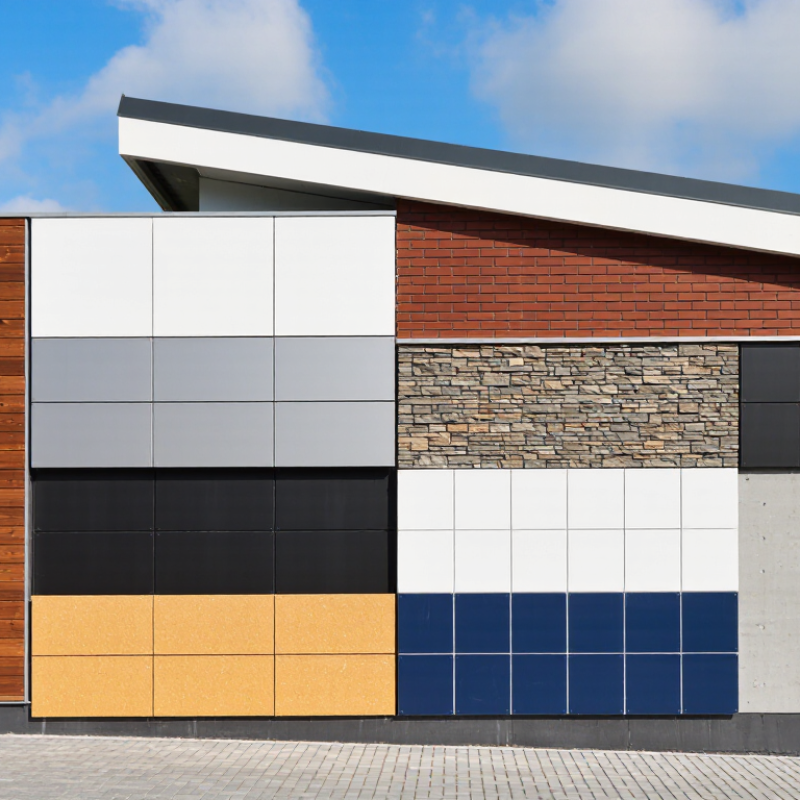
What Are Wall Cladding Panels and How Are They Classified?
Wall cladding panels are protective and decorative layers fixed over a building’s exterior or interior walls. They can control rain, sunlight, heat loss, and surface damage. Common types include metal, fiber cement, timber, vinyl, stone veneer, brick slips, ceramic, high-pressure laminate, and composite panels. Classification usually begins with the core material. It also considers panel shape, fixing method, fire behavior, moisture resistance, and thermal performance.
The International Energy Agency reported that buildings consumed about 30% of global final energy in 2022. This makes cladding selection more than a visual decision. Insulated panels may reduce heat transfer, but performance depends on joints, cavities, and installation quality. A metal panel with open seams can fail during wind-driven rain. Fiber cement may resist moisture well, yet careless cutting can weaken edges. Fire performance is commonly assessed under standards such as EN 13501-1 or ASTM E84. These tests support comparison, but they do not replace project-specific engineering. Classification is useful, but never perfect.
Tips: Check the wall substrate before choosing a panel. Confirm drainage paths, fastener spacing, fire ratings, and local exposure conditions. Ask for tested thermal and water-resistance data, not only marketing claims. A small sample can reveal color variation, texture, edge quality, and cleaning difficulty. I have found that installation details often matter as much as the panel itself. Perhaps that is the part many specifications underestimate.
Wall cladding panels are prefabricated boards or sheets installed over exterior or interior wall surfaces for protection, appearance, insulation support, or moisture control. They are commonly classified by their primary material. The chart compares representative panel thicknesses used in common wall-cladding systems; actual specifications vary by manufacturer, structural requirements, and installation method.
The top 10 wall cladding panel types cover very different performance needs. Metal panels suit modern façades and resist insects, but coastal air can accelerate corrosion. Fiber cement panels offer strong fire resistance and stable dimensions. Wood panels bring warmth and visible grain, although they need careful sealing and regular inspection. Stone veneer creates a solid, textured appearance without the weight of full masonry.
Brick Veneer Panels provide familiar character and useful moisture detailing. Vinyl panels are lightweight, economical, and simple to replace. Wood-plastic composite panels resist routine moisture better than untreated timber. High-pressure laminate panels offer many colors and consistent surface patterns. Ceramic or porcelain panels handle sunlight and cleaning well, but their weight demands accurate support. Glass panels increase daylight, though glare and thermal movement require professional design.
Panel choice should follow the building’s exposure, structure, drainage, and maintenance plan. I check joints, fasteners, corner details, and ventilation gaps before judging appearance. Small installation errors can allow water behind an otherwise excellent panel. That matters.
A shaded northern wall may tolerate wood longer than a sun-baked southern elevation. In wet regions, open-joint systems need properly designed membranes and flashings. Product data helps, but site experience still matters. No panel wins every project. Some recommendations remain uncertain until the wall’s wind, humidity, and cleaning conditions are measured. An honest specification should allow for that uncertainty.
| No. | Wall Cladding Panel Type | Primary Material | Typical Panel Form | Main Advantages | Common Applications | Maintenance Profile | Important Considerations |
|---|---|---|---|---|---|---|---|
| 1 | Fiber Cement Panels | Cement, cellulose fibers, mineral fillers, and water | Large flat sheets, lap boards, or textured panels; commonly supplied prefinished or ready for coating | Non-combustible in many tested assemblies, resistant to rot and insects, dimensionally stable, and suitable for many climates | Residential façades, commercial buildings, rainscreen systems, and low-rise renovation projects | Low to moderate; periodic cleaning and inspection of joints and coatings are generally required | Heavy compared with some alternatives; cutting can generate respirable dust, so appropriate controls are needed |
| 2 | Metal Composite Panels | Usually two metal skins bonded to a mineral-filled or polymer-based core | Lightweight, rigid flat panels with routed-and-folded or cassette-style edges | Low weight, broad color selection, clean lines, fast installation, and good resistance to weathering when properly specified | Office buildings, retail façades, transport facilities, soffits, and feature walls | Low; surfaces normally require occasional washing and inspection for dents or damaged coatings | Fire performance depends heavily on the core and complete assembly; specify tested systems for regulated buildings |
| 3 | Solid Aluminum Panels | Single-skin aluminum sheet, often formed into cassette or tray panels | Folded cassette panels, flat sheets, or custom-fabricated shapes | Lightweight, corrosion resistant, recyclable, easy to form, and available in anodized or high-performance coatings | Commercial façades, canopies, parapets, column covers, and architectural feature areas | Low; cleaning intervals depend on local pollution, salt exposure, and finish type | Can dent or scratch; thermal movement and galvanic contact with dissimilar metals must be managed |
| 4 | High-Pressure Laminate Panels | Decorative resin-impregnated papers compressed over a kraft-paper or mineral-based core | Thin, rigid sheets installed as ventilated façade panels or compact laminate boards | Wide range of wood, stone, and solid-color finishes; impact resistant, lightweight, and suitable for detailed designs | Ventilated façades, balconies, educational buildings, and residential exterior walls | Low; smooth coated surfaces are generally easy to clean | Edges and penetrations must be sealed or detailed correctly; fire and moisture performance varies by product and assembly |
| 5 | Natural Stone Panels | Cut or thinly fabricated granite, limestone, slate, marble, quartzite, or other natural stone | Thin stone slabs, honeycomb-backed panels, or mechanically fixed rainscreen units | Distinctive appearance, high durability, UV stability, and strong resistance to impact when appropriately selected | Prestige commercial façades, civic buildings, hospitality projects, entrances, and feature walls | Low to moderate; cleaning, joint inspection, and occasional treatment may be needed depending on stone type | High weight and installation cost; anchorage, substrate capacity, freeze-thaw behavior, and water management are critical |
| 6 | Brick Veneer Panels | Thin fired-clay brick slips, brick tiles, or factory-assembled brick-faced panels | Thin masonry units on carrier panels or mechanically supported modular systems | Provides the appearance of traditional masonry with less thickness and weight than full brickwork | Residential exteriors, commercial façades, façadе renovations, and accent elevations | Moderate; mortar joints and drainage details should be inspected and maintained | Requires properly designed flashing, weeps, movement joints, and secure attachment to control moisture and movement |
| 7 | Terracotta Panels | Fired architectural clay, usually glazed or unglazed | Extruded or pressed hollow rainscreen units, baguettes, or flat façade panels | Colorfast, durable, resistant to ultraviolet exposure, and available in textured or glazed finishes | Institutional buildings, cultural facilities, offices, high-end residential projects, and ventilated façades | Low; generally requires cleaning and inspection of fixings and joints | Panels are brittle and must be engineered for wind loads, impact, thermal movement, and secure mechanical attachment |
| 8 | Wood Cladding Panels | Solid timber, thermally modified wood, acetylated wood, or engineered wood products | Boards, slatted panels, shingles, or modular rainscreen cassettes | Natural appearance, renewable material potential, good workability, and strong design flexibility | Residential façades, hospitality buildings, schools, cabins, and interior-exterior feature transitions | Moderate to high; finish renewal, ventilation, drainage, and inspection are important | Moisture exposure, detailing, species, treatment, and local fire requirements strongly affect performance |
| 9 | PVC or Vinyl Siding Panels | Extruded polyvinyl chloride with impact modifiers, pigments, and stabilizers | Interlocking horizontal or vertical profiles, shakes, or insulated siding panels | Lightweight, economical, moisture resistant, easy to install, and available in many colors and profiles | Low-rise residential buildings, garages, extensions, and cost-sensitive renovations | Low; typically requires washing and replacement of damaged pieces | Can expand and contract significantly; color selection, impact resistance, and fire performance vary by product |
| 10 | Glass-Fiber-Reinforced Concrete Panels | Cementitious matrix reinforced with alkali-resistant glass fibers | Thin precast panels, rainscreen units, perforated screens, or custom-shaped façade elements | High design flexibility, stone-like appearance, lower weight than many conventional precast panels, and good durability | Contemporary façades, civic buildings, cultural projects, screens, and large feature walls | Low to moderate; cleaning and inspection of joints, anchors, and surface finish are recommended | Panel tolerances, lifting, anchorage, moisture control, and crack prevention require specialist engineering |
Note: Actual fire rating, wind resistance, thermal performance, moisture control, service life, and installation requirements depend on the complete wall assembly, local building codes, climate, substrate, and manufacturer-tested system specifications.
Choosing wall cladding starts with climate, structure, and maintenance expectations. Fiber cement panels resist moisture, fire, and insects, but cutting them creates heavy dust. Metal panels are lightweight and durable. They suit modern façades, though dents and thermal movement can become visible. Natural wood offers warmth and tactile grain. It needs regular sealing, especially on rainy elevations. Engineered wood can improve stability, but it still requires careful detailing.
Stone panels provide strong visual weight and excellent weather resistance. Their mass may require reinforced support. Brick veneer handles impact well and ages naturally, yet installation takes time. Vinyl panels cost less and need little painting, but they can look less convincing at close range. These differences matter around windows, corners, and service openings.
WPC panels combine wood fibers and polymers. They resist rot better than untreated timber, but color fading remains possible. HPL panels offer sharp patterns and consistent surfaces. Their edges need reliable protection from water. Terracotta panels create rich color variation and perform well in heat, although their weight complicates installation. Glass panels bring daylight and a clean appearance. They also demand strict attention to glare, cleaning, and thermal performance.
I have seen attractive panels fail because installers ignored drainage gaps. A cheaper system can become expensive after repeated repairs. Designers should inspect sample panels outdoors, not only under showroom lights. Small color shifts, fastener marks, and dirt accumulation often change the final appearance. None of these materials is universally best.
What Are the Top 10 Types of Wall Cladding Panels?
The right wall cladding panel depends on the building’s use, exposure, and maintenance plan. Vinyl panels suit budget-conscious housing and light commercial walls, especially where quick installation matters. Fiber cement panels work well on homes, schools, and coastal buildings because they resist moisture, insects, and impact. Metal panels, including steel and aluminum, support warehouses, offices, and modern public buildings. Their crisp joints also help create a clean architectural rhythm.
Aluminum composite panels suit retail façades and commercial entrances, but installers must verify fire-performance requirements. Natural wood panels bring warmth to hospitality spaces and residential interiors, though they need careful sealing and regular inspection. Stone veneer and brick veneer add a solid, traditional appearance to homes, restaurants, and civic buildings. High-pressure laminate panels fit offices and education interiors, where color control and easy cleaning are valuable. PVC panels can serve wet rooms and utility areas, but low-grade products may discolor. Glass-reinforced concrete panels suit large institutional façades, although their weight demands serious structural planning.
Tips: Match the panel to the wall assembly, not only the surface style. Check drainage paths, fixing methods, thermal movement, and local fire rules before ordering. I have seen attractive panels fail because installers ignored corner details. That mistake is avoidable. For humid regions, request tested moisture data and inspect sample joints after rain. No panel suits every building. Sometimes, a simpler material performs better.
Choosing wall cladding panels requires more than comparing colours and surface textures. The ten common categories include metal, fibre cement, vinyl, timber, high-pressure laminate, brick slips, natural stone veneer, terracotta, glass-reinforced concrete, and insulated composite panels. Each behaves differently under moisture, heat, impact, and movement. A coastal façade may need corrosion-resistant metal and sealed fixings. A woodland project may require breathable detailing behind timber panels.
Energy performance deserves careful attention. The 2023 Global Status Report for Buildings and Construction, published by UNEP, states that buildings consume about 30% of global final energy and produce roughly 26% of energy-related emissions. Panel selection should therefore consider insulation continuity, thermal bridging, air leakage, and solar exposure. IEA’s Buildings 2024 report also highlights the importance of improving building-envelope efficiency during renovation and new construction. Thin panels alone cannot deliver strong thermal results.
Fire classification, drainage, wind loads, panel weight, and substrate condition should guide installation. Review tested assemblies, not isolated product claims. Provide cavity ventilation, movement joints, and properly designed flashings. Small errors often appear around windows.
From site experience, installers sometimes treat sealant as a universal repair, which is risky and often temporary. Maintenance access matters too. A panel that looks excellent at handover may perform poorly when joints are inaccessible or replacement sections are unavailable.
UNEP, Global Status Report for Buildings and Construction 2023; IEA, Buildings 2024.
Contact Us
Pemamek Ltd