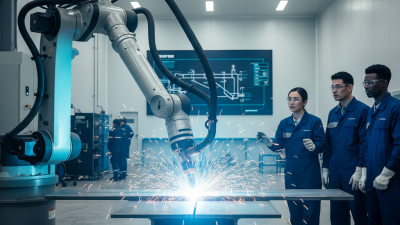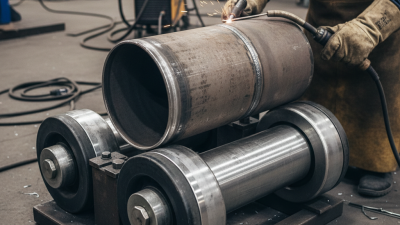
Choosing the Top 10 Pressure Vessel Fabrication Companies Worldwide requires more than comparing factory size or annual revenue. Reliable evaluation depends on engineering capability, documented quality systems, project experience, and the ability to meet demanding service conditions.
This introduction examines companies involved in pressure vessel fabrication for industries such as energy, chemical processing, pharmaceuticals, food production, and water treatment. Their work may include reactors, storage vessels, heat exchangers, and custom equipment for high-pressure or corrosive environments. Details matter. A vessel’s performance can depend on plate selection, weld procedures, heat treatment, inspection records, and precise dimensional control.
The ranking considers publicly available evidence, including certifications, manufacturing capacity, international project references, safety practices, and technical expertise. Standards such as ASME, ISO, and relevant regional codes provide useful benchmarks, but certification alone does not prove every project outcome. Experience matters too. A manufacturer that has built thick-wall vessels for decades may offer different value from a newer company with advanced automation and faster production systems.
No global list is perfectly objective. Public information can be incomplete, outdated, or presented for marketing purposes. Some capable regional manufacturers may receive less attention because their project records are private. That limitation deserves recognition. The companies discussed here represent strong documented examples, not an unquestionable final ranking. Buyers should still verify current certifications, inspection capabilities, material traceability, delivery performance, and after-sales support before selecting a supplier. A practical decision begins with evidence, not reputation alone.
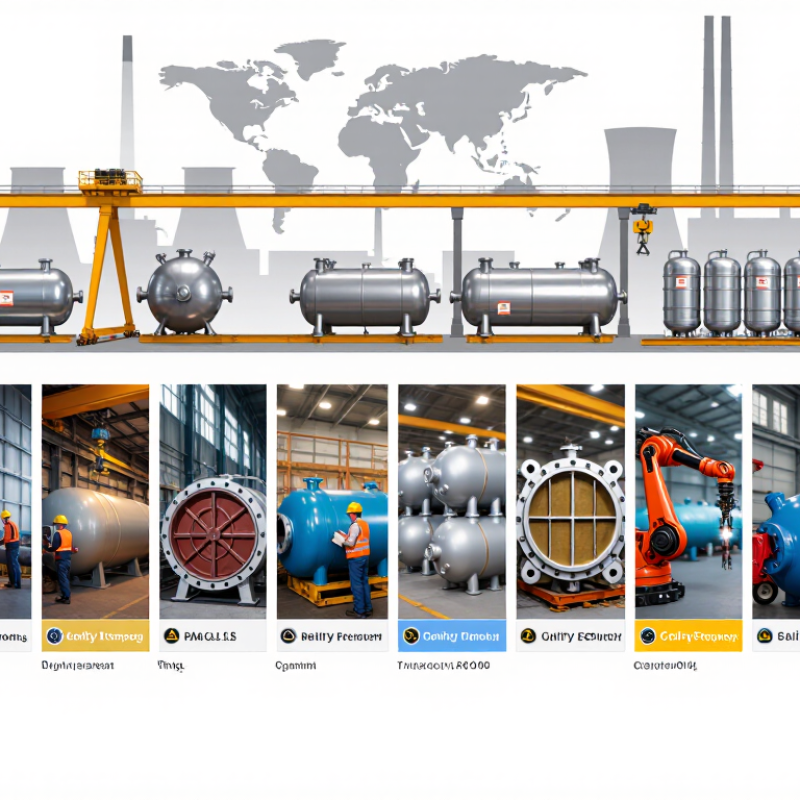
A pressure vessel is a closed container designed to hold gases or liquids at pressures above or below atmospheric conditions. Its design must account for pressure, temperature, corrosion, fatigue, and possible material defects. Common examples include reactors, heat exchangers, storage tanks, and compressed-gas cylinders. The ASME Boiler and Pressure Vessel Code remains a widely referenced framework for design, fabrication, inspection, and testing.
Industrial applications are broad. Refineries use vessels to separate hydrocarbons, while chemical plants rely on reactors with thick steel walls and controlled heating. Food and pharmaceutical facilities require cleanable vessels with carefully managed internal surfaces. Hydrogen is increasing demand for advanced storage systems. The International Energy Agency reported that global hydrogen demand reached about 97 million tonnes in 2023, creating pressure for safer transport and storage infrastructure. Yet hydrogen service can accelerate material damage. That detail is easy to underestimate.
Carbon capture also depends on pressure-rated equipment for compression, dehydration, and transport. The Global CCS Institute’s 2024 report identified more than 50 commercial carbon-capture facilities operating worldwide, with many more under development. Fabricators must therefore combine welding expertise, non-destructive testing, traceable materials, and documented quality control. A vessel may look robust, but small weld flaws can become serious under repeated loading. Design calculations alone are not enough. Reliable fabrication requires disciplined inspection, experienced engineers, and honest attention to uncertainty.
The table below presents ten major pressure-vessel application segments and the engineering requirements commonly addressed by qualified fabricators. Pressure, temperature, materials, and code requirements vary according to the project specification and jurisdiction.
| Rank | Pressure Vessel Type | Primary Industrial Application | Typical Design Pressure | Typical Operating Temperature | Common Materials | Common Design or Manufacturing Standards | Key Fabrication and Inspection Requirements |
|---|---|---|---|---|---|---|---|
| 1 | Process Reactors | Chemical processing, polymer production, refining, and pharmaceutical synthesis | 10–250 bar | −20°C to 500°C | Carbon steel, stainless steel, nickel alloys, clad steel | ASME Section VIII, EN 13445, applicable process standards | Weld-procedure qualification, corrosion allowance, radiography or ultrasonic testing, hydrostatic or pneumatic testing |
| 2 | Distillation and Fractionation Columns | Separation of hydrocarbons, solvents, alcohols, and other chemical products | Vacuum to 50 bar | −30°C to 450°C | Carbon steel, low-alloy steel, stainless steel, clad plate | ASME Section VIII, EN 13445, project piping and process specifications | Dimensional control, nozzle alignment, internal tray or packing supports, weld inspection, vacuum or pressure testing |
| 3 | Shell-and-Tube Heat Exchangers | Heat recovery, cooling, condensation, evaporation, and process heating | 5–300 bar | −196°C to 600°C | Carbon steel, stainless steel, copper alloys, titanium, nickel alloys | ASME Section VIII, TEMA practices, EN 13445 | Tube-to-tubesheet integrity, eddy-current or hydrotesting, leak testing, material traceability |
| 4 | Gas-Liquid Separators | Oil and gas production, natural-gas treatment, compressed-gas systems, and chemical plants | 5–150 bar | −40°C to 250°C | Carbon steel, low-temperature steel, stainless steel, clad steel | ASME Section VIII, API 12J where applicable, EN 13445 | Internal demister installation, sour-service controls when required, weld NDE, pressure testing |
| 5 | LPG and Refrigerated-Gas Vessels | Storage and distribution of propane, butane, ammonia, and similar liquefied gases | 10–25 bar for LPG service | −50°C to 50°C | Carbon steel, low-temperature carbon steel, stainless steel | ASME Section VIII, EN 13445, local pressure-equipment regulations | Fracture-toughness verification, weld impact testing, relief-device connections, volumetric NDE |
| 6 | Compressed-Air Receivers | Pneumatic tools, factory automation, instrumentation, and utility air systems | 7–40 bar | −10°C to 60°C | Carbon steel, galvanized or coated carbon steel, stainless steel | ASME Section VIII, EN 286, applicable national regulations | Internal corrosion protection, drain design, weld inspection, safety-valve and pressure-gauge connections |
| 7 | Cryogenic Storage Vessels | Storage and transport of liquid nitrogen, oxygen, argon, LNG, and other cryogenic fluids | 1–30 bar | −196°C to −150°C | Austenitic stainless steel, aluminum alloys, nickel alloys | ASME Section VIII, EN 13458, ISO 21009 where applicable | Double-wall construction, vacuum-jacket integrity, cryogenic impact testing, leak and hold-time testing |
| 8 | Industrial Autoclaves | Sterilization, composite curing, aerospace processing, timber treatment, and rubber production | 2–20 bar | 120°C to 400°C | Carbon steel, stainless steel, heat-resistant alloy steel | ASME Section VIII, EN 13445, applicable workplace-safety requirements | Door-locking systems, thermal cycling analysis, uniformity testing, weld NDE, interlock verification |
| 9 | Boilers and Steam Drums | Power generation, district heating, manufacturing, food processing, and utility systems | 20–180 bar | 200°C to 600°C | Boiler-quality carbon steel, low-alloy steel, heat-resistant steel | ASME Section I, EN 12952, applicable boiler regulations | Weld heat-treatment control, tube-to-drum inspection, dimensional checks, hydrostatic testing |
| 10 | Hydrogen and High-Pressure Gas Vessels | Hydrogen production, industrial-gas storage, refueling infrastructure, and energy systems | 100–1,000 bar | −40°C to 85°C | High-strength steel, stainless steel, aluminum alloys, fiber-reinforced composites | ASME Section VIII, ISO 11114, ISO 19881, applicable hydrogen regulations | Hydrogen-compatibility assessment, fatigue analysis, leak testing, autofrettage or cyclic testing where applicable |
Note: The pressure and temperature values are representative engineering ranges rather than universal limits. Final design values depend on fluid properties, cyclic loading, corrosion allowance, vessel geometry, materials, applicable codes, and regulatory approval.