

What Is a Plastic Coating Machine and How Does It Work?

A Plastic Coating Machine applies a controlled layer of plastic material to surfaces, products, or continuous web materials. It may coat metal sheets, wires, fabrics, films, or molded components. The goal is practical: improve protection, appearance, insulation, flexibility, or resistance to moisture and chemicals.

The process begins with material preparation. Plastic pellets, powders, liquids, or films enter the system, depending on the machine design. Heating units may soften the plastic, while rollers, spray heads, dies, or electrostatic systems distribute it evenly. Sensors monitor temperature, coating thickness, line speed, and surface tension. These details matter. A slight temperature change can create streaks, bubbles, or weak adhesion.

After coating, the product passes through cooling, curing, or drying stages. Operators then inspect the surface and measure its thickness. Experienced technicians understand that a clean substrate often matters as much as the machine itself. Dust, oil, and uneven tension can undermine an otherwise precise process.

Machine performance depends on plastic type, substrate condition, production speed, and environmental controls. No single setting works for every application. That assumption causes trouble. Reliable results require testing, calibration, documented procedures, and regular maintenance. Industry guidance and manufacturer specifications should support these decisions, especially when coated products serve electrical, medical, food-contact, or structural purposes.

This article examines what a Plastic Coating Machine is, how its main components work, and why process control affects final quality. It also considers common limitations, practical inspection methods, and areas where real production conditions may challenge textbook explanations. The technology is efficient, but not effortless.
What Is a Plastic Coating Machine and How Does It Work?

What Is a Plastic Coating Machine?

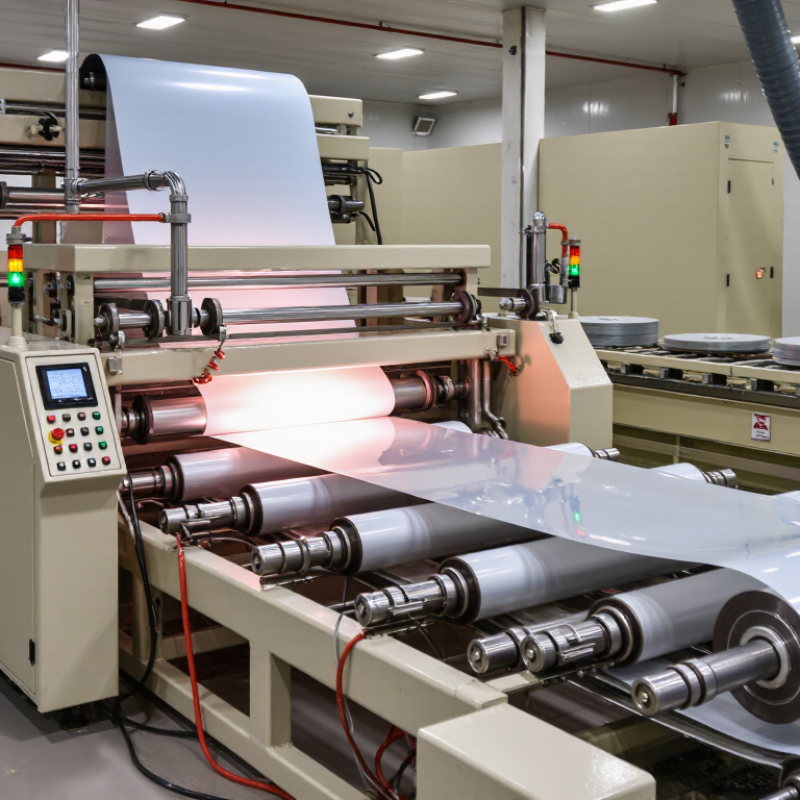
A plastic coating machine is industrial equipment that applies a controlled plastic layer to another material. The base may be metal, paper, fabric, wire, or a plastic film. This coating can improve water resistance, insulation, flexibility, surface protection, or appearance. The machine usually includes a coating head, material tank, heating system, rollers, and a drying or curing section. Each part must work together. Otherwise, the surface may show bubbles, streaks, thin areas, or uneven edges.

During operation, the machine feeds the substrate at a steady speed. A pump delivers melted plastic, liquid resin, or coating powder to the application head. Rollers then spread the material across the surface. Heat, air, ultraviolet energy, or time may solidify the layer. Operators monitor temperature, pressure, coating thickness, and line speed. In real production, results are rarely perfect. Dust, moisture, and small changes in tension can affect the finish. A machine may appear stable while producing hidden thickness differences.

Tips: Keep the substrate clean and dry before coating. Check thickness at several points, not only at the center. Adjust one setting at a time. This makes faults easier to trace. Maintenance also matters. Worn rollers and blocked nozzles can quietly reduce quality. Trial runs should be recorded, although records are sometimes incomplete. That weakness deserves attention, especially when repeatable results are important.

What Materials and Components Does It Use?

A plastic coating machine applies a controlled polymer layer to metal, paper, fabric, film, or molded parts. Its material choice depends on temperature, flexibility, adhesion, and chemical exposure. Common coating polymers include polyethylene, polypropylene, PVC, polyurethane, and fluoropolymers. Extrusion coating often uses resin pellets, while spray systems use liquid dispersions or powder. The PlasticsEurope report Plastics—The Fast Facts 2023 recorded 400.3 million tonnes of global plastics production in 2022. That scale explains the wide range of coating formulations available today.

The machine usually includes a hopper, heated barrel, screw, die, pump, coating head, rollers, and cooling section. The screw melts and mixes the polymer. The die spreads it across the moving substrate. Rollers control pressure, thickness, and surface contact. Infrared heaters or hot-air units may improve drying and bonding. Sensors measure temperature, line speed, web tension, and coating thickness. According to the 2023 Global Web Coating Equipment Market report by Research and Markets, demand is influenced by flexible packaging and technical films. Still, a clean specification can fail on a dusty surface. Adhesion is less predictable than brochures suggest.

Tips: Check resin moisture before processing. Confirm the substrate’s heat tolerance. Keep a sample from each production run. A coating can look smooth but remain weak underneath. Review thickness data, not visual appearance alone. PLASTICS’ 2023 recycling industry data also shows why material selection matters: simpler, compatible structures are generally easier to recover, although real recycling performance varies by product design and local systems.

What Is a Plastic Coating Machine and How Does It Work?

Typical melt-processing temperature ranges for thermoplastic coating materials

A plastic coating machine typically uses a hopper, heated barrel, screw or pump, die, pressure-control system, cooling section, and take-up unit. The polymer is melted, mixed, and delivered through the die to form a uniform coating. The temperature ranges shown are representative processing ranges; actual settings depend on resin grade, additives, coating thickness, line speed, and substrate.

How Does the Plastic Coating Process Work?

A plastic coating machine applies a controlled polymer layer to film, paper, metal, or molded parts. The process usually begins with surface cleaning and tension control. Dust, oil, or uneven tension can create weak areas. Small defects matter.

The coating material enters a heated reservoir or mixing chamber. Temperature sensors maintain a stable viscosity, while pumps deliver the material at a measured rate. A slot die, roller, or spray head then spreads the coating across the moving substrate. The wet layer passes through an oven, infrared zone, or cooling section. Heat removes solvents or softens the polymer, allowing it to bond with the surface. Operators check coating weight, thickness, adhesion, and surface appearance during production.

According to the OECD’s Global Plastics Outlook, global plastic production reached 460 million tonnes in 2019, while only 9% of plastic waste was recycled. This increases pressure to reduce coating loss and improve material efficiency. A coating machine can support that goal through closed-loop thickness control and accurate edge trimming. However, efficiency is not automatic. Excess heat may damage the substrate, while insufficient drying can cause blocking or poor adhesion. A 2022 PlasticsEurope industry report recorded about 400 million tonnes of global plastics production in 2022, showing the scale of the manufacturing challenge. Real production conditions are rarely perfect. Humidity, dust, and operator adjustments still influence results. Testing each batch remains essential.

What Is a Plastic Coating Machine and How Does It Work? - How Does the Plastic Coating Process Work?

Process Stage or Data Dimension Typical Equipment or Method Typical Operating Range Purpose Important Control Factors
Substrate Preparation Cleaning, degreasing, drying, and surface treatment Surface must be dry, clean, and free from oil, dust, and loose particles Improves coating adhesion and reduces surface defects Surface energy, cleanliness, moisture, roughness, and substrate temperature
Plastic Film Extrusion Coating Extruder, flat die, nip rolls, and cooling rolls Common coating resins include polyethylene and polypropylene; melt temperatures are often approximately 180–330 °C, depending on resin grade Applies a molten thermoplastic layer to paper, foil, fabric, or another polymer film Melt temperature, die gap, web tension, nip pressure, cooling rate, and line speed
Roller or Gravure Coating Metering roll, gravure roll, reverse roll, or smooth coating roll Wet coating thickness commonly ranges from about 5–100 µm, depending on the formulation and application method Provides a controlled liquid coating layer over a continuous web Viscosity, roll speed, coating gap, substrate speed, surface tension, and drying conditions
Spray Coating Air spray, airless spray, or electrostatic spray system Suitable for complex shapes; atomizing pressure and spray distance vary according to the coating and equipment Deposits coating onto three-dimensional plastic parts and difficult-to-reach surfaces Droplet size, spray pattern, gun distance, overlap, ventilation, and transfer efficiency
Powder Coating Electrostatic powder spray system and curing oven Many thermosetting powders are cured at approximately 150–200 °C for around 10–30 minutes after the part reaches the required temperature Creates a durable coating with little or no liquid solvent Powder charge, film thickness, part grounding, oven temperature, and cure time
Dip Coating Immersion tank, withdrawal mechanism, and drying or curing oven Coating thickness is mainly controlled by withdrawal speed, viscosity, surface tension, and drainage time Coats irregularly shaped parts and can cover internal or recessed areas Bath temperature, viscosity, immersion time, withdrawal speed, and solution stability
Drying or Curing Hot-air oven, infrared heater, ultraviolet system, or ambient drying area Temperature and time depend on whether the coating is solvent-based, water-based, UV-curable, or thermally cured Removes liquid carriers or completes the chemical cross-linking of the coating Airflow, exhaust, humidity, coating chemistry, film thickness, and substrate heat resistance
Cooling and Solidification Cooling rolls, air knives, chilled air, or controlled cooling conveyor Cooling conditions are selected to prevent blocking, deformation, shrinkage, or surface marking Stabilizes the coated product before winding, stacking, or further processing Cooling temperature, contact pressure, web tension, and residence time
Thickness Measurement Micrometer, beta gauge, X-ray gauge, optical sensor, or weighing method Target thickness is specified by the product design; uniformity is usually more important than maximum thickness Confirms coating weight, coverage, barrier performance, and material usage Calibration, measurement location, web vibration, coating uniformity, and data logging
Final Inspection Visual inspection, adhesion test, abrasion test, gloss measurement, and functional testing Test criteria are defined by the application and applicable product standards Verifies appearance, adhesion, durability, flexibility, barrier properties, and dimensional stability Sampling frequency, test method, environmental conditioning, and acceptance limits
Typical values are general engineering ranges. Actual settings depend on the plastic substrate, coating chemistry, product geometry, required film thickness, equipment design, and applicable safety requirements.

Which Plastic Coating Machine Types Are Available?

A plastic coating machine applies a controlled polymer layer to film, paper, foil, fabric, or shaped parts. The process usually includes feeding, coating, drying, cooling, and winding. Operators monitor viscosity, web tension, temperature, and coating weight. A small error can create pinholes, streaks, or weak adhesion.

Several machine types serve different production needs. Roll-to-roll coating machines use engraved, smooth, or reverse rollers for thin films and flexible packaging. They provide accurate coating control at continuous speeds. Extrusion coating machines melt plastic resin and press it through a flat die onto a moving substrate. This method creates strong moisture and heat barriers.

Spray coating machines use atomized material for irregular surfaces, while dip coating systems immerse parts into a liquid bath. Powder coating equipment applies dry particles before heat fuses them onto the surface. Each system behaves differently.

According to Smithers’ flexible packaging market report, global flexible packaging demand is forecast to keep expanding through 2029, increasing pressure for efficient coating lines. MarketsandMarkets reported that the plastic coatings market could grow from about USD 21 billion in 2023 to over USD 27 billion by 2028. These figures support continued investment, but they do not make every machine suitable. Roll systems may waste less material, yet they require stable tension. Spray systems handle complex shapes better, but overspray can reduce efficiency. The choice remains imperfect. Substrate shape, coating thickness, curing method, energy use, and maintenance access deserve careful testing before installation.

What Factors Affect Machine Performance and Coating Quality?

A plastic coating machine applies a thin polymer layer to film, paper, foil, or fabric. The web passes through an unwinding unit, coating head, drying zone, and rewinder. Performance depends on speed, viscosity, temperature, tension, and drying capacity. A small tension change can create wrinkles or uneven coverage. Excessive line speed may leave solvent or moisture trapped inside the coating. That defect is easy to miss under factory lighting.

Material choice also controls coating quality. High-viscosity compounds need stable pumping and accurate gap control. Low-viscosity compounds may spread well but produce edge thinning. In production trials, operators often adjust the coating gap first. This can be the wrong move. The real cause may be inconsistent substrate moisture or a blocked filter.

The European plastics industry reported global production of 413.8 million tonnes in 2023, showing the scale of pressure for stable, efficient processing (PlasticsEurope, Plastics—The Fast Facts 2024).

Energy matters too. The International Energy Agency reports that industrial heat remains a major source of energy demand, so poorly tuned drying zones can increase costs and emissions.

Quality checks should measure coat weight, thickness, adhesion, gloss, haze, and tensile behavior.

ISO 4593 supports thickness measurement, while ASTM D1003 evaluates optical haze. These tests reveal different weaknesses. One test cannot describe the whole coating. Even experienced teams sometimes accept attractive samples that fail after storage. Temperature records, viscosity logs, and substrate inspection create more reliable decisions, although production data is rarely as clean as engineers expect.

Contact Us