Top 10 Types of Expansion Screws for Global Buyers
An Expansion Screw may look simple on a product page: a metal body, a sleeve, and a tightening mechanism. On site, the details matter. Concrete dust gathers around drilled holes, masonry can vary from one wall to the next, and a poorly matched anchor may fail to perform as expected. For global buyers, comparing types means looking beyond names and price tags.
Dr. Rolf Eligehausen is a recognized researcher in fastening technology. A concise principle consistent with his field of work is: “Match the anchor to the base material, load, and installation method.” This is an editorial paraphrase, not a verbatim quotation. It points to the questions buyers should ask before choosing among wedge, sleeve, drop-in, shield, and other expansion anchors. Is the base concrete, solid brick, or hollow masonry? Will the fastener face vibration, moisture, or repeated loading? These conditions can change the right choice.
This guide introduces ten common types and explains their typical uses, installation needs, and trade-offs. Some product labels overlap, and manufacturers may define categories differently. That can make comparisons less tidy than buyers expect. Check technical data, including approved substrates and load values, rather than relying on a product name alone. A clear comparison helps. But it cannot replace site-specific assessment, especially where a connection is safety-critical.
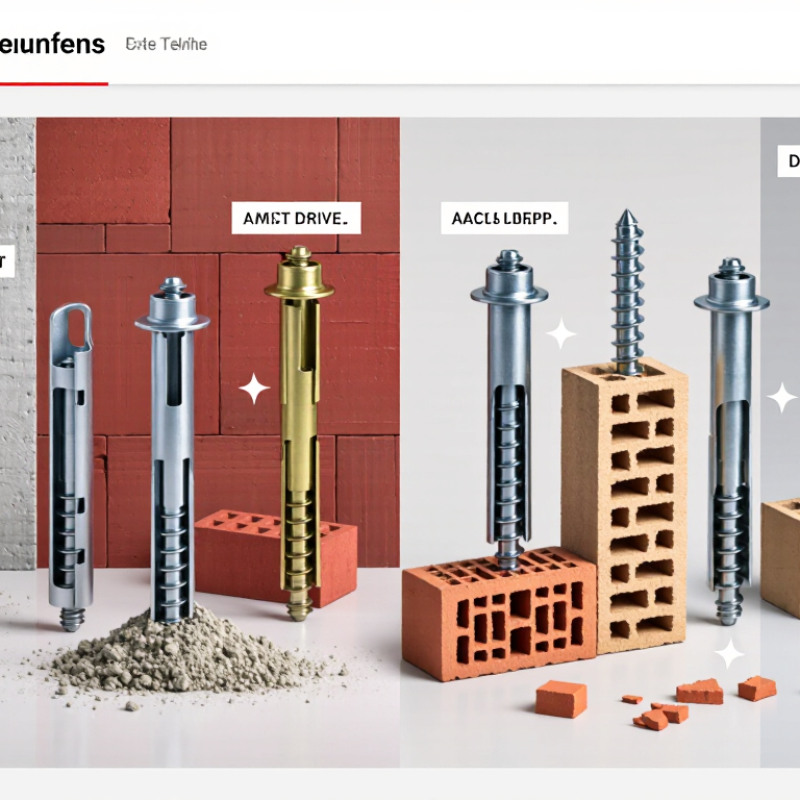
What Expansion Screws Are and How They Work
An expansion screw is a mechanical fastener designed to grip inside a predrilled hole. The term is used broadly, so the exact sleeve and expansion mechanism can vary. In a common design, tightening the screw pulls a tapered cone into a metal sleeve. The sleeve presses outward against the hole wall, creating friction and mechanical resistance. Loads pass from the attached fixture through the fastener and into the base material.
It sounds simple. It isn’t always.
Expansion screws are commonly selected for concrete and solid masonry, but one type may not suit every substrate. Check the specified hole diameter, drilling depth, embedment, and load rating. A hole that is too wide can weaken the grip; one that is too shallow may prevent full seating. Remove drilling dust, position the anchor carefully, and tighten to the maker’s stated torque rather than forcing it.
Over-tightening can damage the sleeve or surrounding material. For example, a bracket close to a concrete edge needs careful attention to spacing and substrate condition. I would not assume that anchors with similar dimensions perform alike. If the installation carries a critical load, use verified technical data and qualified guidance.
Key Designs, Materials, and Performance Characteristics
Expansion screws differ in how they spread, grip, and transfer load. Sleeve anchors use a surrounding sleeve; wedge anchors expand near the tip. Drop-in anchors expand inside a drilled hole, while shield and lag-shield anchors use segmented shells. Nylon plugs and metal expansion plugs are common in lighter fixing tasks. Hammer-drive anchors set with a strike, frame-fixing anchors use long screws, and hollow-wall expansion anchors open behind sheet material. Names vary between suppliers, so check the actual mechanism.
Material and substrate shape performance. Zinc-plated carbon steel suits many dry indoor settings, while stainless steel can offer better corrosion resistance outdoors. Nylon plugs are lightweight and accommodate modest movement, but heat and sustained loads can limit their use. A wedge anchor needs sound concrete and an accurately sized hole. Dust left in the hole can weaken contact. Small detail, big consequence. In hollow blocks, a sleeve or toggle-style design may spread force more broadly than a short plug, though results depend on wall thickness and installation.
For selection, compare the base material, embedment depth, edge distance, and stated load capacity. A larger diameter is not automatically safer; cracked concrete or weak masonry can still fail. Product test data and installation instructions matter more than a generic “heavy-duty” label. On site, hole depth is easy to misjudge. Check it.
Top 10 Types of Expansion Screws for Global Buyers
For global buyers, “expansion screw” can describe several anchors that work differently. Wedge anchors expand near the bottom of a drilled hole; sleeve anchors expand along their length. Drop-in anchors sit flush and accept threaded rods, while shield anchors spread outward under tightening. Single-expansion and double-expansion shields suit different base materials and load conditions. Machine-screw anchors take machine-threaded fasteners; lag shields pair with lag screws. Hammer-drive anchors are quick to install, but offer less adjustment. Concrete screws cut threads into the base material rather than expanding, so they are a related alternative, not a true expansion type.
Choose by substrate, load direction, edge distance, and exposure—not by name alone. ACI 318-19 Chapter 17 checks five tension failure modes for concrete anchors, including steel strength, pullout, and concrete breakout. That is a useful reminder: a strong-looking anchor can still fail through weak concrete. ICC-ES AC193 provides qualification criteria for mechanical anchors in concrete; evaluation reports give tested load values and installation limits. Compare the exact diameter, embedment, and concrete condition shown in the report.
Small details matter. A dusty hole can reduce reliable installation, and shallow embedment may change capacity. Check hole diameter, drilling method, tightening instructions, and corrosion exposure against the technical documentation. A tidy load table can still mislead if its test conditions differ from the job. Verify the substrate on site; concrete is rarely as uniform as a drawing suggests.
How to Match Expansion Screws to Materials and Applications
Top 10 Types of Expansion Screws for Global Buyers
How to Match Expansion Screws to Materials and Applications
Choosing among expansion screw types starts with the base material, not the package label. In dense concrete, wedge or sleeve anchors can provide firm support when holes meet the specified diameter and depth. Solid brick often suits sleeve anchors, but avoid drilling into weak mortar joints. Hollow block and drywall need cavity or toggle anchors that grip behind the surface. Timber is different; a suitable wood screw may be more appropriate than a masonry anchor.
Tips: Check the fixture thickness, expected load, and required embedment depth. Keep anchors clear of edges. Drill a test hole when the substrate is uncertain.
For shelves, handrails, or machinery, consider both load direction and vibration. A ceiling fixture may pull outward, while a wall-mounted bracket often applies shear. Choose an anchor rated for the actual base material, and follow its installation guidance. In damp locations, corrosion-resistant materials can help, but they do not compensate for poor installation. Dust left in a drilled hole can weaken the hold. Charts are useful, though real masonry varies; a small trial installation may reveal more than expected.
What to Check When Sourcing Expansion Screws Internationally
When comparing expansion-screw types, match each design to the actual substrate, not just the product photo. A wedge anchor may suit solid concrete, while sleeve and shield designs serve different masonry conditions. Hollow block needs different engagement. Ask suppliers to state the required hole diameter, embedment depth, and installation torque for each size. These details should match across drawings, samples, and production lots.
For international orders, confirm the steel grade, coating thickness, and corrosion-test method in writing. “Stainless” alone is vague; grade and exposure conditions matter near salt air or damp storage. Request load data with test conditions, edge distance, spacing, and concrete strength clearly shown. A single maximum-load figure is not enough. Check thread pitch, head dimensions, washer fit, and package labels against your installation tools. Small mismatches can slow a job.
Agree on batch identification and acceptable dimensional tolerances before production. Ask for clear inspection records and destination-appropriate shipping documents, then verify that carton labels match the order. Coatings can be damaged in transit. Inspect cartons for moisture, dents, and mixed sizes when they arrive. Do not assume a certificate answers every question. Repeat checks on the first shipment, not only on the samples; this adds time, and it can still miss a flaw. That is worth considering.
Top 10 Types of Expansion Screws for Global Buyers
Typical substrate coverage by anchor type
Bars count common substrate classes for which each type is typically used: concrete, solid masonry, hollow masonry, and hollow board. This is a general application guide, not a load-capacity comparison. Confirm compatibility, approved base materials, dimensions, corrosion resistance, and installation requirements in the product documentation before sourcing.