

How to Choose an Aluminum Bidirectional Gear Pump in 2026

Choosing an Aluminum Bidirectional Gear Pump in 2026 is not just a matter of matching port size or comparing catalog prices. The right choice depends on how the pump handles flow reversal, pressure, speed, fluid viscosity, and the heat generated during repeated cycles. A compact aluminum housing can reduce system weight, but it still needs to withstand the actual duty cycle. Measure the available mounting space. Check the shaft and port connections. Confirm the manufacturer’s pressure and speed limits against your operating conditions.

As hydraulic systems specialist Daniel Mercer puts it, “A pump is only a good fit when its ratings match the work it will do every day.” Treat that as a selection principle, not a substitute for verified product data. Compare continuous and intermittent pressure ratings, leakage behavior, seal compatibility, and performance in both directions. Ask for test information when the application involves frequent reversing or long operating periods. A datasheet may look reassuring. The real operating conditions can be less tidy.

This guide explains how to assess those details before choosing an Aluminum Bidirectional Gear Pump for a new or replacement system. It also considers noise, installation, maintenance access, and supplier support. Small differences matter. A few extra millimeters can complicate a tight installation, while an unsuitable fluid can shorten service life. Not every specification will be available upfront; that is a reason to ask more questions, not to guess. The goal is a pump that fits the system on paper and performs reliably on the machine.
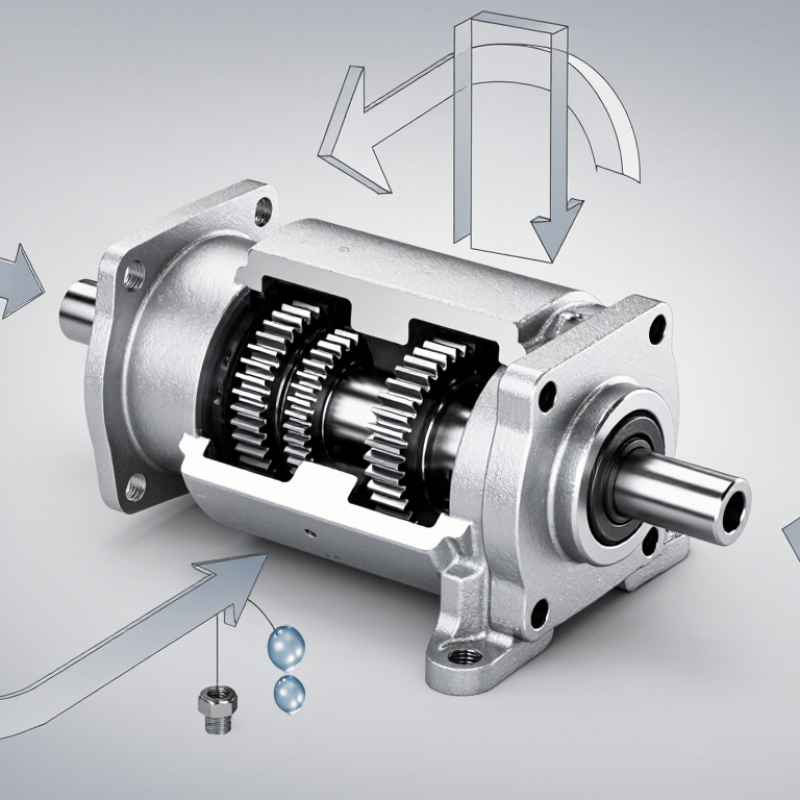
How to Choose an Aluminum Bidirectional Gear Pump in 2026

Define the System Requirements for a Bidirectional Gear Pump

Define the duty before comparing aluminum bidirectional gear pumps. Record required flow, pressure, shaft speed, and operating hours in both rotation directions. A pump may deliver different flow or pressure when reversed, so request performance curves for clockwise and counterclockwise operation. Specify peak pressure separately from continuous pressure, and note how often peaks occur. Small details matter: a cold morning start can bring much thicker oil than a warm running system.

Document the fluid, temperature range, inlet conditions, and contamination-control target. ISO 4406:2021 classifies hydraulic-fluid cleanliness using particle counts at three size thresholds: 4, 6, and 14 μm(c). Set a target code with the system designer; the standard does not prescribe one universal cleanliness level for every pump. Check shaft loads, mounting space, port orientation, and whether seals and internal lubrication suit reverse rotation. Do not assume reversing two lines guarantees equal performance.

Energy matters, too. The U.S. Department of Energy’s Improving Pumping System Performance sourcebook reports that suitable pump-system improvements can reduce energy use by 20–50%; that range is system-wide, not a gear-pump guarantee. Use it as a reason to measure real duty, not as a promised saving. A practical requirement sheet may still miss an awkward startup condition. That deserves another check.

How to Choose an Aluminum Bidirectional Gear Pump in 2026

Define the system requirements before selecting a pump. The chart shows an illustrative flow-sizing example, not a universal pump specification.

Example calculation: a 12 cm³/rev pump running at 1,500 rpm with an assumed 90% volumetric efficiency delivers about 16.2 L/min in either direction. This is calculated as displacement × speed × efficiency ÷ 1,000. Confirm the required flow, pressure differential, speed range, fluid viscosity, temperature, duty cycle, and allowable leakage for your actual system; verify performance against the pump manufacturer’s data.

Match Displacement, Pressure, and Speed to the Application

Choosing an aluminum bidirectional gear pump starts with the machine’s real operating cycle, not its peak number. Displacement sets theoretical flow per revolution; multiply it by shaft speed, then allow for leakage and volumetric efficiency. A 10 cc/rev pump at 1,500 rpm will not deliver exactly 15 L/min in service. Close enough? Not always. Check flow at the oil’s working temperature and intended pressure using the pump’s performance curve.

Pressure and speed must be checked together. A pump may tolerate high intermittent pressure yet require lower continuous pressure or rotational speed. Compare startup loads, pressure spikes, and operating hours, not just the nominal rating. Aluminum reduces weight, but housing material alone does not define safe limits. Check shaft, bearings, seals, and port ratings too. For reverse flow, confirm the pump is designed for bidirectional operation and that the motor, valves, and seals support both directions.

Match displacement to actuator demand: a cylinder needing quick extension may require more flow, while a small motor may need finer control. Check available drive power; pressure and flow determine hydraulic power demand, while losses add heat. Leave margin for cold, viscous oil and brief pressure surges. Suction plumbing is easy to overlook. A restrictive inlet can cause noise, cavitation, and shortened service life. Record the fluid, speed range, pressure profile, and reversal frequency before choosing. The first estimate may need revision after testing.

Check Aluminum Alloy and Fluid Compatibility

When choosing an aluminum bidirectional gear pump, identify the exact housing alloy and any surface treatment. “Aluminum” alone is not enough. Two alloys can react differently to the same fluid, especially when water, salts, or aggressive additives are present. Ask for the material specification, not just a general product description. Small detail. Big consequence.

Check the fluid’s compatibility with the housing, gears, and seals as a complete system. Review the fluid supplier’s compatibility data, then compare it with the pump maker’s operating limits. Water-glycol mixtures, cleaning residues, and changing additive packages may affect corrosion or wear. Pay attention to fluid pH, chloride content, temperature, and viscosity. A fluid that looks harmless in a clean sample may behave differently after heat and contamination build up.

Bidirectional operation also makes seal and porting details worth confirming for both flow directions. Check whether the stated pressure and speed limits apply in reverse, and ask how the selected fluid changes those limits. I would not rely on a quick visual inspection of the pump body; early corrosion can be easy to miss. If the application is unusual, test the actual fluid and materials under expected operating conditions. A short compatibility review may feel fussy, but replacing a damaged pump is fussier.

Compare Porting, Drive, Seals, and Reversal Features

How to Choose an Aluminum Bidirectional Gear Pump in 2026

Porting determines more than hose direction. Check the pump drawing for clearly identified inlet and outlet ports in both rotation directions. A truly bidirectional model must manage pressure and sealing when rotation reverses; do not assume swapping hoses makes a standard pump reversible. Match port size and thread type to the circuit, then check pressure drop at your actual flow rate. Small details matter.

Choose the drive for the motor’s torque, speed, and alignment. A keyed shaft may suit a simple coupling, while a splined connection can handle different load conditions. Confirm the manufacturer’s allowable shaft load; belt tension can quietly shorten bearing life. For seals, verify compatibility with the hydraulic fluid and operating temperature. Ask for continuous and peak pressure limits, not just a headline maximum.

The U.S. Department of Energy’s Improving Pumping System Performance sourcebook reports that pumping systems use nearly 20% of global electricity, and 25–50% of energy in some industrial plants. Those figures cover pumping systems broadly, not aluminum gear pumps specifically, but they underline why operating efficiency deserves attention. Compare measured efficiency at your working speed and pressure, and test reversal with the intended fluid. I would still question any selection based on catalog figures alone: cold starts, contamination, and frequent direction changes can alter real-world performance.

Verify Specifications, Supplier Data, and Test Results in 2026

Choosing an aluminum bidirectional gear pump in 2026 means checking more than nominal flow. Confirm displacement, operating speed, continuous pressure, and peak pressure against the machine’s actual duty cycle. Reversal must be suitable for the intended circuit; some pumps require specific porting or control arrangements. Details matter. Match fluid viscosity and temperature to the supplier’s stated limits, and check seal compatibility. A compact housing can save space, but mounting dimensions and shaft loads still need careful review.

Ask suppliers for current technical data, not just a catalogue headline. Request the material specification, dimensional drawing, pressure-flow curve, and documented operating limits. Check that the data identifies the test fluid, temperature, speed, and pressure. Without those conditions, two quoted efficiency figures may not be comparable. Ask why. If a value seems unusually favorable, request the underlying test method and clarify whether it describes a typical unit or a guaranteed limit.

Test results should reflect your application as closely as practical. Review flow, leakage, efficiency, and noise measurements across relevant speeds and pressures. Look for instrument calibration details and repeatability, not only a single best result. For a sample pump, record fluid temperature and inlet conditions during testing. A short bench test cannot prove long-term durability, and it is easy to overlook that limitation. Where possible, compare supplier results with an independent acceptance test using agreed criteria.

How to Choose an Aluminum Bidirectional Gear Pump in 2026 - Verify Specifications, Supplier Data, and Test Results in 2026

Selection data: The sizing cases below are illustrative calculations, not ratings for specific products. Actual pressure, speed, efficiency, materials, and allowable operating conditions must be confirmed against the exact pump’s current technical documents.

Selection Dimension Illustrative Data or Check How to Evaluate It Evidence to Request and Verify
Sizing Scenarios — Calculated, Not Manufacturer Ratings
Compact flow scenario Displacement: 4 cm³/rev
Reference speed: 1,500 rpm
Theoretical flow: 6.0 L/min
Estimated flow at 90% volumetric efficiency: 5.4 L/min
Theoretical flow = displacement × speed ÷ 1,000. Estimated flow applies an explicitly assumed 90% volumetric efficiency; actual efficiency changes with pressure, speed, temperature, and wear. Obtain the pump’s flow-versus-speed and flow-versus-pressure curves, with the test fluid, temperature, and measurement method stated.
Mid-range flow scenario Displacement: 8 cm³/rev
Reference speed: 1,500 rpm
Theoretical flow: 12.0 L/min
Estimated flow at 90% volumetric efficiency: 10.8 L/min
Compare estimated delivery with required actuator flow in both rotation directions. Confirm that the selected speed is within the pump’s documented operating range. Request a dimensioned drawing, displacement tolerance, recommended speed range, and performance data for both flow directions.
Higher flow scenario Displacement: 16 cm³/rev
Reference speed: 1,500 rpm
Theoretical flow: 24.0 L/min
Estimated flow at 90% volumetric efficiency: 21.6 L/min
Check inlet-line sizing, fluid velocity, available inlet pressure, and the drive’s power capacity. Higher flow can increase inlet losses and heat generation. Verify inlet-pressure limits, allowable fluid viscosity range, port sizes, and any published cavitation or noise test conditions.
Illustrative shaft torque At an assumed 160 bar differential pressure:
4 cm³/rev: approximately 10.2 N·m
8 cm³/rev: approximately 20.4 N·m
16 cm³/rev: approximately 40.7 N·m
Ideal torque = differential pressure × displacement ÷ (2π). These figures exclude mechanical losses and do not establish a safe operating pressure or shaft rating. Confirm the pump’s rated pressure, peak-pressure duration, mechanical efficiency, shaft torque limit, and drive-coupling capacity from the applicable datasheet.
Specification, Supplier Data, and Test Verification
Bidirectional operation Confirm intended rotation and flow direction for clockwise and counterclockwise operation. Check whether both directions are permitted continuously and whether porting, case drain, or pressure-balancing arrangements change the installation requirements. Request a port and rotation diagram, installation instructions, and test records covering both directions where required.
Aluminum construction Verify housing alloy, surface treatment, and compatibility of internal components and seals with the application fluid. Do not assume that “aluminum” alone specifies alloy, corrosion resistance, or fluid compatibility. Request a bill of materials or material declaration, seal-material identification, and any applicable corrosion or compatibility documentation.
Pressure and speed limits Compare continuous, intermittent, and peak limits separately; verify minimum and maximum operating speed. Use the limits for the exact displacement and configuration. Pressure capability may depend on speed, fluid viscosity, temperature, and duty cycle. Check the current revision of the datasheet and obtain written confirmation of the intended duty cycle and operating envelope.
Efficiency, leakage, and temperature Review volumetric and mechanical efficiency, external leakage, and oil-temperature limits at representative operating points. Compare results only when pressure, speed, fluid, viscosity, and temperature are equivalent. Request test curves or reports that identify the test conditions, instrument accuracy, acceptance limits, and sample configuration.
Production test results Check whether each delivered unit is tested or sampled, and identify the tests performed. Relevant checks may include pressure integrity, leakage, flow, rotation, and noise. Acceptance values should be agreed for the application rather than assumed. Request a dated inspection or test report traceable to the delivered batch or serial number, with measured values and pass criteria.
Document control and traceability Match the pump configuration, drawings, and test records to the quotation and purchase specification. Confirm revision dates and ensure that any substitutions or changes are disclosed before approval. Verify drawing revision, datasheet revision, material records, change-control process, and batch or serial-number traceability.

Contact Us