

Maize is more than a staple crop; it is a major raw material for food and feed businesses. The USDA’s World Agricultural Supply and Demand Estimates projected global corn production at about 1.22 billion metric tons for the 2024/25 season. That scale signals a substantial supply base, but it does not guarantee profitable flour sales. Grain quality, local demand, transport costs, and power reliability still shape a mill’s results.
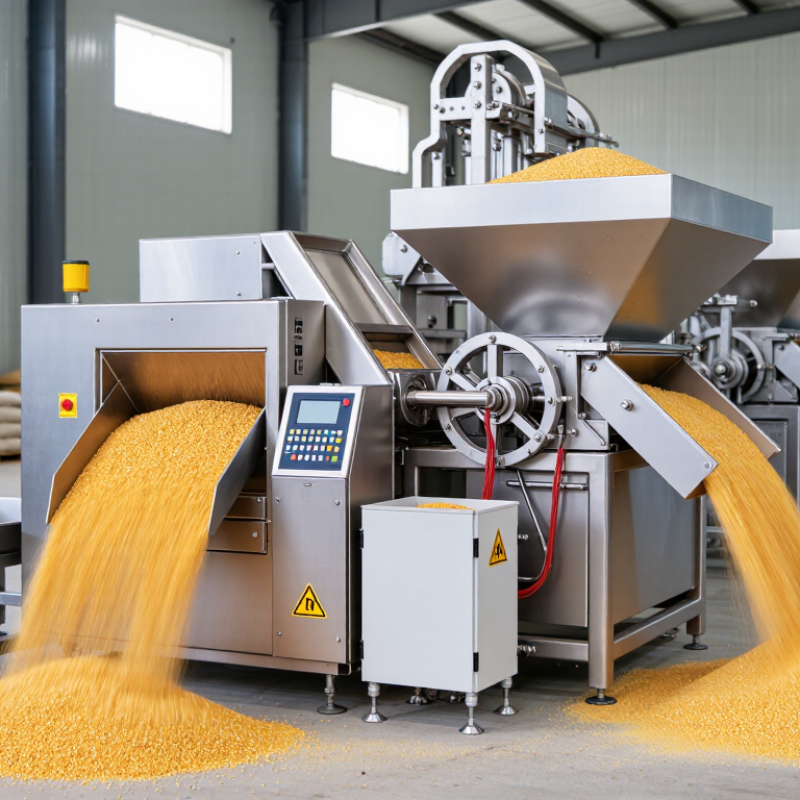
A Maize Flour Mill Machine can help businesses turn whole kernels into a consistent product for households, bakeries, and food manufacturers. The right setup may also support different grind sizes and reduce dependence on outside processors. But capacity figures on a brochure are not the whole story. Maintenance, cleaning, spare parts, and operator training matter on an ordinary working day. Small details count. A worn screen or unstable feed can affect flour texture and create avoidable downtime.
USDA production estimates describe grain output, not the market for milled maize flour. That distinction matters when assessing a purchase. Buyers should compare expected local sales with the machine’s real hourly output, energy use, and service needs. A larger line may look impressive, yet remain underused. There is no perfect choice. A careful review of product requirements and operating costs makes the investment case more credible—and helps a business choose equipment suited to its actual market.
USDA data puts global maize production above 1.2 billion tonnes in 2023/24. That figure signals a vast agricultural supply, but it does not mean every mill can source grain cheaply or consistently. Harvest timing, transport costs, storage conditions, and local demand all matter. A maize flour mill machine can help a business turn available kernels into a product with steady particle size and practical shelf appeal. It can also reduce reliance on outside processors. The right capacity depends on real orders, not impressive global statistics.
Tips: Test maize moisture before milling. Inspect flour texture and machine output during a small trial. Ask about cleaning access, spare parts, and power needs. Small details count.
Before investing, compare expected daily production with confirmed buyers, such as bakeries or food shops. Check whether the machine can handle the grain varieties available nearby. Finer flour may require different settings and more energy. Dust control and routine maintenance also affect operating costs. A machine that runs well in a demonstration may perform differently with local maize. Leave room in the budget for installation, training, and downtime; that part is easy to underestimate.
Global maize production exceeded 1.2 billion tonnes in 2023/24, highlighting the scale of the crop’s supply base.
Large-scale production can offer flour milling businesses a broad agricultural supply base. Actual availability, quality and prices depend on local harvests and markets.
Source: USDA Foreign Agricultural Service, Production, Supply and Distribution (PSD) data. Figures are rounded; 2023/24 is an estimate.
A maize flour mill earns its value through controlled grain preparation, not just fast grinding. Cleaning screens remove stalk fragments and stones, while aspiration lifts lighter dust. Magnets catch stray metal. These steps protect equipment and help keep flour consistent. Scale matters: FAOSTAT reported global maize production of about 1.16 billion tonnes in 2022, so even small process losses can add up across a large operation. The number is impressive. But grain quality still varies by harvest, moisture, and storage.
After cleaning, grain is conditioned with water to soften the outer layers. A degerminator then separates much of the germ and bran from the starchy endosperm. FAO’s Maize in Human Nutrition reports that the endosperm makes up roughly 83% of the kernel, while the germ accounts for about 11%. Separation can improve flour stability, though removing too much also reduces useful grain components. Milling breaks the endosperm into particles; sifters then separate flour from coarser material for another pass. In practice, this balance takes adjustment. A little more water, or a worn screen, can change the texture noticeably. The operator’s checks matter as much as the machine settings.
A maize flour mill machine should be judged by saleable flour recovery, not just its rated capacity. A practical planning range is 65–75% of cleaned maize by weight, but it is an estimate, not a guarantee. Grain moisture, kernel damage, cleaning losses, and the fineness of the flour can all change the result. Small differences matter.
Model the grain bill with a simple formula: grain cost per kilogram divided by recovery rate. If maize costs $300 per tonne, a 65% recovery means about $462 in grain cost per tonne of flour. At 75%, it is about $400. These figures exclude electricity, labor, packaging, maintenance, and any income from bran or germ. Keep by-product revenue separate unless you have a reliable local buyer.
Run a small trial using the maize you actually plan to process. Weigh the cleaned grain and saleable flour, and record moisture and settings. Repeat the test; one batch can mislead. I would not build a business plan around the highest result. A lower, verified yield gives a more cautious cost estimate, though even that figure may shift with seasonal grain quality.
A maize flour mill should match real demand, not an ambitious sales forecast. Estimate daily orders, then account for working hours, cleaning, maintenance, and occasional stoppages. A mill rated only for peak demand may sit underused for much of the year. One sized too tightly can leave orders waiting while grain piles up near the intake.
Capacity should refer to finished flour, not simply maize entering the machine. Milling yield varies with grain condition and the level of refinement, so leave a practical operating margin. Track output over several production days before committing to a larger system. That record may be less impressive than a sales projection, but it is usually more useful.
For product information, maize flour can be positioned at about 361 kcal per 100 g as a reference estimate for dry flour. The actual figure may vary with moisture and processing, so avoid treating it as universal. This estimate is useful, but not exact; that distinction is easy to overlook. Keep the nutrition figure consistent with tested product data, and explain serving sizes clearly. A simple batch sheet recording flour weight, moisture, and milling settings can help connect production decisions with the product customers receive.
| Category | Planning metric | Illustrative value | Business relevance |
|---|---|---|---|
| Mill capacity and annual production planning | |||
| Small operation | Rated throughput and schedule | 50 kg/hour; 4 hours/day; 250 days/year | Suitable for a modest local operation or a business testing demand before expanding. |
| Small operation | Annual output estimate | 50 tonnes/year nominal; approximately 35 tonnes/year at 70% of nominal output | Nominal output is calculated from rated throughput and scheduled hours. The 70% figure is an illustrative planning allowance, not a machine guarantee. |
| Medium operation | Rated throughput and schedule | 250 kg/hour; 8 hours/day; 300 days/year | May suit a regional supplier with established wholesale or retail demand. |
| Medium operation | Annual output estimate | 600 tonnes/year nominal; approximately 420 tonnes/year at 70% of nominal output | Use expected sales, storage capacity, and delivery schedules to check whether this production level is appropriate. |
| Large operation | Rated throughput and schedule | 1,000 kg/hour; 16 hours/day; 300 days/year | Designed as a planning example for a high-volume operation; confirm that supply, staffing, maintenance, and customers can support the schedule. |
| Large operation | Annual output estimate | 4,800 tonnes/year nominal; approximately 3,360 tonnes/year at 70% of nominal output | Actual output depends on the grain, moisture, flour specification, operating conditions, and downtime. |
| Flour energy reference | |||
| Maize flour | Approximate energy per 100 g | About 361 kcal (approximately 1,510 kJ) | Useful as a general product reference. Energy values vary with flour type, processing, and product composition; use a product-specific nutrition analysis for labeling. |
| Sizing check | |||
| Capacity selection | Planning calculation | Required hourly output = forecast annual sales ÷ (operating days/year × operating hours/day) | Compare forecast demand with practical output, then allow for maintenance, cleaning, changeovers, and seasonal fluctuations before choosing a mill size. |
It signals broad supply, not guaranteed local availability. Harvest timing, transport, storage, and local demand still affect costs.
Compare daily capacity with confirmed orders. Check local grain varieties, power needs, cleaning access, spare parts, and installation costs. Details matter.
Run a small trial with local grain. Measure moisture, inspect flour texture, and record machine settings and output. One batch can mislead.
Screens remove stones and stalk fragments, aspiration lifts dust, and magnets catch stray metal. Water conditioning softens outer layers before separation.
It separates much of the germ and bran from the starchy endosperm. This can improve flour stability, but excessive removal reduces useful grain components.
A practical estimate is 65–75% of cleaned maize by weight. Actual recovery varies with moisture, damaged kernels, cleaning losses, and flour fineness.
At $300 per tonne of maize, 65% recovery means about $462 in grain cost per tonne of flour. At 75%, it is about $400. Other costs are excluded.
Weigh cleaned grain and saleable flour across repeated trials. Use a verified lower yield, and keep by-product income separate unless buyers are reliable. I would still leave room for surprises.
Contact Us
Pemamek Ltd