

Choosing a formwork supplier in China in 2026 is not simply a price comparison. The right partner can affect concrete finish, site safety, labor hours, and project schedules. A quotation may look competitive, yet omit connection hardware, packing details, or replacement terms. Small gaps become expensive on a busy site.
Start with the actual application. Wall, slab, column, and climbing systems place different demands on materials and engineering. Ask for drawings, load calculations, product specifications, and clear assembly instructions. Then compare those documents with physical samples and recent production records. Check welds, panel dimensions, surface coatings, and how components are bundled for shipping. Details matter.
A capable formwork supplier in China should explain manufacturing capacity, quality checks, customization limits, and delivery planning in specific terms. Request references for projects with similar systems and conditions, not just a polished catalog. If possible, arrange an independent factory audit or a live production inspection. Verify that the people answering technical questions can connect you with engineering and quality teams. A fast sales response is useful, but it proves little about factory control.
Keep communication practical. Share drawings early, confirm tolerances in writing, and agree on how changes will be recorded. Ask what happens when a batch arrives short or a component does not fit. No supplier is flawless. We can also overvalue a neat sample and overlook the consistency of a full shipment. That is worth remembering. A careful selection process cannot remove every risk, but it can expose weak assumptions before they reach the jobsite. In 2026, dependable documentation, transparent production, and realistic delivery commitments deserve as much attention as unit price.
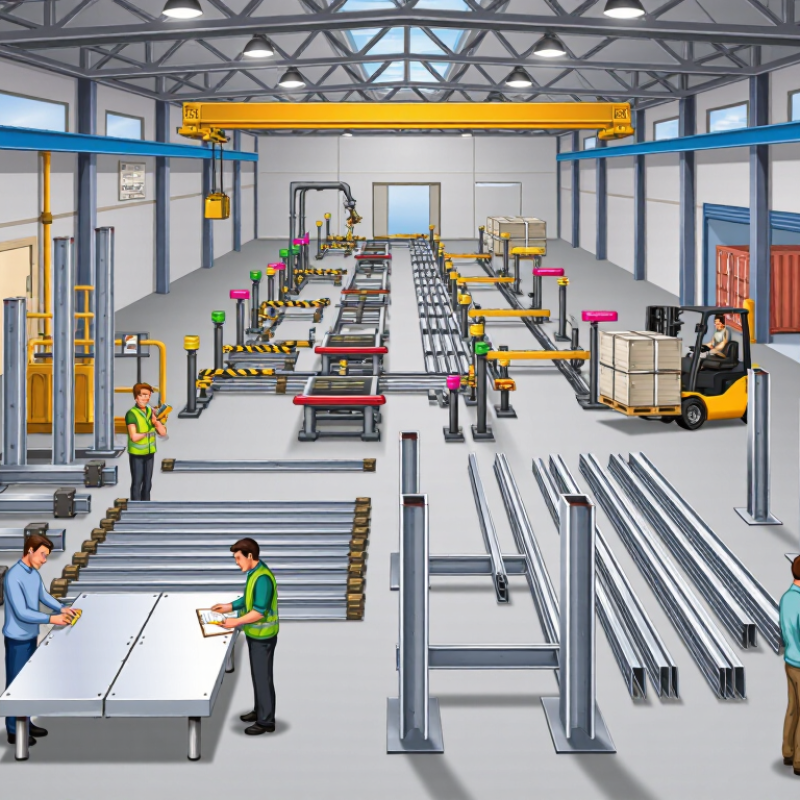
Before comparing formwork suppliers in China, write down what the project actually requires. Record slab thickness, wall height, pour sequence, expected concrete placement rate, and the number of reuse cycles. Small details matter. A two-storey residential project and a high-rise core need different load capacities, panel sizes, and handling plans.
Specify the required concrete finish, dimensional tolerances, and any openings or embedded items. Note site limits too: crane capacity, access routes, storage space, and local weather. These details help suppliers propose a system that fits the work, rather than sending a generic catalogue. Ask for material specifications, layout drawings, and load calculations that match your project conditions. Have the project engineer review the design and confirm applicable requirements.
Keep the first specification practical, but not overly confident. Early quantities and cycle estimates are often imperfect; revise them when drawings or construction sequences change. Measure twice. Share one clear drawing set and a written list of assumptions with each shortlisted supplier. Then compare proposals against the same scope, including accessories, replacement parts, delivery timing, and technical support. A low price is hard to judge when one quotation leaves out ties or corner panels.
| Requirement Area | Information to Define | Example Project Input | What to Request from the Supplier |
|---|---|---|---|
| Project and application | Project location, building type, construction sequence, and intended use of the formwork. | Cast-in-place reinforced-concrete residential building; formwork reused across typical floors. | Written confirmation of the proposed system’s intended applications, limitations, and required accessories. |
| Structural geometry | Wall, column, beam, and slab dimensions; floor-to-floor height; openings; corners; and changes in layout. | Provide dimensioned drawings and identify typical, transfer, and non-typical levels separately. | Panel layout drawings, shop drawings, and a component schedule coordinated with the latest project drawings. |
| Concrete and design loads | Concrete density and mix, placement rate, pour height, temperature, vibration method, and construction loads. | Set project-specific values with the structural engineer and concrete contractor; do not use a generic pressure assumption. | Design calculations showing the assumed loads, load combinations, support arrangement, and design criteria. |
| System and material | Select a suitable system, such as timber-beam, steel, aluminum, or modular panel formwork, based on geometry and site conditions. | Compare system weight, handling method, available crane capacity, labor skills, and expected reuse conditions. | Material grades, component dimensions, connection details, surface finish information, and product data sheets. |
| Deflection and concrete finish | Specify acceptable formwork movement and the required concrete surface finish for each element. | Identify whether surfaces will be exposed, painted, tiled, or covered by another finish. | Design checks against the project’s stated deflection and finish criteria, plus details for joints and tie-hole treatment. |
| Supports and stability | Define prop spacing, shore height, bracing, anchorage, bearing surfaces, and reshoring sequence. | Check the actual site layout, floor capacity, ground conditions, and temporary works sequence. | Support and bracing layouts, installation guidance, and calculations for the proposed site configuration. |
| Compatibility and interfaces | Check compatibility with reinforcement, embedded items, construction joints, safety platforms, and adjoining systems. | Mark lift openings, service penetrations, slab edges, and any areas with congested reinforcement on the drawings. | Coordinated drawings and a clear list of included, excluded, and separately supplied components. |
| Quantity and reuse plan | Estimate the required formwork area, peak concurrent demand, construction cycle, and planned reuse sequence. | Base quantities on pour schedules and floor layouts rather than total building area alone. | A quantity takeoff with assumptions, spare-parts allowance, and a realistic reuse and maintenance plan. |
| Quality and traceability | Set inspection requirements for dimensions, welds, coatings, fasteners, and incoming materials. | Agree acceptance criteria and inspection points before production begins. | Inspection records, material certificates where applicable, traceability information, and pre-shipment inspection access. |
| Delivery and documentation | Confirm delivery location, packing method, shipment schedule, unloading arrangements, and required documents. | Coordinate delivery dates with the construction programme and site storage capacity. | Packing list, component labels, installation and safety instructions, maintenance guidance, and agreed delivery schedule. |
| Commercial scope and support | Clarify supply scope, engineering responsibilities, spare parts, warranty terms, and technical support arrangements. | Record responsibilities for design review, installation supervision, and changes caused by revised drawings. | A detailed quotation with exclusions, service scope, response arrangements, and documented change-control terms. |