Why Choose a 3.5t Forklift for Global Operations?
Global operations demand lifting equipment that balances capacity, maneuverability, operating cost, and service access. A 3.5t Forklift often fits this middle ground. It can handle palletized machinery, building materials, steel products, and dense warehouse loads without reaching the footprint of heavier equipment. In many facilities, that balance matters more than maximum lifting capacity.
Industry data supports careful evaluation. The World Industrial Truck Statistics (WITS) report tracks more than two million industrial truck deliveries worldwide in recent reporting years, showing the scale and competitiveness of this equipment market. Meanwhile, the U.S. Occupational Safety and Health Administration (OSHA) reports that powered industrial trucks are linked with approximately 85 workplace fatalities and 35,000 serious injuries annually in the United States. These figures underline a practical truth: selection, operator training, visibility, stability, and maintenance must work together. Numbers matter.
For international buyers, a 3.5t Forklift can also simplify fleet planning. Common load ratings, container-friendly dimensions, diesel, LPG, and electric configurations support different climates and work patterns. Electric models may suit enclosed warehouses, while diesel versions can offer stronger endurance on rough outdoor surfaces. However, the “best” specification is never universal. Tire choice, mast height, battery infrastructure, spare-parts availability, and local technician expertise can change the result. That is where purchasing decisions often become less certain. A forklift may perform well in a factory trial yet struggle on uneven export yards. Reliable global deployment therefore requires documented testing, transparent safety data, and after-sales support—not merely an attractive capacity rating.
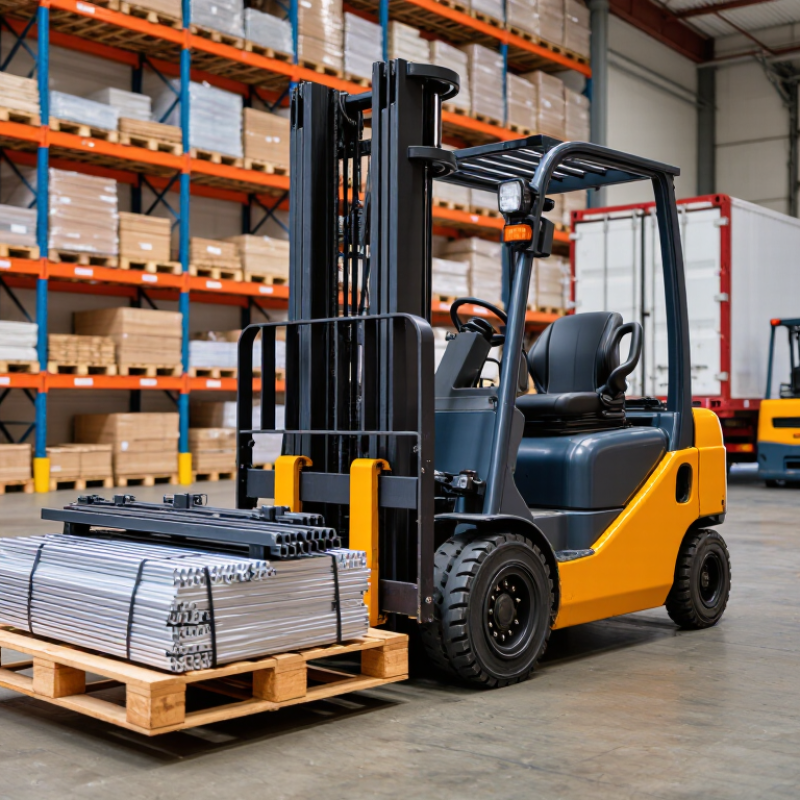
What Defines a 3.5t Forklift and Its Global Operating Role?
A 3.5t forklift is commonly rated to lift 3,500 kilograms under specified conditions. That rating depends on the load center, mast height, attachment, and ground stability. A compact steel frame may look powerful, but capacity drops when a long load shifts forward. The data plate matters more than appearance. Operators check it first.
Across global operations, this class sits between light warehouse trucks and heavier yard machines. It can unload palletized machinery, move building materials, and feed production lines without excessive floor damage. In a busy distribution center, solid tires and a tight turning radius can save aisle space. At a humid coastal site, corrosion control and daily inspection become practical concerns. At high altitude or on uneven ground, performance assumptions need review. These differences are easy to underestimate.
Reliable use begins with matching the forklift to local loads, surfaces, climate, and work rhythms. Supervisors should verify rated capacity, visibility, braking, pedestrian separation, and operator competence before deployment. Maintenance records should show inspections, hydraulic checks, tire condition, and battery or fuel-system care. Training also needs local language and clear signals. A 3.5t forklift is not automatically a 3.5t solution everywhere. That part is uncomfortable. Treating the published rating as a promise would be careless.
How 3.5t Capacity Matches Common International Material-Handling Needs
A 3.5-ton forklift often fits the working rhythm of international warehouses. In many facilities, standard pallets, steel cages, machinery parts, and building materials fall within this range. The capacity is substantial without making the truck unnecessarily large. That balance matters when aisles are narrow and loading bays stay busy.
From practical site assessments, operators usually need more than a headline capacity. A 3.5-ton rating commonly applies at a defined load center, often 500 millimeters, and heavier or longer loads reduce the safe allowance. Fork length, mast height, attachment weight, tire type, and floor condition also change performance. A container floor may feel level, yet a damaged section can affect stability. Small details matter.
For global operations, this capacity supports mixed tasks across distribution centers, workshops, ports, and production sites. It can move palletized goods, coils, crates, and compact equipment without demanding the footprint of heavier industrial units. However, climate, operator training, service access, and local compliance requirements differ between countries. A fleet chosen from a spreadsheet may look efficient but work poorly in real traffic. I have seen teams overestimate capacity and underestimate turning space. That mistake is avoidable, though not always obvious during purchasing. Test the intended load, route, attachment, and shift pattern before approval.
Which Performance Features Support Diverse Global Work Environments?
A 3.5t forklift offers a practical balance between lifting strength, maneuverability, and transport flexibility. Its capacity suits palletized machinery, building materials, and dense warehouse loads. Yet capacity alone does not guarantee safe performance.
Visibility matters more than many specifications suggest. A low-profile dashboard, clear mast channels, and a suspended seat help operators manage uneven yards and narrow aisles.
OSHA reports that forklifts cause about 35,000 serious injuries and 62,000 non-serious injuries annually in the United States.
That figure supports choosing stability controls, speed limiting, seat-belt interlocks, and reliable braking systems. ISO 3691-1 also provides a useful safety framework for industrial trucks.
Tire selection should match the environment. Cushion tires reduce turning space indoors, while pneumatic tires absorb rough surfaces at ports, farms, and construction sites.
In cold storage, sealed electrical components and battery heating can protect productivity. In hot or dusty regions, cooling capacity and filtration deserve closer inspection.
Telematics can record impacts, utilization, and maintenance intervals, supporting evidence-based fleet decisions. The World Bank’s 2023 Logistics Performance Index emphasizes reliability and shipment timeliness, so uptime has commercial value.
Still, telematics cannot replace trained operators or site inspections. A 3.5t forklift may perform differently after attachments, ramp work, or uneven loading.
That detail is easy to underestimate.
How Fuel, Electric, and Hybrid Models Compare Across Regions
Why Choose a 3.5t Forklift for Global Operations?
A 3.5t forklift fits many warehouses, ports, and construction sites. Its capacity supports pallets, machinery, and dense racking without excessive size. Fuel, electric, and hybrid models behave differently across regions. Operators should examine duty cycles, climate, charging access, and local energy prices.
Fuel models suit remote yards with limited electrical infrastructure. LPG refueling often takes minutes, while battery charging may require scheduled downtime. However, combustion models create onsite exhaust and noise. The International Energy Agency reported that global electricity generation reached a record clean-power share in 2023, but regional differences remain substantial. An electric forklift may be cleaner in one market than another.
Electric models offer quiet operation and no tailpipe emissions. They work well indoors, especially where ventilation is restricted. Eurostat data shows wide electricity-price differences across European countries, affecting operating costs. Cold regions can also reduce battery performance. That detail is easy to miss. Battery replacement costs need careful planning.
Hybrid forklifts may reduce fuel use during repeated lifting and braking. Yet independent, cross-region data remains limited. The International Council on Clean Transportation notes that real-world efficiency often differs from laboratory results. This warning applies here too. A hybrid may disappoint when loads stay constant or charging systems are weak. Regional maintenance skills, spare-parts access, and grid reliability can matter more than advertised efficiency.