Who Are the China Top 10 Anchor Drill Rig Manufacturers?
Choosing an Anchor Drill Rig is a practical decision, not just a comparison of catalog prices. These machines secure slopes, foundations, tunnels, and retaining structures, often where space is tight and ground conditions change quickly. A rig that performs well on a level test site may behave differently on fractured rock or a narrow urban project. The details matter. Mast reach, torque, feed force, mobility, and maintenance access can shape daily productivity. So can the availability of local parts and trained service technicians.
This guide explores ten notable Chinese manufacturers and the factors buyers can use to compare them. It considers product range, drilling capability, customization, export experience, technical support, and the evidence available for each company. A ranked list can be useful, but it is not a universal verdict. Company information changes, and published specifications do not always show performance under real site conditions. That part deserves a closer look. Buyers should confirm current models, request detailed technical documents, and discuss project requirements directly with manufacturers. Where possible, they should also seek references from comparable jobs. A careful comparison may take longer, but it can reveal trade-offs that a short product page misses. No single rig fits every site.
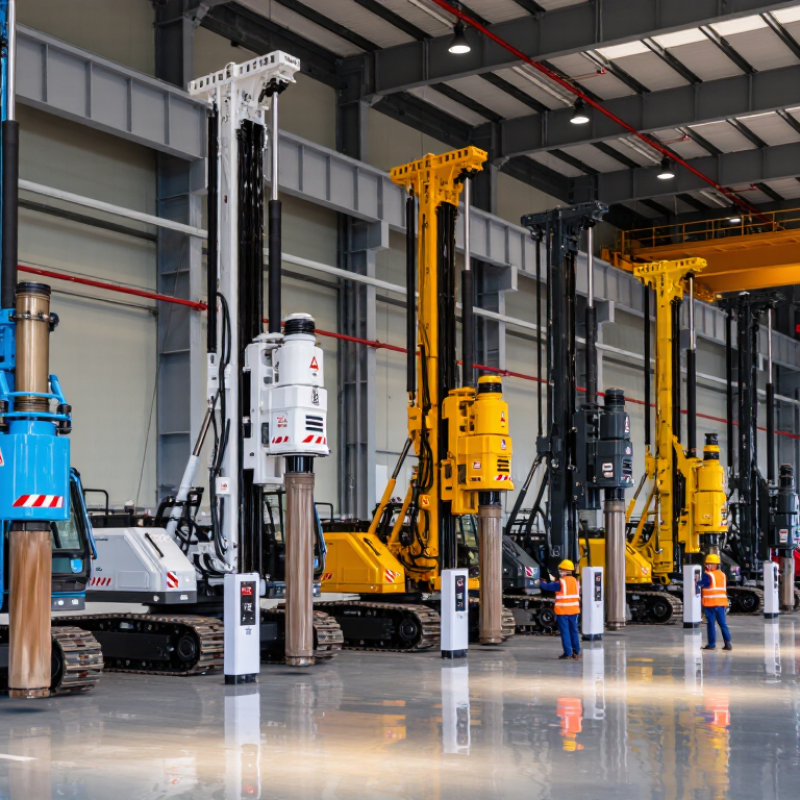
What Are Anchor Drill Rigs and How Are They Used?
Anchor drill rigs create holes for ground anchors that help stabilize slopes, retaining walls, and excavations. Their mast can be positioned at different angles, allowing crews to drill through soil or rock where access is limited. A rotary head turns the drill string, while flushing air or water can carry cuttings out of the hole. The method depends on ground conditions.
After drilling, workers place an anchor tendon or bar into the borehole. Grout fills the space around it, and, after curing, the anchor may be tensioned to provide support. The rig does not perform every step. Installation teams must coordinate drilling, grouting, and testing, and follow the project’s engineering plan.
Good setup matters. On a steep site, stable tracks and careful mast alignment can reduce unwanted movement and help keep the hole on line. Operators also need to watch for changing rock layers, groundwater, and blocked flushing paths. Small delays can reveal useful information. Not always. A rig’s capacity alone does not determine whether it suits a job; access, hole depth, ground conditions, and the required drilling angle all matter. Engineers should confirm these details before work begins.
Who Are the China Top 10 Anchor Drill Rig Manufacturers? – What Are Anchor Drill Rigs and How Are They Used?
Anchor drill rigs are machines used to drill holes for installing ground anchors, soil nails, rock bolts, and related support systems. The table below compares ten common rig configurations used in the Chinese market; it is not a ranked or verified list of manufacturers. Figures are indicative industry ranges, not specifications for a particular machine.
| Rig Configuration | Typical Drilling Method | Typical Hole Diameter | Typical Drilling Depth | Typical Power Range | Common Applications |
| Compact crawler anchor rig | Rotary or rotary-percussive | 90–200 mm | 10–30 m | 30–75 kW | Small construction sites, slope stabilization, and foundation reinforcement |
| Hydraulic crawler anchor rig | Rotary-percussive | 100–250 mm | 15–40 m | 55–110 kW | Retaining walls, deep excavations, and soil-nailing projects |
| Top-hammer anchor rig | Top-hammer percussion with rotation | 45–127 mm | 10–35 m | 45–120 kW | Rock bolts and ground anchors in fractured or competent rock |
| Down-the-hole (DTH) anchor rig | DTH hammer with rotary drilling | 90–300 mm | 15–60 m | 75–180 kW | Hard-rock drilling, slope reinforcement, and large-diameter anchor holes |
| Multi-angle anchor rig | Rotary-percussive; adjustable mast | 90–200 mm | 10–35 m | 45–110 kW | Inclined anchors, complex retaining structures, and restricted job sites |
| Low-headroom anchor rig | Rotary or rotary-percussive | 76–200 mm | 8–30 m | 30–90 kW | Basements, tunnels, underpasses, and work beneath overhead obstructions |
| Truck-mounted anchor drilling rig | Rotary or DTH, depending on setup | 90–250 mm | 15–50 m | 75–200 kW | Roadside slope protection, distributed projects, and sites requiring rapid relocation |
| Multifunction foundation and anchor rig | Rotary, rotary-percussive, or casing-assisted drilling | 100–300 mm | 15–50 m | 75–180 kW | Ground anchors, micropiles, and foundation work where several drilling methods are needed |
| Micropile and anchor rig | Rotary with flushing or casing | 100–300 mm | 10–40 m | 45–150 kW | Micropiles, underpinning, underpinning anchors, and confined urban construction |
| High-torque deep anchor rig | Rotary-percussive or DTH | 150–350 mm | 30–80 m | 110–250 kW | Deep prestressed anchors and major retaining or infrastructure projects |
How Are China’s Leading Anchor Drill Rig Manufacturers Identified?
Identifying China’s leading anchor drill rig manufacturers requires more than comparing catalogues or factory photographs. A credible assessment starts with documented production capability, engineering support, and equipment performance in representative ground conditions. Look for test records, clear specifications, and service teams able to explain each rig’s limits. Details matter.
For anchor drilling, useful evidence includes mast stability, torque range, feed force, flushing options, and compatibility with stated rod sizes. These figures should match the intended work, whether crews face fractured rock, dense soil, or restricted urban sites. Ask how the manufacturer validates its claims and whether wear parts can be supplied consistently. A polished brochure is not proof. Check carefully.
Rankings should also weigh quality controls, operator training, response times, export experience, and transparent warranty terms. Independent references and site visits can reveal how machines perform after months of vibration, dust, and daily transport. Still, public data varies, and some companies disclose more than others; that can skew any top-ten list. Treat the ranking as a shortlist, then compare the evidence against your drilling plan and local support needs. The result is rarely perfect.
Who Are the Top 10 Anchor Drill Rig Manufacturers in China?
Who Are the Top 10 Anchor Drill Rig Manufacturers in China? There is no single reliable ranking that settles this question. Lists may weigh production volume, export reach, or technical support differently. A useful shortlist should focus on verified capabilities, not promotional claims. Ask manufacturers for recent project references and clear equipment specifications.
Compare rigs by drilling depth, torque, feed force, and performance in the ground conditions you face. Check whether the mast, clamps, and hydraulic system suit your anchor installation method. A compact rig can be practical on a narrow site, while a larger unit may offer more reach. Bigger is not always better. Review service coverage, spare-part lead times, operator training, and warranty terms. These details are easy to overlook when comparing price sheets. I would also verify that test figures come from comparable working conditions; otherwise, the comparison can be misleading.
Tips: Request a written configuration and a parts list. Ask for a reference site you can contact. Confirm transport dimensions and setup time before ordering. A tidy brochure is helpful, but it cannot replace a careful technical review.
What Products and Technologies Set These Manufacturers Apart?
China’s leading anchor drill rig manufacturers stand apart through practical engineering, not one headline feature. Their ranges may include crawler-mounted rigs for uneven sites, compact units for restricted access, and hydraulic systems for controlled drilling. Mast design matters. A stable mast helps crews keep the intended angle, while adjustable feed force can suit different ground conditions.
Technology choices shape daily performance. Some rigs offer remote controls, digital depth displays, or monitoring for pressure and rotation speed. These features can improve repeatability, but they do not replace skilled operators or careful ground assessment. Dust-control options, accessible service points, and common wear-part sizes also affect real job costs. No machine is perfect. A feature-rich model may be harder to maintain in remote areas.
Tips: Compare rated torque, drilling angle range, transport dimensions, and service access. Ask for test data from ground similar to your site. Check what the standard package actually includes; optional controls and tools can change the price. A polished specification sheet is useful, but field support matters too.
How Can Buyers Compare and Select an Anchor Drill Rig Manufacturer?
Compare anchor drill rig manufacturers against the ground you will actually drill. Check torque, pullback force, feed stroke, mast angle, and the diameter range for your anchor system. Ask for operating data in comparable rock or soil, not only maximum figures. The Global Infrastructure Hub’s 2017 Global Infrastructure Outlook estimated $94 trillion in infrastructure investment needs by 2040. That scale makes reliable equipment important, but a large market does not prove a rig suits your site.
Request a witnessed drilling trial using your planned bit, rods, and grout setup. Record penetration rate, rod changes, fuel use, and hole deviation. Ask how the manufacturer handles spare parts, operator training, and service response in your region. The Federal Highway Administration’s Ground Anchors and Anchored Systems manual describes project-based anchor testing procedures; use those requirements to check whether the rig supports your verification plan. A polished brochure is not field evidence.
Tips: Compare at least two suppliers using the same ground conditions and test criteria. Inspect hose routing, dust protection, and access to daily service points. Get delivery times and warranty exclusions in writing. If a supplier cannot provide comparable test records, treat that as a gap—not a minor detail.
How to Compare Anchor Drill Rig Manufacturers
Suggested buyer evaluation weights (%) for comparing manufacturers. These are a customizable decision framework, not market-survey results or ratings of specific companies.
Compare each manufacturer against the same project requirements. Verify drilling capacity and ground-condition suitability from technical documents, and assess reliability, safety compliance, service support, total cost of ownership, and delivery terms using written quotations and references.