

China Top 10 Tungsten Alloy Manufacturers

Tungsten Alloy is valued for its high density, strength, and ability to perform in demanding industrial settings. These properties make it relevant to applications such as precision counterweights, radiation shielding, aerospace components, and specialized tooling. Yet choosing a supplier involves more than comparing a product sheet. Buyers need to assess material composition, dimensional tolerances, machining capability, inspection records, and the consistency of batch documentation.

The supply chain deserves attention. The U.S. Geological Survey’s Mineral Commodity Summaries 2025 estimates global tungsten mine production at 81,000 metric tons in 2024, including 67,000 metric tons from China. These figures describe mined tungsten, not finished alloy output. Still, they show why sourcing conditions and processing capacity matter when evaluating manufacturers. The International Tungsten Industry Association’s technical resources also help explain tungsten’s industrial properties and uses. The details matter.

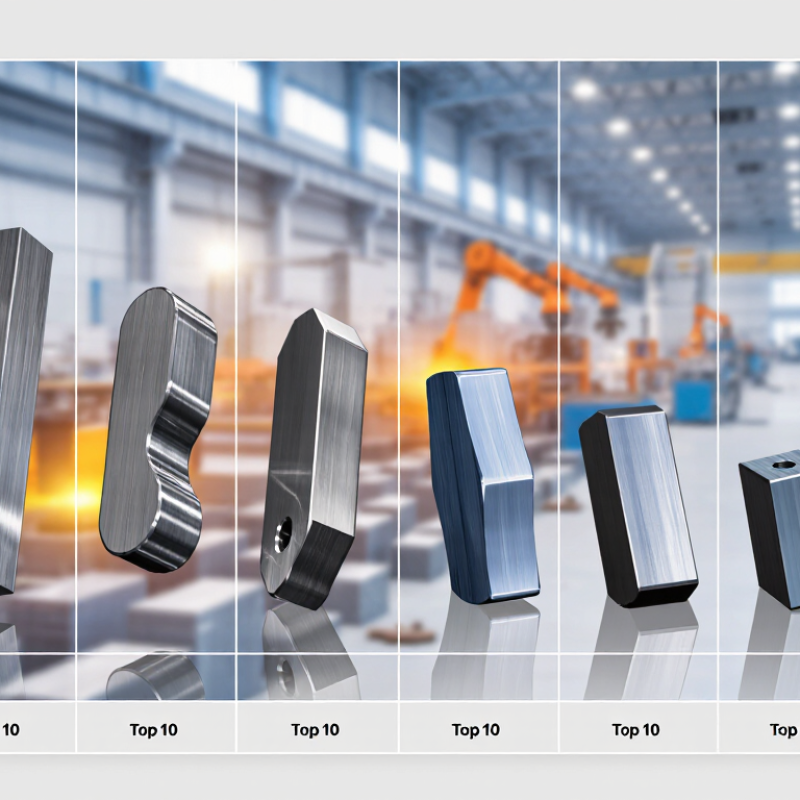
This overview of China’s top 10 tungsten alloy manufacturers is intended as a practical starting point, not a definitive ranking. Company capabilities can differ by alloy grade, product form, production scale, and quality-control systems. Published claims may not reveal actual lead times or performance in a specific application. That gap deserves scrutiny. Readers should verify current certifications, request technical data, and compare samples against their own requirements before making a purchasing decision.
China Top 10 Tungsten Alloy Manufacturers

Tungsten Alloys: Composition, Properties, and Common Grades

Tungsten heavy alloys are engineered composites, not simply solid tungsten. They usually contain tungsten powder bonded with a nickel-iron or nickel-copper phase. ASTM B777 defines four commonly used classes: 90, 92.5, 95, and 97 weight percent tungsten. The balance is mainly binder metal. Higher tungsten content generally increases density, while binder choice affects strength and machinability. Typical grades reach roughly 17–18.5 g/cm³, far above steel. That matters. A small machined part can feel unexpectedly heavy in the hand.

Grade selection should reflect the component’s actual job, not density alone. ASTM B777 class designations provide a useful starting point, but they do not describe every manufacturing detail or performance trade-off. The USGS Mineral Commodity Summaries 2025 estimated 2024 global tungsten mine production at 81,000 metric tons, with China producing 67,000 metric tons. This supply context helps explain why material specifications and traceable test records matter to buyers. Still, mine output is not the same as finished-alloy capacity. It is an easy distinction to overlook. For a dense counterweight or precision-machined component, request the stated tungsten fraction, density, and relevant mechanical test results before comparing grades.

How Tungsten Alloys Are Manufactured in China

In China, tungsten-alloy production generally begins with carefully prepared metal powders. Tungsten powder is blended with a binder metal, often nickel-iron or nickel-copper, to meet requirements for density and strength. Small differences in particle size or mixing time can affect the finished part. This is less tidy than a recipe suggests.

After blending, manufacturers compact the powder in a die or use methods such as cold isostatic pressing. The resulting “green” shape is fragile, so handling matters. It is then sintered in a controlled atmosphere, where heat bonds the particles and forms a dense alloy. Temperature, furnace conditions, and time must be monitored closely. A few degrees can matter.

The sintered material may be forged or machined into counterweights, shielding components, or precision parts. Tungsten alloys are dense and relatively hard, so cutting tools can wear quickly; slow, stable machining often helps maintain dimensions. Producers typically check composition, density, dimensions, and surface condition against specifications. Measurement is essential. Still, no process removes every source of variation, and unusual shapes can complicate inspection. Reliable production depends on documenting each stage and agreeing on tolerances before work begins.

Major Applications of Tungsten Alloys Across Industries

Tungsten alloys are used where compact parts must provide substantial weight and stability. Their high density makes them useful as counterweights in aircraft control systems and precision instruments. A small, carefully placed weight can help balance moving components without taking up much space. That matters. In medical imaging equipment, tungsten alloy parts can help shield X-ray sources when space is limited. Shielding performance still depends on the component’s design, thickness, and operating conditions.

Industrial equipment offers other practical uses. Tungsten alloy weights can help balance rotating machinery, reducing unwanted vibration during operation. In specialized measurement devices, their mass can support stable, repeatable movement. Some components also serve in radiation shielding for inspection equipment. These parts are not automatically the best choice. High density can increase handling and support requirements, while machining and joining need suitable processes. Composition and manufacturing quality also affect performance. It is worth checking the actual operating conditions before specifying an alloy; “heavier” alone is not a complete design brief.

Key Criteria for Evaluating Chinese Tungsten Alloy Manufacturers

China Top 10 Tungsten Alloy Manufacturers

Key Criteria for Evaluating Chinese Tungsten Alloy Manufacturers

Selecting a manufacturer requires more than comparing quoted prices. The USGS Mineral Commodity Summaries 2024 reported 2023 tungsten mine production of about 78,000 metric tons worldwide, with China producing approximately 63,000. This concentration makes clear sourcing records and dependable quality controls especially important. Ask for lot-specific certificates showing tungsten content, density, dimensions, and mechanical properties. Check that reported values match agreed test methods and the product’s intended use. ASTM B777 can provide a relevant reference for tungsten-base, high-density metals, but confirm its suitability for your application.

Examine how the factory controls each step, from powder preparation and sintering to machining and inspection. Request recent test reports, calibration records, and a sample from a normal production lot—not only a specially prepared sample. Small details matter. A consistent density reading across several parts can reveal more than a polished brochure. Ask how defects are recorded, investigated, and prevented from recurring. Site audits or independent laboratory checks can help verify claims. A certificate alone is not proof. I would also compare samples under realistic machining conditions; that step is easy to overlook, and I would not treat a datasheet as a substitute for hands-on evaluation.

China Top 10 Tungsten Alloy Manufacturers - Key Criteria for Evaluating Chinese Tungsten Alloy Manufacturers

A practical, evidence-based scorecard for comparing manufacturers of tungsten heavy alloys. The criteria below describe what to evaluate; they do not rank or identify individual companies.

No. Evaluation Criterion What to Check Useful Evidence to Request Suggested Weight
1 Material composition and grade control Confirm tungsten content and the specified binder elements, commonly nickel-iron or nickel-copper. Check that composition tolerances are defined for the ordered grade. Material specification, batch chemical analysis, and a certificate of analysis traceable to the supplied lot. 15%
2 Density and dimensional consistency Compare the guaranteed density range with the product drawing and application requirements. Verify how density is measured and how dimensional tolerances are controlled. Inspection report showing measured density and dimensions, sampling method, and instrument calibration status. 14%
3 Mechanical-property verification Check relevant properties such as tensile strength, hardness, elongation, or impact performance. Test methods and specimen conditions should be stated, since results depend on grade and processing. Test reports identifying the test standard, specimen orientation, material condition, and batch or heat number. 12%
4 Manufacturing and process capability Assess whether the supplier can produce the required forms and geometries, including pressed-and-sintered stock, machined parts, or custom components. Confirm process limits before approving the design. Process flow, capability data for comparable parts, equipment overview, and a first-article inspection plan. 11%
5 Machining quality and surface condition For finished components, review tolerance capability, surface finish, edge condition, and the handling of dense, hard material during machining. Dimensioned sample, surface-finish results where specified, and inspection records against the approved drawing. 10%
6 Quality-management system and traceability Check that documented controls cover incoming materials, production, inspection, nonconforming product, and corrective action. Verify lot-level traceability through manufacturing and shipment. Current quality-system certificate where applicable, audit information, inspection procedures, and sample traceability records. 10%
7 Application-specific engineering support Evaluate the supplier's ability to review drawings, recommend suitable grades, clarify property requirements, and identify design or manufacturing risks before production. Technical review records, material recommendations with supporting data, and documented responses to engineering questions. 8%
8 Testing facilities and measurement reliability Determine which tests are performed in-house and which are outsourced. Confirm that methods, equipment, and laboratory competence are suitable for the required acceptance criteria. Equipment list, calibration records, test-method references, and laboratory accreditation details when relevant. 7%
9 Lead time, capacity, and order flexibility Compare quoted lead times, production capacity, minimum order quantities, and the supplier's approach to urgent orders or demand changes. Validate promises against the required delivery schedule. Written production schedule, capacity confirmation, order terms, and delivery performance data for comparable work. 7%
10 Export packing, documentation, and commercial clarity Check that packaging protects heavy parts from impact, corrosion, and movement in transit. Review export documentation, packaging responsibilities, delivery terms, and warranty or claim procedures. Packaging specification, sample shipping documents, written Incoterms® 2020 quotation, and documented claims process. 6%

Scoring guidance: Apply the suggested weights to evidence gathered for each supplier, and mark any unverified item as “not confirmed” rather than assuming compliance. Requirements vary by application, grade, part geometry, and applicable purchase specification.

Profiles of China’s Top 10 Tungsten Alloy Manufacturers

China’s tungsten-alloy manufacturers are best compared by process capability, not catalog breadth alone. Look for evidence of powder preparation, pressing, sintering, and precision machining. These steps influence density, dimensional stability, and consistency. Small details matter. Ask whether published tolerances apply to finished parts or test coupons, and whether inspection records cover each production lot.

The USGS Mineral Commodity Summaries 2025 estimated 2024 world tungsten mine output at 81,000 metric tons, with China accounting for 67,000 tons. This describes raw-material supply, not finished-alloy quality. Manufacturer profiles should distinguish powder sourcing from in-house alloy production and machining. A facility may make dense counterweights reliably yet have limited experience with thin-wall components or tight tolerances.

For each candidate, compare tungsten content, binder chemistry, density, hardness, and available dimensions. Request material certificates, lot traceability, and sample inspection records. Check lead times. Public disclosures can be uneven; some firms describe equipment but provide little detail about process controls. That gap deserves scrutiny. Rankings can also mislead when manufacturers serve different applications. Match each profile to an actual drawing, operating temperature, and impact load, then validate the fit with a sample.

Contact Us