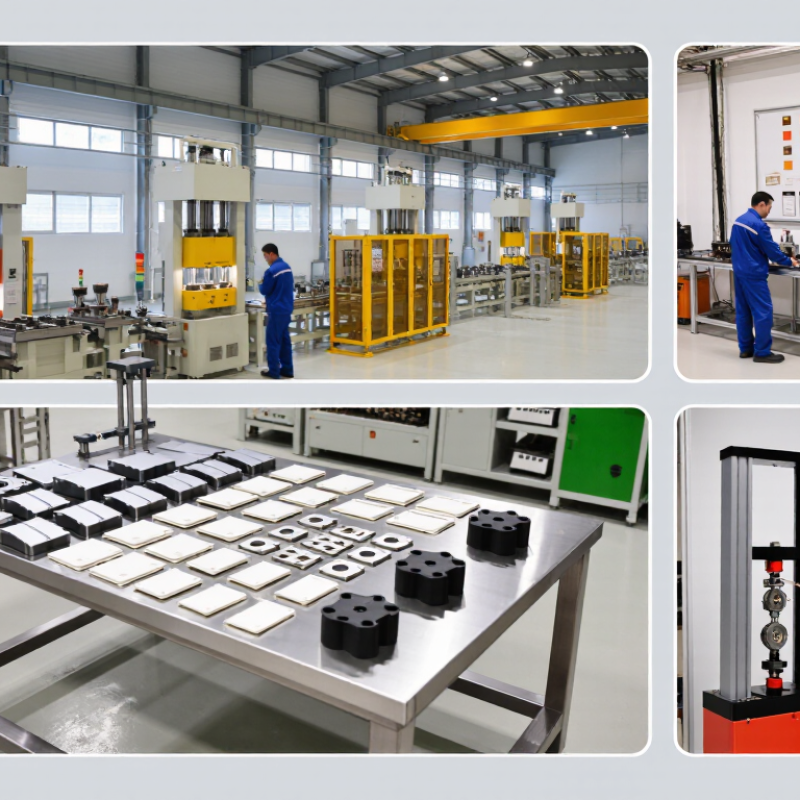
Choosing the China Best Compression Moulding Parts Supplier requires more than comparing unit prices. It requires evidence.
Grand View Research reported that the global compression molding market was valued at approximately USD 5.7 billion in 2023. The same report expects continued growth through 2030, driven by automotive, electrical, aerospace, and consumer applications. MarketsandMarkets also identifies thermoset composites, SMC, and BMC as important growth areas. These figures suggest stronger demand, but they do not prove that every supplier can deliver consistent parts.
That distinction matters.
Reliable Compression Moulding Parts suppliers should demonstrate controlled material preparation, mold-temperature stability, and repeatable pressing cycles. Buyers should request dimensional inspection records, material certificates, and documented corrective actions. A clean factory floor helps, but traceability matters more. Look for ISO 9001 certification, and request IATF 16949 evidence when supplying automotive programs. For aerospace or safety-critical components, AS9100 capability may be relevant.
Practical experience also reveals details that brochures often hide. Ask how the supplier controls flash around a 0.3-millimeter sealing edge. Check whether operators inspect fiber orientation, voids, warpage, and surface defects after demolding. Confirm whether tooling repairs are recorded and approved. Sample testing should include heat aging, tensile strength, dimensional stability, or electrical insulation, depending on the application.
The lowest quote can become expensive.
A capable China-based partner should explain its limits clearly. It should not promise every tolerance, resin, or production volume without review. Supplier selection remains imperfect because published market data describes demand, not factory performance. Therefore, audit findings, trial parts, communication quality, and long-term quality records should guide the final decision.
Compression moulding parts are components formed by pressing a measured material charge inside a heated mould. The material softens, flows, and cures under controlled pressure and temperature. Common materials include silicone, EPDM, natural rubber, thermoset compounds, and fiber-reinforced plastics. These parts often become seals, gaskets, vibration pads, electrical insulators, and protective covers.
A typical production cycle starts with accurate material weighing. The operator places the charge into the mould cavity before closing the heated tool. Pressure then spreads the compound into detailed areas, including grooves and narrow corners. After curing, the part is removed, trimmed, and inspected. Small errors matter. Uneven temperature may create soft spots, excess flash, or dimensional changes. Practical inspection should include hardness, visual quality, measurements, and compression performance.
Reliable suppliers should review drawings, material requirements, tolerances, and working conditions before production. Traceable batch records can help identify problems when results change unexpectedly. In China, capable moulding manufacturers may support prototype sampling, tool adjustments, and repeat production. However, a low price does not prove stable quality. The process is not flawless. Even experienced teams may need to refine pressure, curing time, or mould ventilation. Clear communication and sample approval remain essential for dependable compression moulding parts.
China Best Compression Moulding Parts Supplier?
Compression moulding parts begin with material preparation. Engineers weigh rubber, thermoset resin, or composite charge carefully. The charge enters a heated mould cavity. Pressure then forces it across the tool surface. Heat activates curing or cross-linking. After cooling, operators remove flash and inspect critical dimensions.
Process control matters more than impressive machinery. A 2024 PlasticsEurope report recorded 54.6 million tonnes of plastics production in Europe during 2023. That volume highlights the need for stable cycle times and lower material waste. In practical production, technicians monitor mould temperature, closing pressure, cure time, and part weight. They also check voids, warpage, hardness, and surface marks. ASTM D570 can support water-absorption testing for suitable polymer parts. ISO 20457 helps define tolerances for moulded plastic components. These standards improve traceability, although they cannot replace experienced judgement. A perfect setting on paper may still produce uneven edges.
Tips: Keep the mould clean and preheated. Record every batch. Use a controlled charge shape. Inspect the first parts after each setup change. Do not assume one pressure profile fits every material. Small adjustments often prevent larger defects. Supplier evaluations should include sample approval, process records, inspection equipment, and corrective-action response. Price alone is a weak measure of manufacturing reliability.
China Best Compression Moulding Parts Supplier?
What Materials Are Used in Compression Moulding Parts?
Compression moulding parts commonly use rubber, silicone, thermoset plastics, and composite materials. Each option responds differently to heat, pressure, chemicals, and repeated loading. EPDM rubber suits outdoor seals because it resists weathering and ozone. NBR performs well around oils and fuels. Silicone remains flexible across wide temperature ranges. It is also suitable for many sealing applications.
Thermoset materials include phenolic compounds, epoxy compounds, and polyester-based moulding compounds. These materials create rigid parts with good electrical insulation and dimensional stability. Glass fibres may be added for higher strength and reduced warping. Carbon or mineral fillers can change stiffness, wear resistance, and thermal performance. The filler choice matters more than many buyers expect.
Small details affect reliability.
A capable supplier should verify hardness, cure time, shrinkage, and operating temperature before production. Material certificates and batch records support traceability. Practical testing should include compression set, tensile strength, chemical exposure, and ageing where necessary. A part may look perfect after moulding and still fail months later. That uncomfortable possibility deserves attention. Engineers sometimes choose a material from a familiar specification without checking the actual service environment. Humidity, surface contact, assembly force, and cleaning chemicals can change the result. Clear drawings, approved samples, and documented inspection standards reduce these risks. The best material is not always the most expensive one; it is the one matched carefully to the part’s real working conditions.
Representative density of commonly compression-moulded material families
Thermoset compounds such as phenolic, polyester, and epoxy materials are widely used for rigid, heat-resistant parts. Silicone and EPDM rubber compounds are commonly selected for flexible seals, gaskets, and vibration-control components. The values shown are representative midpoints of typical density ranges; actual results vary with fillers, reinforcement, and formulation.
China’s compression moulding sector serves automotive, electrical, medical, and industrial applications. According to the 2024 MarketsandMarkets Compression Molding Market report, the market may grow from about USD 4.8 billion in 2023 to USD 6.3 billion by 2028. Growth increases supplier choices, but not every factory offers dependable process control. Ask for material certificates, mould maintenance records, and recent inspection data. Do not rely on polished photographs.
Evaluate production capability through measurable evidence. Check whether the supplier controls temperature, pressure, curing time, and fibre orientation. Request dimensional reports from actual batches, not sample-room parts. A capable factory should provide Cpk data, with 1.33 commonly used for stable critical dimensions. Review traceability from compound lot to shipment. Shorter lead times sound attractive. However, rushed mould changes can create flash, warpage, or uneven thickness.
Audit the people behind the equipment. Inspect calibration labels, laboratory tools, operator training, and nonconformance records. ISO 9001 certification supports system discipline, but it cannot replace an on-site review. For automotive components, IATF 16949 practices and PPAP experience can reduce launch risks.
One practical warning remains: suppliers sometimes report excellent first-article results while routine batches vary. Ask for three consecutive production lots. The answer may be uncomfortable, yet revealing. A small pilot order can expose packaging damage, delayed feedback, and weak corrective action before full production begins.
China Best Compression Moulding Parts Supplier?
Which Supplier Best Meets Your Production Requirements?
Choosing a compression moulding parts supplier should begin with your production data. Share the material grade, part dimensions, tolerance range, annual volume, and working temperature. A supplier may offer attractive prices, but unsuitable tooling can create flash, warping, or uneven thickness.
During factory evaluations, inspect the complete process, not only the finished samples. Ask how the team controls mould temperature, pressure, curing time, and demoulding. Check whether inspection records include dimensional reports, material certificates, and batch traceability. Small details matter. A reliable supplier should explain corrective actions clearly when a part fails inspection.
Request trial parts made with production-intent tooling. Compare sealing performance, surface finish, hardness, and weight across several batches. I have seen samples pass visual checks but fail after repeated heat cycling. That experience changed how I assess suppliers. Laboratory results help, but real assembly trials reveal more. Ask for realistic lead times, spare-tool support, packaging details, and communication procedures. A supplier with strong engineering advice may prevent design problems before mass production. Still, no supplier is perfect. Review risks openly, document acceptance standards, and leave room for process improvement.
| Evaluation Dimension | Your Production Requirement | Practical Industry Benchmark | Recommended Verification Evidence | Priority | Why It Matters |
|---|---|---|---|---|---|
| Material Compatibility | The supplier must process the specified thermoset compound, such as phenolic, epoxy, melamine, or glass-fiber-reinforced molding compound. | Documented experience with the exact material grade and reinforcement system required for the part. | Material datasheet, processing history, batch traceability records, and approved sample parts. | Critical | Material selection directly affects strength, heat resistance, electrical insulation, shrinkage, and dimensional stability. |
| Dimensional Capability | The supplier must consistently meet the drawing tolerances for critical dimensions, flatness, concentricity, and hole location. | Capability should be demonstrated against the approved drawing; a process capability target of Cpk ≥ 1.33 is commonly used for critical characteristics when sufficient production data is available. | FAI report, dimensional inspection report, control plan, gauge list, and statistical process data. | Critical | Stable dimensions reduce assembly problems, rework, leakage, vibration, and field failures. |
| Press Capacity and Part Size | Available molding presses must provide enough closing force, daylight, platen area, and stroke for the selected mold and part geometry. | The required press tonnage should be calculated from projected cavity area, molding pressure, safety factor, and mold layout rather than selected by part weight alone. | Press list, technical specifications, machine utilization data, and a documented tonnage calculation. | Critical | Insufficient capacity can cause flash, incomplete filling, mold damage, and inconsistent part quality. |
| Mold and Tooling Engineering | The supplier should be able to design or manufacture compression molds suitable for the compound, geometry, expected life, and production volume. | The tooling plan should define steel selection, cavity layout, venting, ejector design, shrinkage allowance, maintenance intervals, and spare components. | Mold-flow or filling analysis where applicable, 2D/3D tooling drawings, mold trial records, and maintenance instructions. | Critical | Well-designed tooling improves cycle consistency, reduces flash, and lowers long-term maintenance costs. |
| Production Volume and Scalability | The supplier must support the required annual volume and accommodate future demand increases without compromising delivery or quality. | Capacity should be evaluated using available machine hours, cavity count, cycle time, planned utilization, downtime allowance, and backup equipment. | Capacity calculation, monthly output records, production schedule, and contingency plan for peak demand. | High | Actual available capacity is more meaningful than a nominal maximum output figure. |
| Cycle-Time Control | The molding cycle must remain stable across loading, compression, curing, cooling, demolding, and post-processing stages. | The supplier should define approved process windows for temperature, pressure, cure time, and demolding conditions. | Process parameter sheets, machine data logs, first-off approval records, and reaction plans for out-of-control conditions. | High | Controlled cycle times improve productivity and help prevent under-cured, over-cured, warped, or cracked parts. |
| Quality Management | The supplier should operate a documented quality system covering incoming materials, molding, trimming, inspection, nonconformance control, and shipment release. | An independently certified quality management system, such as ISO 9001, is a useful baseline; industry-specific requirements may need additional controls. | Valid certificate, quality manual, internal audit records, corrective-action reports, and inspection procedures. | Critical | A documented system provides repeatability, traceability, and a formal method for preventing recurring defects. |
| Inspection and Test Equipment | The supplier must have suitable equipment for dimensional, visual, mechanical, thermal, electrical, or application-specific testing. | Measurement equipment should be calibrated at defined intervals and suitable for the accuracy required by the drawing and specifications. | Equipment register, calibration certificates, measurement system analysis, and sample inspection reports. | High | Reliable measurement prevents false acceptance, false rejection, and disputes over product conformity. |
| Surface Finish and Post-Processing | The supplier must control flash removal, deburring, drilling, machining, coating, marking, and other finishing operations. | Acceptance limits should be defined by drawings, visual standards, reference samples, or measurable surface requirements. | Limit samples, work instructions, inspection criteria, and records for secondary operations. | High | Consistent finishing is essential for safe handling, fit, appearance, sealing, and downstream assembly. |
| Lead Time and Delivery Reliability | The supplier must meet tooling, sample, pilot-run, and recurring production deadlines. | A realistic schedule should separate tooling lead time, first-article approval, pilot production, and mass-production lead time. | Milestone schedule, historical on-time delivery data, production planning process, and escalation procedure. | High | Predictable delivery supports inventory planning and prevents production-line interruptions. |
| Traceability and Documentation | Each production lot should be traceable to material batch, tooling, machine, process parameters, inspection results, and shipment date. | Lot-level traceability should be maintained for the period required by the customer, regulatory environment, and product risk level. | Lot labels, batch records, inspection reports, certificates of conformity, and document-retention policy. | High | Traceability enables faster containment and root-cause analysis if a quality issue occurs. |
| Total Cost of Ownership | The quotation should include tooling, material, molding, trimming, inspection, packaging, logistics, maintenance, and potential rework costs. | The lowest unit price is not necessarily the lowest total cost; compare yield, tool life, scrap rate, lead time, and warranty exposure. | Transparent quotation, cost breakdown, scrap assumptions, tooling-maintenance terms, and change-order policy. | Medium | Lifecycle cost provides a more accurate basis for supplier selection than piece price alone. |
| Communication and Engineering Support | The supplier should provide timely technical feedback on manufacturability, tolerances, draft, inserts, venting, and material selection. | A formal engineering review should be completed before tooling release, with all design changes documented and approved. | DFM review, engineering change records, response-time commitments, and assigned technical contact. | High | Early engineering input can prevent avoidable tooling revisions and production delays. |
| Compliance and Supply-Chain Risk | The supplier should meet applicable material, environmental, product-safety, export, packaging, and customer-specific requirements. | Compliance should be assessed according to the destination market and end-use application; evidence must relate to the actual supplied material and process. | Material declarations, test reports, compliance statements, business-continuity plan, and supplier-risk assessment. | Critical | Compliance failures can cause shipment holds, redesigns, recalls, or market-access restrictions. |

Selection method: score each criterion from 1 to 5 after reviewing objective evidence, then multiply the score by the assigned priority. Final supplier approval should be based on samples, process validation, and documented production capability rather than quotation price alone.
Contact Us
Pemamek Ltd