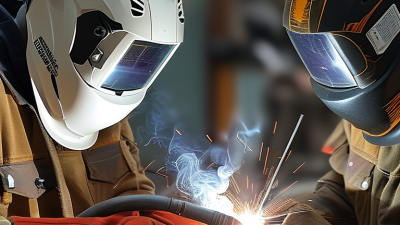
What Are the Best China Pipe Rollers for Welding?
Choosing the best pipe rollers for welding begins with the workpiece, not the machine’s advertised speed. A roller system must support the pipe’s weight, diameter, length, and surface condition. In a busy fabrication shop, a poorly matched unit may slip, stall, or create uneven rotation. That can affect weld consistency and operator safety. Practical selection requires more than comparing prices.
Reliable pipe rollers should offer suitable load capacity, stable frames, accurate speed control, and durable wheel materials. Self-aligning models can reduce setup time when pipe sections vary slightly. Rubber-coated rollers may improve grip, while steel wheels can suit heavier industrial applications. Buyers should also inspect emergency stops, control layouts, maintenance access, and available replacement parts. These details matter during long welding sessions, especially when hot steel, dust, and repeated repositioning are involved.
Real fabrication experience shows that no single roller fits every workshop. A compact unit may perform well on small pipe but struggle with thick-wall sections. An advanced system may provide excellent control yet exceed a small company’s budget. Specifications should be checked against manufacturer data and actual welding procedures. Independent testing, qualified technical advice, and clear warranty terms add confidence. Even experienced buyers can overlook floor conditions or uneven loads. That mistake is worth remembering. This guide examines key roller types, performance factors, and practical buying considerations, helping welders choose equipment that supports safer handling and more consistent results.
What Are China Pipe Rollers for Welding?
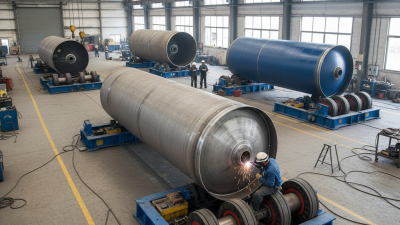
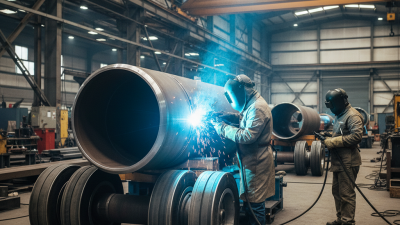
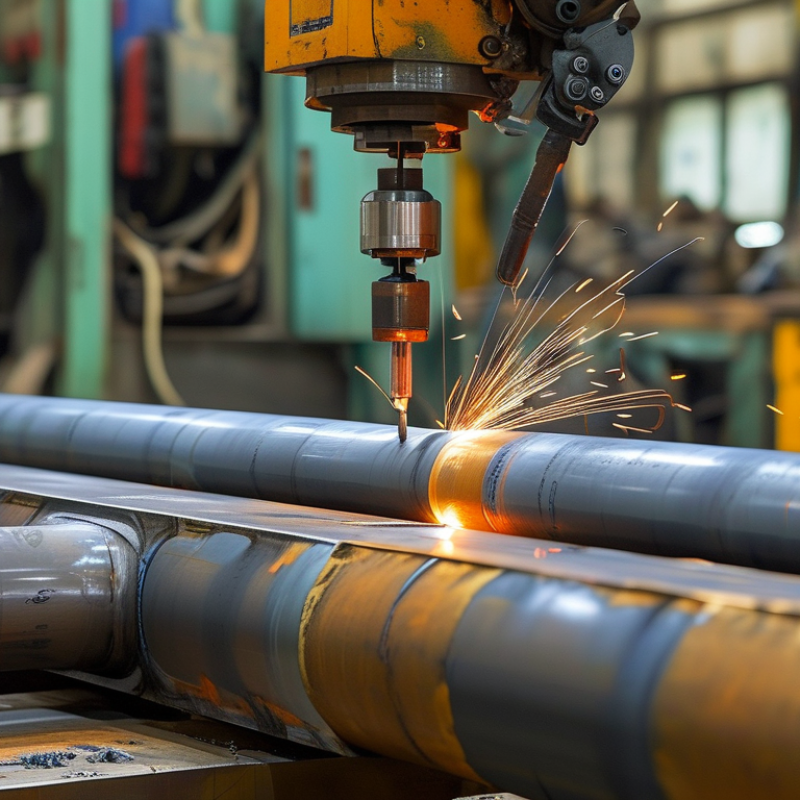
China pipe rollers for welding are rotating supports used to position cylindrical workpieces during welding. They carry the pipe on adjustable wheels or rollers. A motor turns the assembly at a controlled speed. This helps the welder maintain a steadier torch angle and bead width.
Most units include a powered roller, an idler roller, a frame, and a control box. Adjustable spacing supports different pipe diameters. Rubber, steel, or polyurethane surfaces offer different grip and wear behavior. In workshops, I check the rated load against the pipe’s actual weight, not its empty theoretical weight. Wall thickness, fittings, and uneven loading can change the calculation. Small detail. Big consequence.
When comparing China-made pipe rollers, inspect weld quality, bearing protection, speed control, and emergency stopping access. Ask for load-test records, wiring diagrams, and dimensional drawings. The rollers should start smoothly without sudden movement. During a trial, watch for pipe drift, vibration, and wheel flattening. I have found that a clean frame does not always mean precise alignment. Careful measurement matters here. Operators should keep hands clear, secure long workpieces, and follow local workplace requirements. A suitable model matches diameter range, load capacity, rotation speed, and workshop space. Cheapest is rarely simplest.
Which Types of China Pipe Rollers Suit Different Welding Tasks?
Choosing the best China pipe rollers starts with the welding task, not the catalogue price.
In 2023, the World Steel Association reported about 1.89 billion tonnes of global crude steel production. That volume reflects continued demand for reliable pipe fabrication equipment. For small and medium pipe sections, conventional turning rolls offer steady rotation and simple setup. They suit repeated circumferential welds in controlled workshop conditions.
Self-aligning rollers work better when pipe diameters change frequently. Their frame adjusts as the workpiece settles, reducing manual repositioning during fit-up. For large, heavy pipes, powered turning rolls with separate idler units provide stronger support and smoother rotation.
Fit-up rollers are useful during tack welding, but they may not provide enough control for long production welds. Check the combined pipe, fixture, and tooling weight before selection. Never rely only on the roller’s advertised load rating.
Speed control matters when heat input and weld position must remain consistent. The U.S. Department of Energy’s 2022 Industrial Decarbonization Roadmap states that iron and steel production creates roughly 7–9% of global greenhouse-gas emissions. Stable rotation can reduce stoppages, rework, and wasted shielding gas.
One practical warning remains: uneven pipe surfaces can cause slipping, even with self-aligning equipment.
I would also inspect roller contact pressure, emergency stopping, and alignment after installation. Catalogue descriptions often sound complete. They are not.
How to Evaluate the Best China Pipe Roller Features
What Are the Best China Pipe Rollers for Welding?
How to Evaluate the Best China Pipe Roller Features
Choosing a China pipe roller starts with load capacity, not price. The rated load should exceed the heaviest pipe, supports, and welding accessories. Add a practical safety margin of at least 25 percent. Roller diameter also matters. Larger rollers reduce surface pressure and improve movement on thin-wall pipes. Check the manufacturer’s test method, because “capacity” can mean unevenly distributed weight.
Speed control is essential for stable welding. Look for variable rotation, low-speed torque, and smooth starts. A useful working range may be 0.1 to 1.0 meters per minute, depending on pipe diameter and welding procedure. Adjustable roller spacing helps accommodate different pipe sizes. Self-aligning designs reduce manual correction, but they still need accurate setup. In field use, alignment is rarely perfect.
Safety and documentation reveal real engineering quality. ISO 12100 emphasizes risk assessment, while ISO 13849 supports safer control-system design. Check emergency stops, overload protection, guarding, grounding, and electrical enclosure ratings. A 2024 Fortune Business Insights report valued the global welding equipment market at approximately 15.55 billion U.S. dollars in 2023, showing strong demand for dependable equipment. That figure does not guarantee quality. I would request load-test records, motor details, inspection certificates, and spare-parts information before purchasing. The control panel may look impressive. The gearbox often tells the truth.
What Are the Best China Pipe Rollers for Welding?
How to Evaluate the Best Pipe Roller Features
This representative benchmark compares common pipe roller capacity classes used in welding fabrication.
Higher load capacity is useful for large, heavy pipes, while adjustable roller spacing and stable variable-speed
rotation are essential for safe alignment, consistent weld positioning, and reduced operator effort. Always confirm
the final working load, pipe diameter range, motor duty cycle, and safety factor against the actual project requirements.
How to Compare China Pipe Rollers by Capacity and Performance
What Are the Best China Pipe Rollers for Welding?
How to Compare China Pipe Rollers by Capacity and Performance
Choosing pipe rollers for welding requires more than checking the largest advertised load. Capacity must match the pipe’s real weight, diameter, wall thickness, and support length. A safe working margin matters. I usually look for at least 20 percent extra capacity. Heavy pipes can shift suddenly during rotation.
Performance depends on more than motor power. Check rotation speed, torque, roller grip, and adjustment range. Variable speed control helps welders maintain a steady travel rate. This is especially useful near joints, flanges, and uneven surfaces. Roller spacing should support the pipe without causing excessive bending. A strong steel frame also reduces vibration during continuous work.
Test details can reveal practical quality. Ask for load-test records, motor data, control-panel specifications, and maintenance guidance. Inspect the rollers for flat spots, rough welds, or weak guards. Small defects become serious during long production cycles. Noise and heat also deserve attention. Excessive noise may indicate poor alignment or worn bearings.
A common mistake is choosing capacity alone. I have seen oversized equipment perform poorly on small pipes because its minimum adjustment was too wide. That problem is easy to miss. Consider the full working range, not just the maximum rating. Sometimes a slower, better-controlled roller produces cleaner welds than a faster machine. Performance should be measured at the job site, under realistic loads and working conditions.
How to Choose a Reliable China Pipe Roller Manufacturer
Choosing a reliable China pipe roller manufacturer requires more than comparing prices.
Start with the roller’s working range, rated load, pipe diameter, and surface condition. A suitable machine should support the pipe steadily without slipping or damaging its coating. Ask for evidence. Request load tests, dimensional drawings, material details, and recent inspection records. Clear documents often reveal how seriously a manufacturer controls production.
Study the drive system carefully. Variable speed control helps welders maintain a consistent rotation during long seams. Independent adjustment is useful when pipe sections have different diameters. Check the motor protection, emergency stop, gearbox design, and remote-control response. A factory with practical welding experience should explain these points without vague promises.
Watch the rollers. Their movement should remain smooth under load, with limited vibration and no sudden speed changes.
Communication also matters after the order.
Confirm spare-part availability, installation guidance, warranty terms, and response times in writing. Ask whether the manufacturer can provide a recorded factory test using a similar pipe weight. Photos are helpful, but they are not enough. A video can still hide defects. I once treated a polished sample as proof of dependable production, and that judgment was too quick. A better review includes production records, inspection data, and feedback from comparable users. The cheapest option may reduce the initial budget, but weak alignment or delayed service can increase welding costs later.
Reliability is built through measurable details, not confident language.