

7 Best 22m Telescopic Diesel Boom Lifts for Sale

Choosing a 22m Telescopic Diesel Boom Lift is about more than reaching a stated height. The right machine must suit the ground, access route, load, and daily work pattern. On a busy construction site, a narrow entrance or soft patch of soil can matter as much as platform reach. Small details matter.

This guide introduces seven models worth considering for sale and explains what buyers should compare. Look closely at working height, horizontal outreach, platform capacity, and machine weight. Also check the dimensions when stowed, tire type, drive performance, and required clearance for transport. A specification sheet is useful, but it cannot show how easily a lift will turn beside stored materials or settle on uneven ground.

Compare dealer information carefully. Ask for current inspection records, service history, parts availability, and clear details about the machine’s condition. For used equipment, photographs may hide wear around pins, hoses, tires, or the platform controls. A hands-on inspection is better. If that is not possible, request detailed video and independent technical checks where practical.

No single boom lift suits every site. That is worth remembering. The best choice depends on the work, the operators, and the conditions where the machine will be used. The models in this list offer a starting point, not a substitute for checking manufacturer specifications and confirming the lift meets your project’s needs.
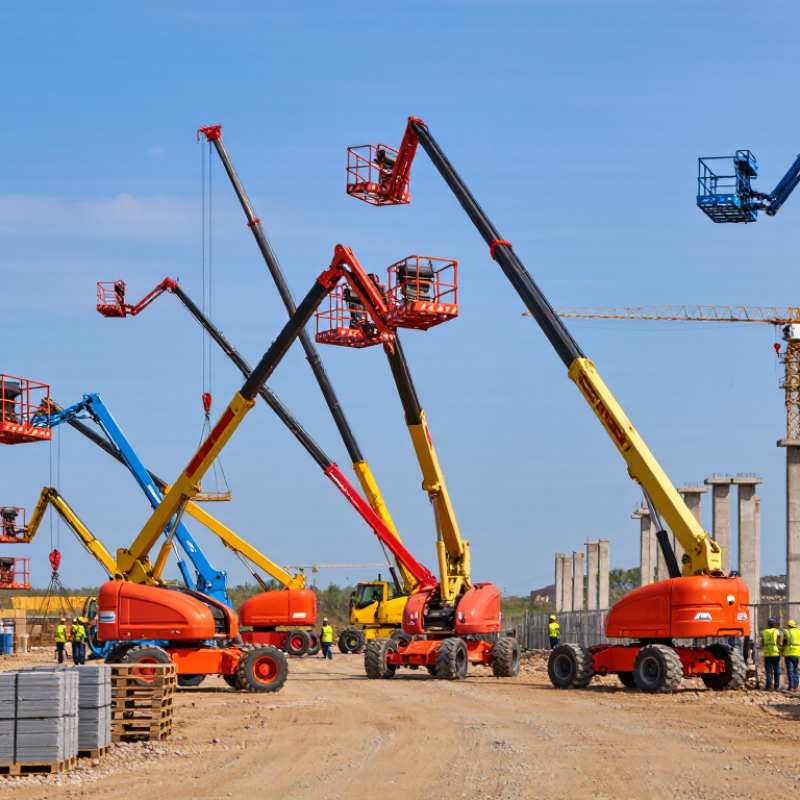
7 Best 22m Telescopic Diesel Boom Lifts for Sale

What Is a 22m Telescopic Diesel Boom Lift?

A 22m telescopic diesel boom lift is a mobile elevated work platform with a straight, extendable boom and a worker basket at its tip. “22m” usually refers to the advertised working height, not necessarily the platform floor’s height. Check the machine’s specification sheet: platform height, horizontal outreach, and safe working load are separate measurements. That distinction matters when reaching over a roof edge or across a wide work area.

Diesel power and rough-terrain tires suit many outdoor construction and maintenance jobs. The boom extends outward, so operators must consider ground firmness, slope, wind, and overhead obstacles before raising the basket. Diesel exhaust also makes enclosed spaces a poor fit without suitable controls.

Capacity varies by model and boom position. Do not assume two lifts with the same height rating can carry the same load. The U.S. Bureau of Labor Statistics recorded 5,283 fatal work injuries across all occupations in 2023 in its Census of Fatal Occupational Injuries; this broad figure is not specific to boom lifts, but it underscores why site-specific risk checks matter. A rushed setup can still feel safe—until the ground shifts.

How These Lifts Work and Where They Are Used

A 22m telescopic diesel boom lift uses nested steel sections to extend its arm outward and upward. Hydraulic cylinders move the boom, while a rotating turntable lets the platform face different parts of a structure. The operator controls movement from the basket. Small adjustments matter near roof edges, pipes, and overhead beams. Check whether “22m” refers to platform height or working height; listings may use these terms differently.

Diesel power and large, rough-terrain tires make these lifts useful on outdoor construction sites, where firm, level ground may be limited. Crews use them to install steelwork, fit wall cladding, inspect façades, and reach lighting or signs. They can also support maintenance at industrial facilities. A basket carrying tools and materials saves repeated trips, but its rated capacity still sets a strict limit.

Before raising the boom, operators should assess ground firmness, slope, overhead hazards, and nearby traffic. The machine can reach far. That can feel deceptively safe. Soft soil, a hidden drain, or a sudden turn may affect stability. Diesel exhaust and engine noise also make these lifts a poor fit for enclosed spaces without suitable ventilation. Check the site conditions, load chart, and machine inspection records before work begins.

7 Best 22m Telescopic Diesel Boom Lifts for Sale – How These Lifts Work and Where They Are Used
Selection Typical working height Typical horizontal outreach Typical platform capacity How it works Suitable applications Buying check
1. General-purpose 22m telescopic lift About 21–22 m About 17–19 m Typically 230–300 kg A hydraulically extended straight boom raises the platform and reaches outward, with ground-level controls for positioning and recovery. Building maintenance, steel erection, exterior installation, and general construction on firm or moderately uneven ground. Confirm the capacity at the required outreach; maximum platform capacity may be limited at some boom positions.
2. High-outreach 22m-class lift About 21–22 m About 18–20 m Typically 230–300 kg A telescopic boom provides a long, relatively direct reach from the chassis, reducing the need to reposition where access is clear. Reaching across obstacles, large building façades, industrial structures, and elevated work areas set back from the machine. Compare the working envelope chart, not just the maximum outreach figure; outreach changes with height and load.
3. Increased-capacity 22m-class lift About 21–22 m About 16–19 m Some configurations offer up to about 450 kg in restricted working positions Reinforced boom and platform configurations can carry more people or materials, while controls may restrict movement to maintain rated limits. Installation work involving heavier tools or materials, subject to the machine’s load chart and local safety rules. Check whether the stated capacity applies throughout the working envelope or only in a restricted zone.
4. Rough-terrain 22m telescopic lift About 21–22 m About 16–19 m Typically 230–300 kg Four-wheel drive and terrain-oriented running gear help the machine travel over suitable uneven outdoor surfaces; the boom lifts and extends hydraulically. Outdoor construction sites, infrastructure projects, and work areas with unpaved or uneven access routes. Verify ground pressure, permitted slope, tire type, and gradeability against the actual site conditions.
5. Compact-chassis 22m-class lift About 21–22 m About 15–18 m Typically 230–300 kg A more compact chassis is designed to improve access through tighter routes while retaining a telescopic boom for elevated reach. Restricted construction sites, industrial yards, and projects with narrow access paths or limited maneuvering space. Measure gate openings, turning areas, transport height, and total machine width before purchase or rental.
6. Articulating-and-telescopic 22m-class lift About 21–22 m About 15–18 m Typically 230–300 kg A jib or articulated section, where fitted, helps position the platform around overhead or side obstacles; the main boom supplies elevation and reach. Plant maintenance, pipework, building services, and work areas where a direct straight-line approach is blocked. Check jib range, articulation geometry, and whether the platform can reach the required point without contacting obstacles.
7. Heavy-duty outdoor 22m-class lift About 21–22 m About 16–19 m Typically 230–300 kg; higher-capacity versions vary A diesel engine powers travel and hydraulic functions for outdoor work, while the telescopic boom extends to position the platform at height. Long-duration outdoor construction, industrial maintenance, and sites where electric charging infrastructure is unavailable. Assess fuel use, emissions requirements, noise limits, service access, and whether a diesel machine is permitted on site.

Note: These are brand-neutral buying profiles for the 22m telescopic diesel boom-lift class, not specifications for seven individual machines. Figures are indicative ranges; exact working height, outreach, capacity, dimensions, and features vary by model and configuration. Always verify the manufacturer’s load chart, operating manual, and site requirements before purchase or use.

Key Specifications for Comparing Seven Lift Options

When comparing seven 22 m telescopic diesel boom lifts, confirm whether 22 m means working height or platform height. The difference affects reach planning. Compare maximum horizontal outreach, platform capacity, and capacity at full outreach; these figures can change sharply as the boom extends. Check the platform dimensions, too. A tool case or two workers can make a compact basket feel crowded.

Record transport dimensions, machine weight, axle load, gradeability, and turning radius for every option. These details matter on narrow access roads, soft ground, and indoor thresholds. Compare four-wheel drive, rough-terrain tyres, and available stabilising features against the actual jobsite. Check the load. A high capacity at minimum outreach does not guarantee the same capacity over a roof edge. Ask suppliers for the load chart, not just the headline number.

Safety data deserves equal attention. IPAF’s 2024 Global Safety Report recorded 4,374 incidents and 100 fatalities reported for 2023 across 34 countries. The report is a reminder that access equipment selection and operator planning matter. Compare ground and platform controls, emergency lowering, and inspection documentation. Also verify engine emissions requirements and fuel use for the work pattern. Real fuel consumption varies; brochure figures may not reflect cold starts, idling, or repeated repositioning. A specification sheet helps, but site conditions still decide whether a lift fits.

Seven 22m Telescopic Diesel Boom Lifts to Consider

A 22m telescopic diesel boom lift can reach elevated steelwork, roof edges, and outdoor maintenance points. These seven configurations are worth comparing, since the same nominal height does not guarantee the same reach or capacity.

A standard four-wheel-drive model is a practical choice for firm construction sites. An oscillating-axle version can keep its wheels in contact with uneven ground. A high-capacity platform suits crews carrying heavier tools, but check its rated load before adding materials. A long-reach configuration may access work beyond obstacles; compare its outreach chart, not just the maximum height. Small details matter.

A model with a jib can make positioning easier around beams and pipes, though the extra joint needs careful control. A narrower-chassis option may help on congested sites, but measure access routes and turning space first. Finally, compare tire types: foam-filled tires resist punctures, while other setups may provide a different ride or traction. Ask for the machine’s actual platform height, working outreach, gradeability, and transport dimensions. Specifications vary. I would not choose by height alone; ground conditions and the work envelope can change the sensible choice.

How to Choose and Buy the Right Lift

When comparing 22m telescopic diesel boom lifts, confirm what “22m” means. Some listings state working height; others emphasize platform height. Check the machine’s reach diagram, not just its headline figure. A lift reaching 22m may still fall short if the work area sits behind a roof edge or across a wide gap.

Measure the ground slope, access width, and turning space at the actual site. Then compare those measurements with the lift’s operating envelope and load chart.

Capacity matters. Include workers, tools, and materials, and leave a practical margin rather than planning around the maximum. Check four-wheel drive, gradeability, platform dimensions, transport height, and diesel service access.

Ask for maintenance records and a hands-on inspection; worn tires or hydraulic leaks are easy to miss in listing photos.

Safety deserves equal weight. The U.S. Bureau of Labor Statistics’ Census of Fatal Occupational Injuries reported 395 fatal falls among 1,069 construction fatalities in 2022. That figure is a reminder to check guardrails, controls, emergency lowering, and inspection documentation before purchase.

No machine suits every site. A short rental trial can reveal awkward access or poor positioning that a specification sheet cannot.

Contact Us