

Choosing the right Metering Equipment in 2026 requires more than comparing prices and product photographs. Global buyers must match each device with the material, process, accuracy target, and operating environment. A water treatment plant may need electromagnetic flow meters, while a food facility may require hygienic designs with smooth, cleanable surfaces. A fuel terminal faces different demands, including temperature changes, vapor control, and strict measurement traceability.
This guide examines major equipment types, including flow meters, mass meters, level meters, pressure instruments, dosing systems, and smart monitoring platforms. It considers accuracy, repeatability, installation conditions, maintenance access, communication protocols, and calibration support. Real purchasing decisions often depend on small details. A poorly positioned sensor can create unstable readings. A missing spare part can delay production for days. Reliable suppliers should provide technical documentation, test records, warranty terms, and responsive after-sales service.
No shortlist is perfect. Product performance can change with viscosity, pipe vibration, dust, corrosion, or operator practice. That limitation matters. Buyers should verify specifications through application data, site testing, and independent quality procedures where appropriate. Regional certification and import requirements also deserve early attention, because compliance expectations differ across markets. The best selection is not always the most advanced model. Sometimes, a simpler instrument offers easier maintenance and more dependable long-term results. This 2026 overview helps procurement teams compare practical options with greater confidence, while recognizing that every process still needs professional engineering review.
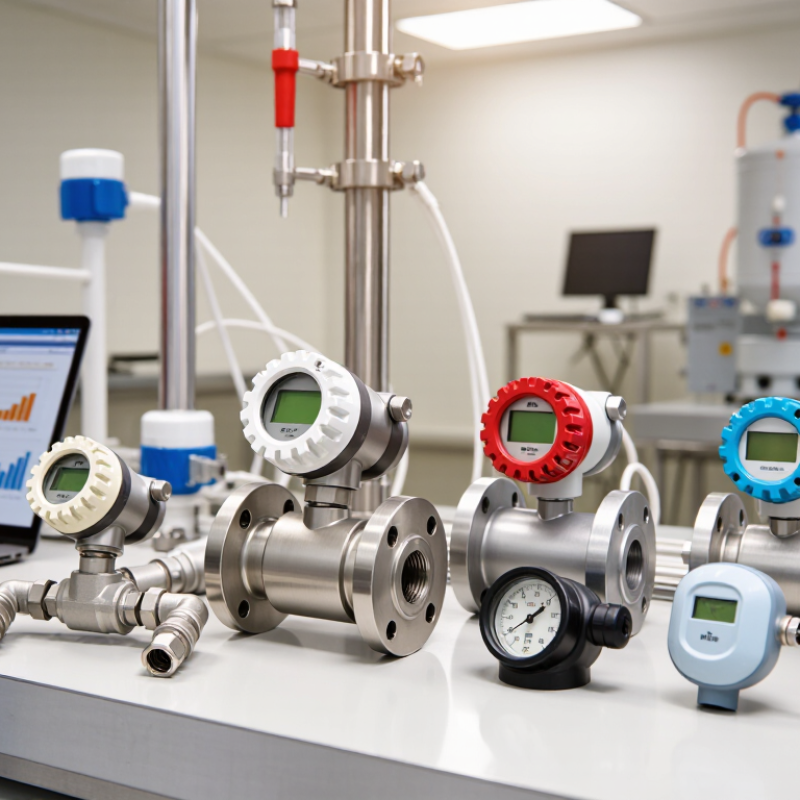
Common types include utility meters, flow meters, pressure meters, energy meters, and industrial weighing systems. Electricity meters support commercial buildings and renewable energy sites. Water and gas meters help utilities track consumption and detect unusual losses. In factories, flow and pressure meters monitor pipelines, pumps, boilers, and compressed-air systems. A clear display helps operators react quickly. Remote communication adds value when equipment is installed in difficult locations.
Selection requires more than checking measuring range. Buyers should review accuracy, installation conditions, calibration records, communication protocols, enclosure protection, and service access. Temperature changes, vibration, dust, and moisture can affect readings. A meter suitable for a clean indoor room may fail in a wet processing area. That detail is often overlooked. Not every digital device is automatically more reliable. Some systems offer advanced data functions but require trained technicians and stable network connections. Independent testing, documented calibration, and compliance with applicable regional requirements provide stronger evidence than attractive specifications alone. An honest review should also question the expected service life, replacement parts, and total operating cost.
2026 Best Metering Equipment Types for Global Buyers
Key Metering Equipment Types for Industrial and Commercial Use
Industrial and commercial facilities need accurate measurement before they can control costs, safety, and production. Flow meters measure water, chemicals, fuel, steam, and compressed air. Electromagnetic meters suit conductive liquids, while ultrasonic meters work well where pipe access must remain undisturbed. Coriolis meters provide precise mass flow readings for demanding process lines.
Electricity meters support factories, offices, warehouses, and retail buildings. Main meters track total consumption, while submeters separate workshops, tenants, lighting circuits, or charging areas. Gas meters help monitor boilers, kitchens, and heating systems. Water meters can reveal night-time leakage through unusual consumption patterns. Small changes matter.
Pressure and temperature instruments complete many measurement systems. A pressure transmitter installed near a pump can expose blocked filters or unstable flow. Temperature sensors placed at boiler outlets help operators detect overheating early. In dusty rooms, sealed housings and simple displays may prove more useful than advanced connectivity. Digital features are valuable, but they can create new maintenance work.
Selection depends on the fluid, pipe size, operating range, accuracy target, installation space, and local certification requirements. Calibration records should be easy to review. Communication options may include pulse output, wired networks, or wireless monitoring. A perfect meter does not exist. That assumption often fails when staff overlook cleaning, grounding, vibration, or changing process conditions. Reliable results require correct installation and periodic verification, not only a high specification.
For global buyers, meter selection starts with the measured variable, not the product label. Electricity meters need different tests from water, gas, or thermal meters. Accuracy should be stated across actual load ranges. OIML R 46 specifies metrological requirements for active electrical energy meters, including error limits and verification controls. For water applications, OIML R 49 addresses accuracy, durability, and measurement under changing flow conditions. A laboratory result at stable flow can mislead.
Capacity includes current, pressure, flow, memory, and operating temperature. A high-range meter may perform poorly during low demand. Check overload tolerance, turndown ratio, battery life, and data storage. The U.S. Energy Information Administration reported approximately 128 million advanced meters in 2023, showing how remote data has entered mainstream utility operations (EIA, Electric Power Annual, 2024). Connectivity should match the site. Wired protocols suit fixed cabinets, while cellular or low-power wireless can support remote assets. Wireless coverage is not compliance.
Require calibration certificates, traceability to national standards, ingress protection, cybersecurity controls, and local type approval. IEC 62052 and IEC 62053 provide widely used requirements for electricity-meter testing and accuracy classes. NIST Cybersecurity Framework 2.0 supports governance, protection, detection, response, and recovery. It does not replace sector-specific rules. During procurement trials, compare readings against a reference meter at low, normal, and peak conditions. Keep raw logs. This exposes drift. I would question one common assumption: more connectivity does not guarantee better measurement. Sometimes, a simpler meter with verified calibration is safer.
| Equipment Type | Primary Measurement | Typical Accuracy | Typical Capacity and Range | Media and Operating Conditions | Connectivity and Data Functions | Common Standards and Compliance Considerations |
|---|---|---|---|---|---|---|
| Electromagnetic Flow Meter | Volumetric flow of conductive liquids | Approximately ±0.2% to ±0.5% of reading, depending on configuration and calibration | Common line sizes from about DN15 to DN2400; turndown commonly up to 100:1 | Water, wastewater, chemicals, slurries and conductive food liquids; requires minimum conductivity and a full pipe | 4–20 mA, pulse, HART, Modbus RTU, Ethernet-based protocols and fieldbus options; empty-pipe and diagnostic functions often available | ISO 20456 for electromagnetic flow measurement; IEC 60529 ingress protection; hygienic versions may require EHEDG or 3-A acceptance where applicable |
| Ultrasonic Clamp-On Flow Meter | Volumetric flow of liquids, and selected gas applications | Approximately ±1% to ±2% of reading for well-installed liquid systems | Suitable for many pipe sizes, commonly from about DN25 to DN3000; wide range without cutting the pipe | Best for relatively clean liquids with suitable acoustic transmission; installation quality, pipe lining and air bubbles affect performance | Portable or fixed transmitters; 4–20 mA, pulse, RS-485/Modbus and data logging are common | ISO 17089 may apply to ultrasonic gas measurement; ISO 5167 principles may support associated flow systems; verify local custody-transfer approval separately |
| Coriolis Mass Flow Meter | Mass flow, density and often temperature | Approximately ±0.05% to ±0.2% of mass flow for many liquid models | Small to medium process lines, commonly from about 0.1 kg/h to 1,000,000 kg/h; pressure drop increases with smaller tubes | Liquids, gases and multiphase services; suitable for high-value dosing, batching and concentration calculations | 4–20 mA, pulse, HART, Modbus, FOUNDATION Fieldbus, PROFIBUS and advanced diagnostics are commonly available | OIML R117 may apply to dynamic measurement of liquids other than water; ATEX, IECEx, PED and hygienic requirements depend on location and application |
| Vortex Flow Meter | Volumetric or compensated mass flow of liquids, gases and steam | Approximately ±0.7% to ±1.5% of reading for liquids; gas and steam accuracy varies by design | Commonly used from about DN15 to DN300; moderate turndown, often around 10:1 to 30:1 | Clean liquids, gases and steam; requires adequate straight-run piping and a flow velocity above the shedding threshold | 4–20 mA, pulse, HART, Modbus and temperature/pressure compensation options | ISO 12764 for vortex flow measurement of fluids; pressure equipment, hazardous-area and steam-system requirements may also apply |
| Turbine Flow Meter | Volumetric flow of relatively clean liquids or gases | Approximately ±0.5% to ±1% of reading after suitable calibration | Commonly from about DN15 to DN600; typical turndown around 10:1 to 20:1 | Clean, low-viscosity fluids; moving parts are sensitive to solids, excessive viscosity, pulsation and poor filtration | Frequency or pulse output, 4–20 mA transmitters, HART and flow computers are common | API MPMS chapters may be relevant for petroleum measurement; OIML R117 or MID MI-005 may apply to approved liquid-fuel systems |
| Positive Displacement Flow Meter | Volumetric flow by repeatedly measuring fixed fluid volumes | Approximately ±0.1% to ±0.5% of reading, depending on fluid and calibration | Often selected for low-to-medium flow rates; turndown may reach 50:1 or higher for suitable liquids | Clean to moderately clean liquids, including oils and viscous products; pressure loss and mechanical wear must be assessed | Pulse, mechanical register, 4–20 mA, HART, Modbus and batch-controller integration options | OIML R117, MID MI-005 and API MPMS requirements may apply to custody-transfer liquid systems; material compatibility is essential |
| Thermal Mass Flow Meter | Mass flow of gases | Approximately ±1% to ±2% of reading, with gas composition and calibration being important factors | Commonly used from low laboratory flows to several thousand standard volume units per hour; high turndown is possible | Air, nitrogen, natural gas and other clean gases; moisture, contamination and changing gas composition can affect results | 4–20 mA, pulse, HART, Modbus, totalization and alarm outputs are common | ISO 14511 may support thermal-mass gas measurement; hazardous-area certification, pressure ratings and local gas regulations must be checked |
| Water and Utility Meter | Domestic, commercial or utility water volume | Typical metrological accuracy classes correspond to R-values such as R80, R100 or R160, depending on product and approval | Common residential sizes include DN15–DN40; commercial and bulk meters commonly extend from DN50 upward | Potable or utility water; water quality, pressure, temperature and installation orientation must meet the meter specification | Pulse, wired M-Bus, wireless M-Bus, LoRaWAN, NB-IoT and optical interfaces are common in smart-metering projects | ISO 4064 and OIML R49 are key references for water meters; drinking-water contact materials and national legal-metrology approval may be required |
| Radar Level Meter | Non-contact level, distance and calculated volume | Typically about ±2 mm to ±10 mm, depending on frequency, antenna, installation and surface conditions | Measurement ranges commonly from a few metres to approximately 30–80 m, depending on technology and target conditions | Liquids, powders and bulk solids; unaffected by vapor or moderate dust better than many contact technologies, but obstructions and foam require evaluation | 4–20 mA, HART, Modbus, Bluetooth commissioning and remote diagnostics are widely available | IEC 60079 series may apply in explosive atmospheres; radio-frequency approval, IP rating, EMC and tank-sector requirements must be verified |
| Weighing and Belt Scale System | Mass flow and totalized mass of bulk solids | Typically ±0.25% to ±1% of totalized load for a properly installed and calibrated system | From several tonnes per hour to many thousands of tonnes per hour, based on belt width and speed | Coal, minerals, aggregates, grain and other bulk solids; belt loading, material moisture, vibration and alignment are critical | Pulse, 4–20 mA, Modbus, Ethernet, remote monitoring, totalizers and alarm outputs are common | OIML R50 may apply to continuous totalizing weighing instruments; site-specific calibration and conveyor safety requirements are also important |
For global buyers, the best metering choice depends on the application, not marketing claims. Electricity networks often need smart meters with remote reading and interval data. The IEA Electricity 2024 report forecasts global electricity demand growth of about 4% in 2024 and 2025. That pressure makes accurate load monitoring more valuable. However, rural sites may need simpler meters with strong battery life and local data storage. Connectivity can fail.
Water utilities face different priorities. The UN-Water SDG 6 Synthesis Report 2023 states that billions of people still lack safely managed drinking water services. Electromagnetic meters suit conductive water and large pipelines. Ultrasonic meters work well where pressure loss must remain low. Mechanical meters can be practical for smaller buildings and limited budgets. Buyers should check pipe conditions, sediment levels, temperature range, and calibration support. A cheap meter becomes expensive when maintenance is difficult.
Industrial facilities may select Coriolis meters for mass flow, vortex meters for steam, or thermal mass meters for selected gases. The right technology depends on viscosity, pressure, pulsation, and required accuracy. ISO 17025-accredited calibration provides stronger evidence than a basic factory statement. IEC 62052 and IEC 62053 are useful references for electricity-meter performance. Still, standards do not replace field testing. Installation errors remain common. A perfect specification can produce poor data if grounding, straight-run length, or sensor positioning is ignored.
For global buyers, metering selection in 2026 should begin with the application, not catalog appearance. Revenue meters require verified accuracy, stable communication, and documented testing. IEC 62052 and IEC 62053 provide useful technical references. Local approval rules still decide market acceptance. Check them before issuing a purchase order. The IEA Electricity 2025 report projects global electricity demand growth of 3.7% in 2026, increasing pressure on measurement infrastructure.
Look beyond the unit price. Include current transformers, gateways, software integration, calibration, training, and replacement stock. A cheaper meter can become expensive after installation. Field maintenance is easier when terminals are accessible and firmware updates are documented. Ask for a realistic calibration interval. Six months may be excessive for one site, but risky for another. That judgment is often missed.
Supply risk deserves a written plan. Compare approved alternatives for displays, communication modules, and power supplies. Request component continuity statements and practical lead-time ranges. The World Bank Commodity Markets Outlook highlights continuing commodity-price uncertainty, which can affect electronics and metal-based components. Do not assume one supplier is safer. It may only look simpler. A small pilot, followed by witnessed testing, can expose weak readings, poor network recovery, or confusing software before a large order. Mistakes remain possible. Document them honestly.
Contact Us
Pemamek Ltd